
Pontia occidentalis
(Reakirt, 1866)
Western White
Pontia occidentalis, commonly known as the western white, is a in the Pieridae native to western North America. have a wingspan of 38–53 mm and exhibit distinctive wing markings including lighter marginal forewing markings and gray-green veining on the underside. The shows reduced activity in forest compared to alpine meadow habitat. Larval plants are members of Brassicaceae, with caterpillars feeding primarily on flowers, buds, and fruit.

Pronunciation
How to pronounce Pontia occidentalis: //ˈpɒn.ti.ə ˌɒk.sɪˈden.tə.lɪs//
These audio files are automatically generated. While they are not always 100% accurate, they are a good starting point.
Identification
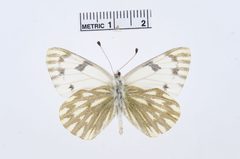
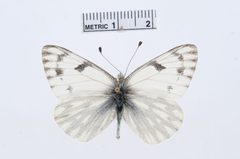
Distinguished from other Pontia by the lighter marginal markings on the forewing upperside (lighter than the submarginal stripe) and the gray-green veining on the underside of the forewing tips and hindwings. The combination of wing pattern and western North American range helps separate it from eastern relatives.
Images
Appearance
Wingspan 38–53 mm. Upperside of forewing has marginal markings lighter than the submarginal stripe. Below, forewing tips and hindwings have outlined in gray-green.
Habitat
Occurs in alpine meadow and forest habitat; activity is reduced in forest habitat relative to alpine meadow habitat. Specific habitat preferences beyond these two studied environments are not well documented.
Distribution
Western North America. Recorded from Canadian provinces of Alberta, Manitoba, and Saskatchewan, and throughout the western United States.
Seasonality
In the northern part of the range, one flies in June and July. In the southern part of the range, two generations fly from May to August.
Diet
: not specified in available sources. Larvae: feed on flowers, buds, and fruit of Brassicaceae plants.
Host Associations
- Brassicaceae - larval plantCaterpillars feed especially on flowers, buds, and fruit
Life Cycle
One per year in northern range; two generations per year in southern range. Complete with , larva, pupa, and stages. Specific details of site and stage not documented in available sources.
Behavior
activity is reduced in forest relative to alpine meadow habitat. are active fliers during daylight hours.
Ecological Role
Larval herbivore on Brassicaceae. role in pollination not documented. Specific functions beyond herbivory not established in available sources.
Human Relevance
Not documented as a significant agricultural pest or beneficial in available sources. No economic importance established.
Similar Taxa
- Pontia protodiceSimilar checkered white pattern; distinguished by wing markings and geographic range (P. protodice more eastern and widespread)
- Pontia sisymbriiSimilar western range and plant use; requires close examination of wing pattern details for separation
More Details
Flight behavior study
Research has demonstrated that P. occidentalis exhibits reduced activity in forest compared to alpine meadow habitat, suggesting habitat structure influences movement patterns.
Sources and further reading
- BugGuide
- Wikipedia
- GBIF taxonomy match
- iNaturalist taxon
- NCBI Taxonomy
- Catalogue of Life
- Bumble Bees: Feeling Impact of Climate Change | Bug Squad
- Probing the Molecular Interactions Between Western Flower Thrips and the Tomato Spotted Wilt Virus | Bug Squad
- Flabellate Grasshopper
- Good News for the Western Bumble Bee, Bombus occidentalis
- A sting to kill a cow? Red velvet ant, a.k.a. cow killer, Dasymutilla occidentalis — Bug of the Week
- Bug Eric: True Bug Tuesday: Exporting the Western Conifer Seed Bug
- Forest Habitat Reduces the Flight ofPontia occidentalis(Reakirt) (Lepidoptera: Pieridae) Relative to Alpine Meadow Habitat