Phigalia titea
(Cramer, [1780])
Half-wing Moth, Spiny Looper
Phigalia titea, commonly known as the Half-wing or Spiny Looper, is a geometrid moth native to eastern North America. males have fully developed wings with an average wingspan of approximately 34 mm, while females are wingless (). The is notable for its exceptionally early adult activity period in late winter and early spring, making it one of the first moths to appear each year. Larvae are loopers (inchworms) that feed on a wide variety of deciduous hardwood trees and can cause significant defoliation during years.
Pronunciation
How to pronounce Phigalia titea: //faɪˈɡeɪ.li.ə ˈtɪ.ti.ə//
These audio files are automatically generated. While they are not always 100% accurate, they are a good starting point.
Identification
Males distinguished from similar Phigalia by wing pattern details and genitalia; from other early spring geometrids by reduced hindwings. Females recognized by wingless condition and early spring occurrence on tree trunks. Larvae identified by looping locomotion, presence of body spines, and early spring feeding on hardwood foliage. Resembles Paleacrita vernata (Spring Cankerworm) in and timing, but P. titea females lack the more robust body form of that species; P. titea males have more distinctly patterned forewings.
Images
Appearance
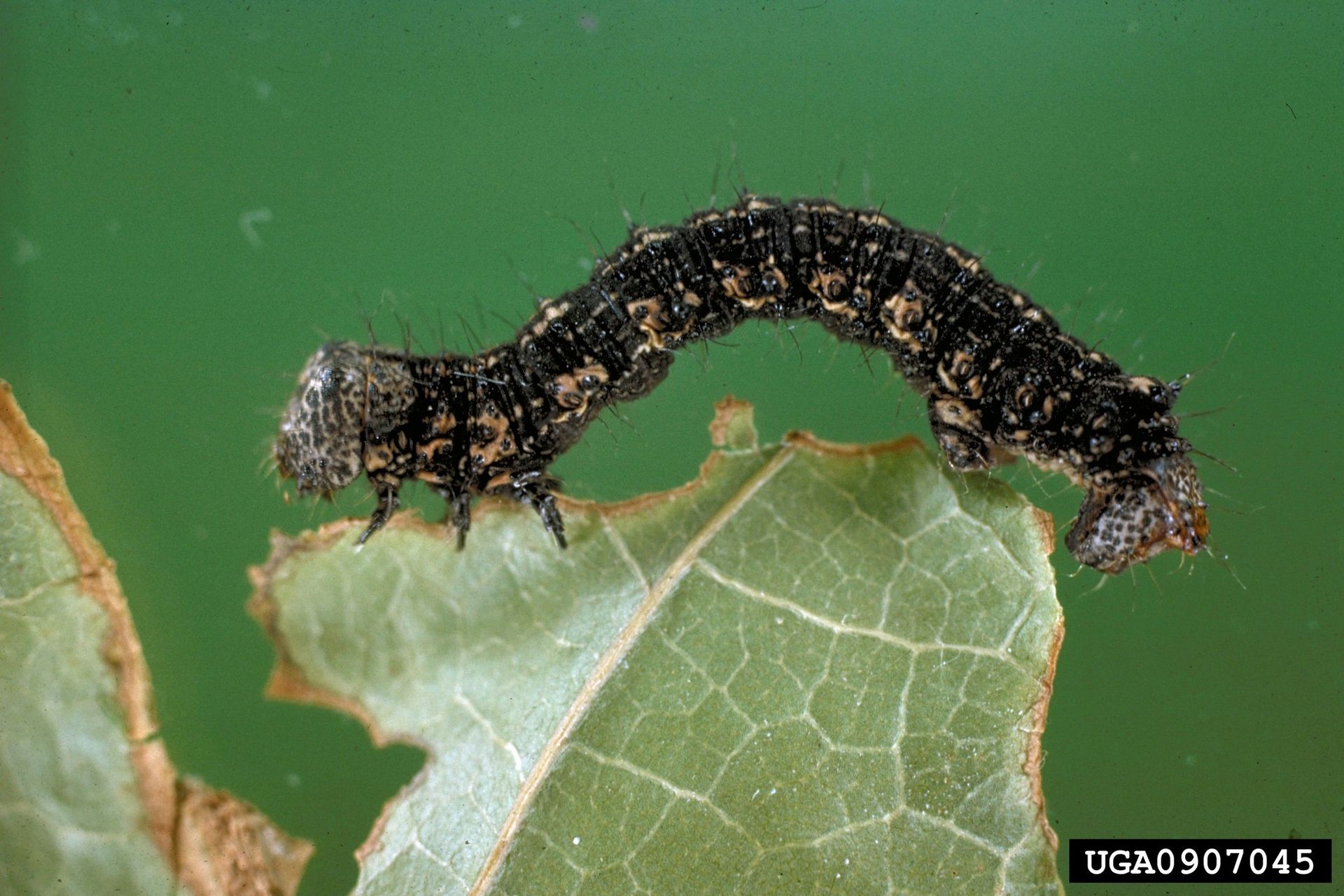
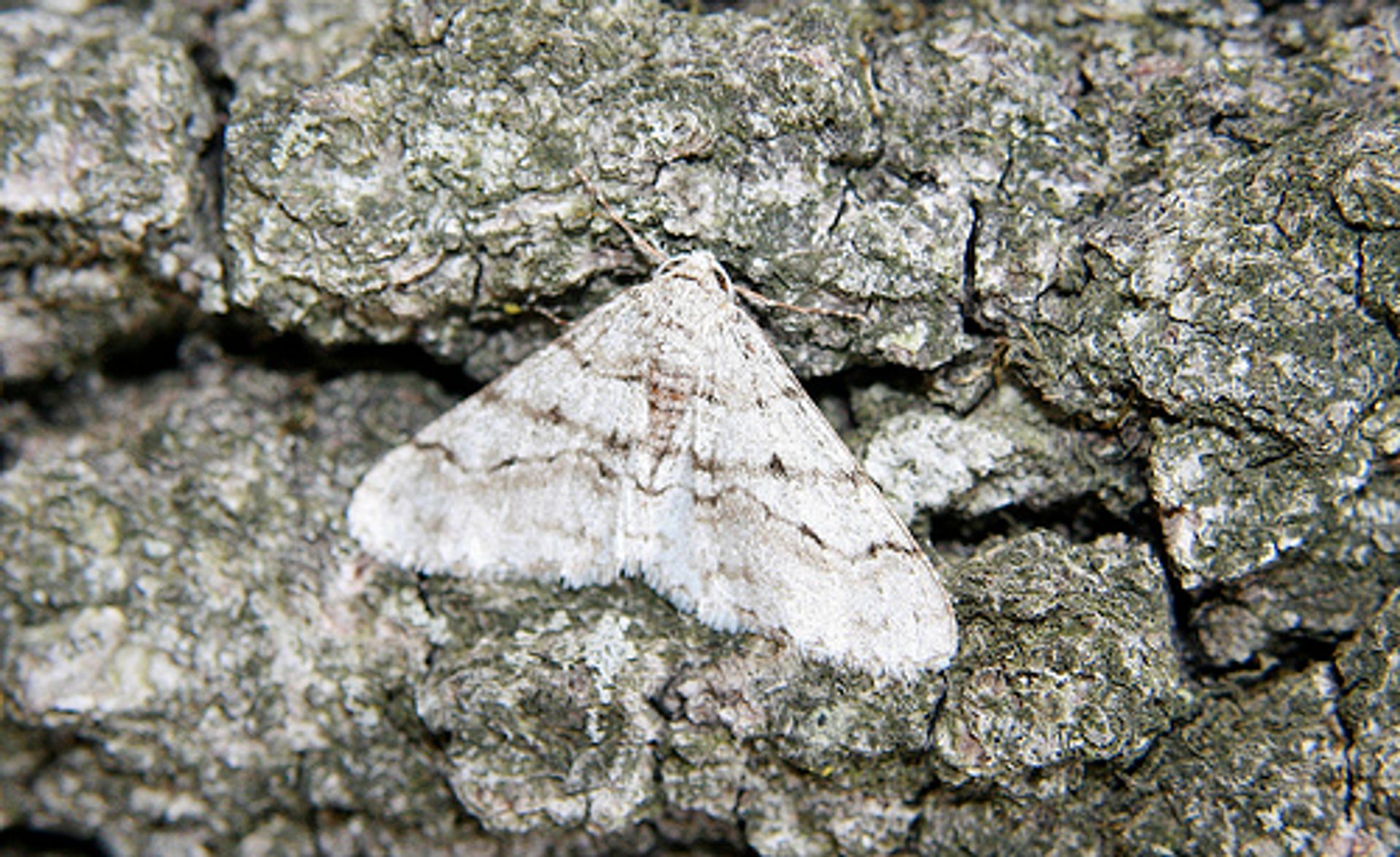
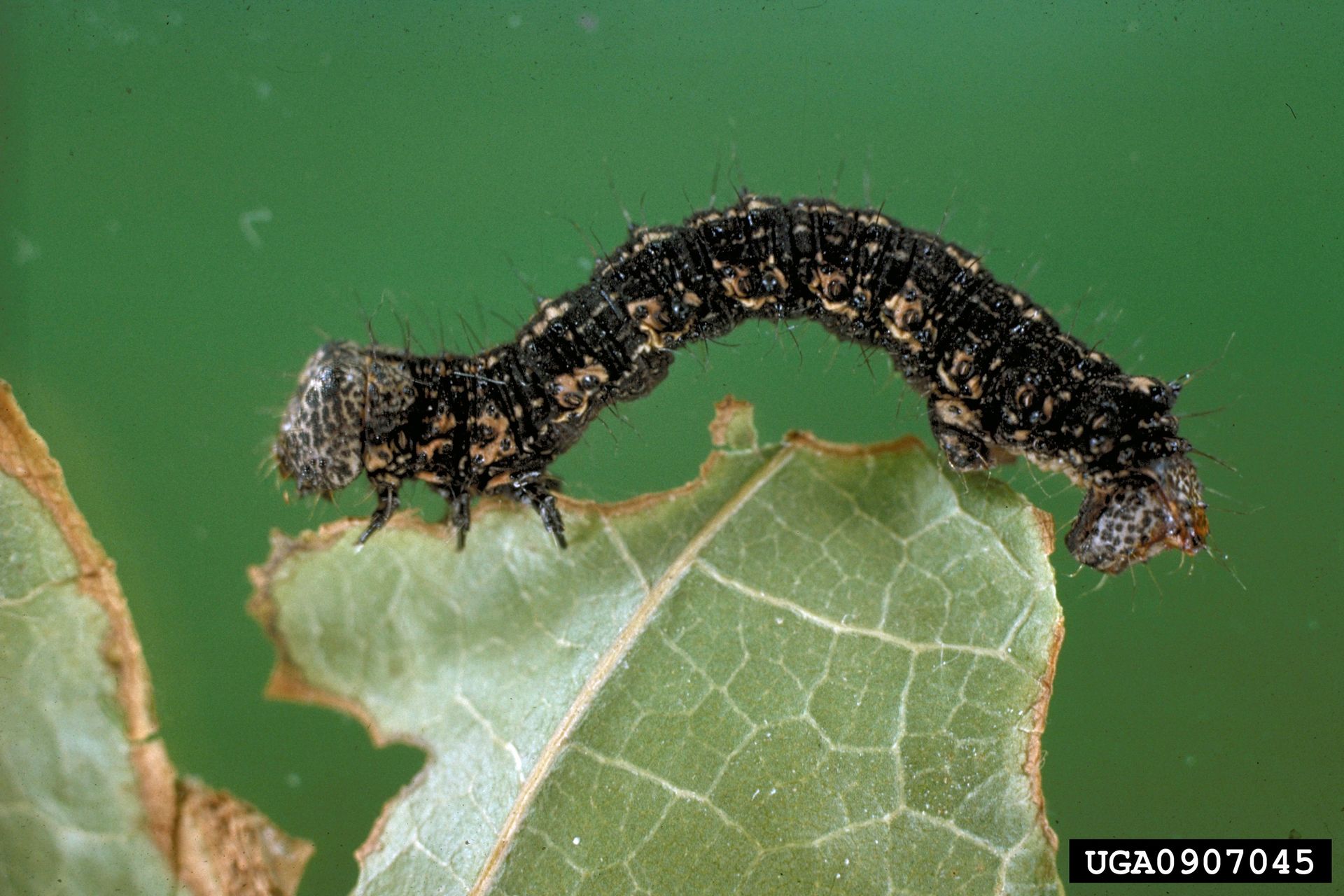
males possess broad, triangular forewings with variable gray-brown coloration and fine wavy transverse lines; hindwings are reduced to small, non-functional lobes, giving the 'half-wing' appearance. Wingspan averages 34 mm. Adult females are completely wingless with a compact, cylindrical body and reduced . Larvae are slender loopers with only two or three pairs of at the end, causing the characteristic looping gait. Mature larvae have scattered short spines along the body, hence 'spiny looper'.
Habitat
Deciduous hardwood forests and wooded areas with diverse tree . Found in both mature forests and suburban landscapes with established hardwood trees. Requires presence of acceptable trees for larval development.
Distribution
Eastern North America, ranging from the Atlantic coast west to the Great Plains. Documented from eastern Canada (Ontario, Quebec, Maritime provinces) through the northeastern and mid-Atlantic United States, south to at least Virginia and West Virginia, and west to the prairie provinces of Canada (Alberta, Manitoba, Saskatchewan) and corresponding U.S. states.
Seasonality
active in late winter and early spring, typically from February through April depending on latitude; one of the earliest to emerge each year. Larvae present in spring, completing development before full closure. with single .
Diet
Larvae are folivores on deciduous hardwood trees. Field observations document feeding on 41 . Laboratory trials with 69 species found 33 highly acceptable, 12 acceptable, 20 unacceptable, and 4 toxic. Primary hosts include oaks (Quercus), hickories (Carya), maples (Acer), birches (Betula), and various other hardwood . do not feed.
Host Associations
- Quercus - primary larval oaks, highly acceptable
- Carya - primary larval hickories, highly acceptable
- Acer - primary larval maples, highly acceptable
- Betula - primary larval birches, highly acceptable
Life Cycle
Overwinters as in masses on twigs. Eggs hatch in early spring as host buds break. Larvae feed through spring, passing through five instars. occurs in soil or leaf litter. emerge in late winter to early spring of the following year. : one per year. Females climb host tree trunks to oviposit on twigs.
Behavior
males fly at night and are attracted to light. Females are flightless and must climb vegetation to reach oviposition sites, often ascending tree trunks in early spring. Larvae exhibit characteristic looping locomotion due to reduced number. During years, larvae may defoliate host trees completely. Adults are among the earliest active each year, often appearing while snow remains on the ground.
Ecological Role
Early spring defoliator of deciduous hardwood forests; serves as important food source for insectivorous birds and other during early season when alternative prey is scarce. Contributes to nutrient cycling through herbivory and deposition. can cause significant temporary defoliation of forest , though trees typically recover.
Human Relevance
Occasional forest pest during years, with documented cases of severe hardwood defoliation in West Virginia and surrounding regions. Not a persistent economic pest due to and typical low densities. Of interest to lepidopterists and naturalists due to early period and wingless female condition.
Similar Taxa
- Paleacrita vernataNearly identical , distribution, and timing; both are early spring geometrids with wingless females. Distinguished by male wing pattern and female body form; P. vernata females more robust, males have different forewing markings.
- Phigalia strigatariaCongeneric with similar appearance and ; distinguished by male genitalia and subtle wing pattern differences, and by geographic distribution which is more restricted in P. strigataria.
- Alsophila pometariaAnother early spring cankerworm with wingless females; distinguished by different male wing shape (more rounded) and larval appearance.
More Details
Sexual dimorphism
One of the most striking examples of in North American , with fully winged males and completely wingless females.
Population dynamics
Capable of localized causing severe defoliation, but populations typically crash before becoming widespread pests; seven-year pupal reported for related may contribute to unpredictable population fluctuations.