
Paleacrita
Riley, 1876
spring cankerworm moths
Species Guides
3- Paleacrita longiciliata
- Paleacrita merriccata(White-spotted Cankerworm Moth)
- Paleacrita vernata(Spring Cankerworm)
Paleacrita is a of geometer moths (Geometridae) containing at least three described , including the widespread spring cankerworm (Paleacrita vernata). The genus was established by Riley in 1876. Species in this genus are notable for having flightless females in at least some species, a trait that influences their and seasonal activity patterns.
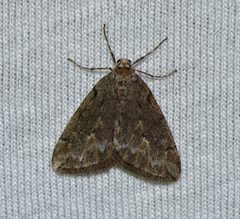
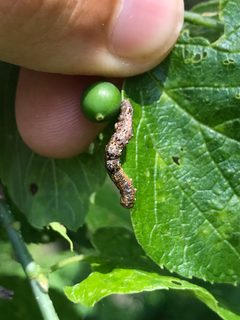
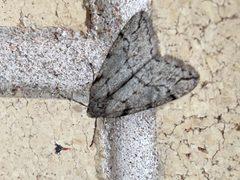
Pronunciation
How to pronounce Paleacrita: /ˌpæliˈækrɪtə/
These audio files are automatically generated. While they are not always 100% accurate, they are a good starting point.
Identification
within Paleacrita are recognized as geometer moths with the typical slender body and broad wings characteristic of the . Paleacrita vernata, the most frequently encountered species, can be identified by its early spring period and association with deciduous forest . Males have functional wings; females of at least P. vernata are wingless and flightless, a trait shared with related such as Phigalia.
Images
Habitat
Deciduous forest and woodland edges. Associated with trees and shrubs that serve as larval plants.
Distribution
Eastern North America, ranging from the eastern Great Plains to the Atlantic coast, and north into Canada. Records include Vermont and other eastern U.S. states.
Seasonality
Winter and early spring activity. emerge during late winter to early spring, with Paleacrita vernata males flying from late February through March and April in southern regions, persisting later in northern latitudes.
Diet
Larvae feed on deciduous trees and shrubs. Paleacrita vernata has been documented feeding on flax as a secondary , with primary hosts including various deciduous trees.
Host Associations
- flax - secondary Documented feeding record for Paleacrita vernata larvae
- deciduous trees and shrubs - primary Principal larval food plants; specific not fully enumerated in available sources
Life Cycle
One per year. Overwinters as or early instar larva. First instar larvae disperse by ballooning on silk threads to locate plants. Pupates in soil. emerge in late winter to early spring.
Behavior
Males are attracted to light; females are flightless and presumably release to attract mates. First instar larvae engage in aerial via silk ballooning, which serves as the primary means of colonizing new plants given the limited mobility of flightless females.
Ecological Role
Herbivore in deciduous forest . Larval feeding on tree foliage contributes to nutrient cycling and may occasionally cause noticeable defoliation. Serves as prey for various .
Human Relevance
Occasional forest pest. Paleacrita vernata is known as the spring cankerworm and can cause defoliation of shade trees and forest stands. The has been recorded as a pest of flax in agricultural contexts.
Similar Taxa
- PhigaliaShared traits including flightless females, early spring period, ballooning first instar larvae, and similar geographic distribution. Phigalia strigataria (Small Phigalia) has nearly identical temporal and spatial distribution to Paleacrita vernata.
- AlsophilaFall cankerworm with similar and ecological role; distinguished by autumn period rather than spring .
More Details
Female flightlessness
The includes with wingless, flightless females, a trait that has evolved independently in multiple lineages of Geometridae. This morphological reduction correlates with reliance on larval ballooning for .
Taxonomic history
Established by Riley in 1876. Contains three described : Paleacrita vernata (Peck, 1795), P. longiciliata Hulst, 1898, and P. merriccata Dyar, 1903.