
Alsophila
Hübner, [1825]
cankerworm moths
Species Guides
1- Alsophila pometaria(Fall Cankerworm Moth)
Alsophila is a of in the Geometridae, Alsophilinae. The genus is characterized by extreme : males are winged and capable of , while females are wingless, flightless, and lack functional mouthparts. are active in late autumn or early spring, with larvae (known as inchworms or loopers) feeding on hardwood tree foliage in spring. Several are significant defoliators of shade trees, with exhibiting eruptive dynamics.
Pronunciation
How to pronounce Alsophila: //ælˈsɒfɪlə//
These audio files are automatically generated. While they are not always 100% accurate, they are a good starting point.
Identification
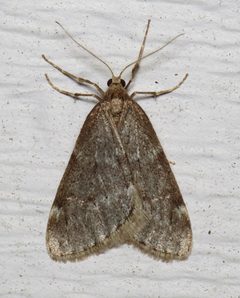
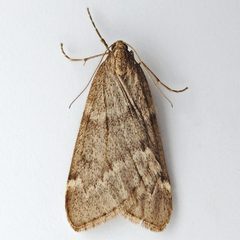
Females are immediately recognizable by their complete lack of wings—appearing as small, gray-brown, caterpillar-like that crawl up tree trunks. Males are small, gray-brown moths with functional wings and typical moth appearance; they are active fliers attracted to light. Larvae are slender, with only two or three pairs of at the rear, producing the characteristic looping "inching" locomotion. Color morphs include light green and dark brown.
Images
Habitat
Larvae feed on hardwood trees including oaks, maples, elms, birch, and lindens. emerge from soil sites and females climb vertical structures (trees, buildings) to oviposit. Found in deciduous forests, urban shade tree plantings, and suburban landscapes across eastern North America.
Distribution
Eastern North America, with records from Maryland, Virginia, North Carolina, Massachusetts, and adjacent regions. Range extends broadly across the continent where suitable trees occur.
Seasonality
emerge from soil in late autumn (fall cankerworm, A. pometaria) or early spring (spring cankerworm, A. pometaria—note: specific seasonality varies), with females releasing on mild winter nights. hatch in early spring, synchronized with leaf bud break. Larvae feed through spring and early summer, then pupate in soil.
Diet
Larvae feed on leaves of hardwood trees, particularly oaks, maples, elms, and lindens. Young larvae create "shot hole" damage in tender young leaves; mature larvae consume entire leaves leaving only midribs and major .
Life Cycle
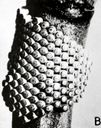
laid on bark of twigs and branches in late autumn or winter. Larvae hatch in early spring, feed for several weeks, then descend to ground on silk threads to pupate in soil. emerge from pupae after several months of . Females die shortly after oviposition; they do not feed as adults.
Behavior
Larvae exhibit characteristic "inching" locomotion: arching body into loop by alternating grasp between and legs. When disturbed, larvae drop from foliage on silk threads. Females release shortly after sunset on mild winter nights to attract flying males. Males track plumes to locate females.
Ecological Role
Native defoliator of deciduous forests. Periodic can cause extensive tree defoliation, though healthy trees typically recover. Serves as food source for birds, spiders, rodents, and predatory insects. regulated by natural enemies, food quality, and weather.
Human Relevance
Significant pest of urban and suburban shade trees during years. Repeated defoliation can weaken stressed trees, increasing susceptibility to secondary pests and . Management options include Bacillus thuringiensis (Bt), spinosad, and other ; barrier bands on tree trunks have shown limited effectiveness. Notable outbreak years include 2015 in Maryland and surrounding states.
Similar Taxa
- Paleacrita vernata (spring cankerworm)Similar wingless females and inchworm larvae; distinguished by spring and slightly different larval . Often co-occurs with Alsophila .
- Operophtera brumata (winter moth)Close relative with flightless females; in New England, causing similar defoliation. Distinguished by geographic range and specific preferences.
- Lambdina fiscellaria (linden looper)Member of same clan with flightless females and similar ; associated with linden and other hardwoods.
Sources and further reading
- BugGuide
- Wikipedia
- iNaturalist taxon
- NCBI Taxonomy
- Catalogue of Life
- Chilly winter days can’t stop the fall cankerworm, Alsophila pometaria — Bug of the Week
- Wintry appearance of a strange moth: Fall cankerworm, Alsophila pometaria — Bug of the Week
- Inch by inch: Fall cankerworm, Alsophila pometaria — Bug of the Week
- Cankerworm conundrums: Fall cankerworm, Alsophila pometaria — Bug of the Week
- A moth in winter - the fall cankerworm, Alsophila pometaria — Bug of the Week
- Inch by Inch, Fall Cankerworms Will Eat Your Trees
- Predicting the Potential Suitable Distribution of Alsophila spinulosa under Climate Change Scenario
- Soil microbial community composition and diversity in the rhizosphere of Alsophila spinulosa growing in different habitats within the Chishui Alsophila National Nature Reserve in Guizhou Province, China