
Erannis tiliaria
(Harris, 1841)
Linden Looper, Linden Looper Moth, Winter Moth
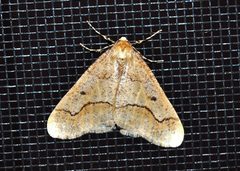
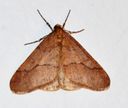
Erannis tiliaria, commonly known as the linden looper or winter moth, is a North American geometrid described by Harris in 1841. males are active in late fall and possess wings with a 32–42 mm wingspan, while females are wingless. The has a broad distribution across eastern and central North America.
Pronunciation
How to pronounce Erannis tiliaria: /ɛˈrænɪs tɪˈlaɪəriə/
These audio files are automatically generated. While they are not always 100% accurate, they are a good starting point.
Identification
Males can be distinguished by their late fall period and 32–42 mm wingspan. The wingless condition of females is a notable diagnostic feature. The was previously confused with Erannis vancouverensis, which is now recognized as a separate species.
Images
Appearance
males have a wingspan of 32–42 mm. Females are wingless. Specific coloration and pattern details are not provided in available sources.
Habitat
Associated with deciduous forest environments where trees and shrubs occur.
Distribution
North America from central Alberta east to Nova Scotia, south to Missouri, Georgia, Utah, and Texas. Distribution records from GBIF confirm presence in Alberta, Manitoba, Saskatchewan (Canada), and Vermont (USA).
Seasonality
males are on wing in late fall.
Diet
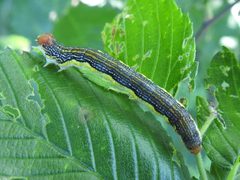
Larvae feed on various deciduous trees and shrubs including basswood (Tilia), apple (Malus), ash (Fraxinus), beech (Fagus), birch (Betula), elm (Ulmus), maple (Acer), oak (Quercus), poplar (Populus), Prunus , and Ribes species.
Host Associations
- Tilia - larval food plantbasswood
- Malus - larval food plantapple
- Fraxinus - larval food plantash
- Fagus - larval food plantbeech
- Betula - larval food plantbirch
- Ulmus - larval food plantelm
- Acer - larval food plantmaple
- Quercus - larval food plantoak
- Populus - larval food plantpoplar
- Prunus - larval food plant
- Ribes - larval food plant
Ecological Role
Larvae function as folivores on deciduous trees and shrubs.
Human Relevance
Larvae may cause defoliation of ornamental and fruit trees, including apple. The 'winter moth' is ambiguous and shared with other , potentially causing confusion.
Similar Taxa
- Erannis vancouverensisFormerly considered a of E. tiliaria, now recognized as a separate based on distinct characteristics.
Misconceptions
The 'winter moth' is ambiguous and also applied to other , including the European Operophtera brumata. Erannis tiliaria has been erroneously reported from the Murmansk region of Russia due to misidentification; this species does not occur in Europe.
More Details
Taxonomic History
Erannis vancouverensis was treated as a of E. tiliaria for some time before being elevated to status.
Faunistic Data Quality
A 2019 revision by Kozlov documented that misidentification of in published records can lead to cascading errors in databases and literature, emphasizing the importance of accurate identification for this species and related .