
Pero
Herrich-Schäffer, 1855
Pero Moths
Species Guides
17- Pero ancetaria(Hübner's Pero Moth)
- Pero astapa
- Pero behrensaria(Behr's Pero Moth)
- Pero catalina
- Pero flavisaria
- Pero honestaria(honest pero)
- Pero inviolata
- Pero macdunnoughi(Mcdunnough's pero)
- Pero meskaria(Meske's Pero Moth)
Pero is a of geometrid moths comprising approximately 150 described distributed primarily in the New World. These are characterized by their cryptic coloration and slender bodies typical of the Geometridae . are and attracted to light sources. The genus was established by Herrich-Schäffer in 1855 and remains taxonomically active with ongoing species descriptions.
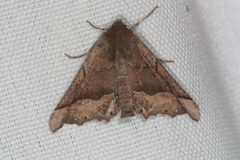
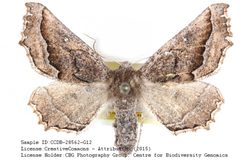
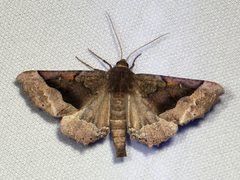
Pronunciation
How to pronounce Pero: /ˈpɛroʊ/
These audio files are automatically generated. While they are not always 100% accurate, they are a good starting point.
Identification
Members of Pero can be distinguished from similar geometrid by wing pattern characteristics, though specific identification often requires examination of genitalia. The genus is part of the Ennominae, and -level identification presents challenges due to subtle morphological differences and individual variation.
Images
Distribution
New World distribution with highest diversity in North and South America.
Similar Taxa
- DigrammiaBoth are geometrid with similar cryptic coloration and slender body form; Digrammia often show more pronounced wing markings
- HystrichophoraBoth are small that can occur in similar ; Hystrichophora is in the Tortricidae rather than Geometridae, with different wing posture and body shape
- FurculaBoth are attracted to lights; Furcula ( Notodontidae) has distinctly hairy legs and more robust body compared to the slender Pero
Sources and further reading
- BugGuide
- Wikipedia
- iNaturalist taxon
- NCBI Taxonomy
- Catalogue of Life
- Why Honey Is Neither Bee Vomit Nor Bee Barf | Bug Squad
- They Quickly Learned What All the Buzz Was About | Bug Squad
- Bug Eric: National Moth Week Recap for Colorado Springs
- Spectroscopy Opens Potential for Ultra-Early Pest Detection in Crops
- Bad Roommates: Study Tracks Mice to Nests, Finds Ticks Aplenty
- Super Crop Challenge #15 | Beetles In The Bush
- Macrocyclic oxygen transfer in the conversion of fatty acid hydroperoxide to a single species of triol in physiological saline.