
Phthorimaea
Meyrick, 1902
Species Guides
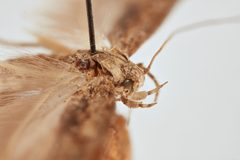
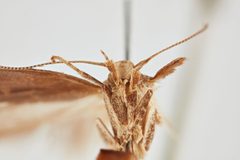
1- Phthorimaea operculella(potato tuber moth)
Phthorimaea is a of small in the Gelechiidae, established by Edward Meyrick in 1902. The genus contains approximately 15 described distributed across the Americas and other regions. Several species are economically significant agricultural pests, particularly (potato tuber moth) and Phthorimaea absoluta (South American leafminer/tomato leafminer), which infest Solanaceae crops worldwide. The genus is characterized by its association with nightshade family plants and has been the subject of intensive research due to the potential and management challenges posed by its pest species.

Pronunciation
How to pronounce Phthorimaea: /θɔːrɪˈmaɪə/
These audio files are automatically generated. While they are not always 100% accurate, they are a good starting point.
Identification
-level identification within Phthorimaea requires examination of genitalia and detailed wing pattern analysis. The can be distinguished from related Gnorimoschemini genera such as Tecia and Symmetrischema by combinations of wing venation, male genitalia structure (particularly valva and ), and female genitalia characteristics including signum shape and ductus bursae structure. and P. absoluta are externally similar and have been historically confused; accurate separation requires dissection and comparison of genitalia or molecular markers.
Images
Habitat
are primarily agricultural and associated with cultivated Solanaceae crops. Natural habitats appear to include arid and semi-arid regions where native Solanum occur, though specific non-agricultural habitat associations remain poorly documented for most species.
Distribution
The has a broad distribution spanning North, Central, and South America, with individual showing varying ranges. has achieved worldwide distribution through human-mediated and is present on all continents except Antarctica. Phthorimaea absoluta, native to South America, has spread to Europe, Africa, and Asia since 2006. Other species have more restricted distributions in the Neotropics and southern South America.
Diet
Larvae of known are specialized herbivores of Solanaceae plants. larvae feed on potato tubers and foliage, tomato leaves and fruit, and other Solanum species. Phthorimaea absoluta is primarily a tomato pest, feeding on leaves, stems, and fruit. The diet of most other species in the remains undocumented.
Host Associations
- Solanum tuberosum - Primary of P. operculella; larvae mine leaves and bore into tubers
- Solanum lycopersicum - Primary of P. absoluta; also host for P. operculella
- Solanum melongena - for P. operculella
- Nicotiana tabacum - for both P. absoluta and P. operculella in experimental conditions
Behavior
are and exhibit phototactic responses to light traps. Females deposit on plant foliage, stems, or soil near plant bases depending on . Larvae are internal feeders, creating mines in leaves or boring into stems, fruit, and tubers. occurs in silk cocoons on the plant surface, in soil, or within feeding tunnels. Reproductive interference has been documented between P. absoluta and P. operculella when they co-occur on shared hosts, with asymmetric competitive outcomes depending on host plant species.
Ecological Role
As herbivores on Solanaceae, Phthorimaea function as significant regulators of their plants in natural . In invaded ranges, they can alter plant dynamics and serve as prey for and . The P. absoluta and P. operculella have become important components of agroecosystem , supporting communities of introduced and native natural enemies including parasitoid in the Braconidae, Ichneumonidae, and Eulophidae.
Human Relevance
is a major pest of potato and tomato crops globally, causing significant yield losses through tuber damage and foliar mining. Phthorimaea absoluta has emerged as one of the most destructive pests of tomato production worldwide since its spread from South America began in 2006, with estimated control costs exceeding billions of dollars. Management relies on , -based , , and cultivars. P. absoluta is under regulation in the United States and subject to proactive research programs to prevent establishment.
Similar Taxa
- Tecia solanivoraSimilar larval mining on potato; distinguished by wing pattern and male genitalia structure
- Symmetrischema tangoliasAlso a potato pest in South America; differs in genitalia and larval feeding habits
- Plutella xylostellaSimilar size and appearance but belongs to Plutellidae; distinguished by wing venation and resting posture
More Details
Taxonomic history
The was revised by Povolný in 1989 and 1990, who clarified boundaries and described new species from southern South America. Several species were previously placed in Gnorimoschema or other related genera.
Research significance
Phthorimaea has become a model system for studying , reproductive interference between , and the evolution of resistance. Genomic resources are being developed for P. absoluta and P. operculella to support management efforts.
Sources and further reading
- BugGuide
- Wikipedia
- GBIF taxonomy match
- iNaturalist taxon
- NCBI Taxonomy
- Catalogue of Life
- Erika Bueno, Ph.D. - Entomology Today
- Phthorimaea absoluta Archives - Entomology Today
- How One Entomologist Puts a Childhood Love of Insects to Work in IPM
- Phthorimaea operculella . [Distribution map].
- Phthorimaea operculella . [Distribution map].
- Reproductive interference between Phthorimaea absoluta and Phthorimaea operculella (Lepidoptera: Gelechiidae) on 2 host plants
- 2Phenylethanol and oCresol Repel the Tomato Leaf Miner Phthorimaea absoluta and Attract the Parasitoid Trichogramma chilonis
- Interactions between the potato moth (Phthorimaea operculella (Zeller)) and its main host the potato (Solanum tuberosum L.) in laboratory and field
- Insecticidal potential of Lantana camara L. ethanol and nano-silver extracts against the potato tuber moth (Phthorimaea operculella [Zeller]).