
Gnorimoschema
Busck, 1900
Species Guides
23- Gnorimoschema alaricella
- Gnorimoschema baccharisella(Coyote Brush Stem Gall Moth)
- Gnorimoschema bacchariselloides
- Gnorimoschema busckiella
- Gnorimoschema compsomorpha
- Gnorimoschema coquillettella
- Gnorimoschema gallaeasterella
- Gnorimoschema gallaesolidaginis(Goldenrod Elliptical-Gall Moth)
- Gnorimoschema huffmanellum
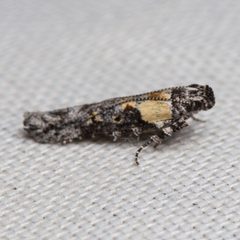
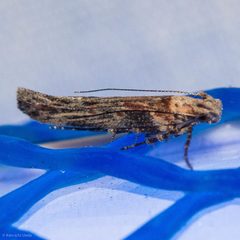
Gnorimoschema is a of small in the Gelechiidae, first described by Busck in 1900. The genus belongs to the tribe Gnorimoschemini and contains numerous distributed across the Holarctic region, with particularly diverse faunas in North America and the Palaearctic. Several species are notable for their specialized , including gall induction on plants. The genus has been subject to extensive taxonomic revision, with many new species described in recent decades by researchers including Povolný and Powell.
Pronunciation
How to pronounce Gnorimoschema: //ɡnoʊˈɹɪmoʊˌskiːmə//
These audio files are automatically generated. While they are not always 100% accurate, they are a good starting point.
Identification
Small gelechiid moths with typical characteristics including narrow, wings and a slender body form. -level identification requires examination of genitalia and wing pattern details. The can be distinguished from related genera in Gnorimoschemini by combinations of genitalic characters and wing markings, though precise boundaries with some related genera such as Gobipalpa require knowledge.
Images
Habitat
vary by ; many species occupy open habitats including grasslands, meadows, and coastal dunes. Some species are specifically associated with goldenrod (Solidago) stands where gall-forming species induce stem galls.
Distribution
Holarctic distribution, with records from North America (including the United States and Canada), Europe, and Asia. Specific records include: China (Yunnan, Ningxia, Gansu, Inner Mongolia, Hebei, Shanxi), Russia (Altai, Zabaikalskiy krai, Upper Kolyma River, Chukchi area), Kazakhstan, Kirgisia, and across northern Europe (Denmark, Norway, Sweden).
Ecological Role
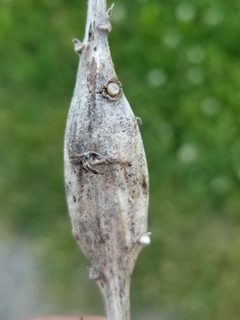
Some function as gall inducers on plants, creating abnormal plant growths that provide sheltered development sites for larvae. Gall-forming species such as G. gallaesolidaginis have been demonstrated to concentrate soil contaminants within gall tissue, suggesting potential use as bioindicators of environmental pollution.
Human Relevance
G. gallaesolidaginis and related gall-forming are being investigated as novel tools for detecting belowground chemical contaminants, including volatile organic compounds and industrial pollutants, due to their ability to accumulate toxins in gall tissue at higher concentrations than surrounding plant tissues. One species, Gnorimoschema debenedictisi, was named in honor of lepidopterist John De Benedictis for his contributions to research.
Similar Taxa
- GobipalpaRelated in tribe Gnorimoschemini with similar ; distinguished by genitalic and wing pattern characters
- ScrobipalpaRelated gelechiid with superficially similar appearance; requires genitalic examination for reliable separation
Sources and further reading
- BugGuide
- Wikipedia
- GBIF taxonomy match
- iNaturalist taxon
- NCBI Taxonomy
- Catalogue of Life
- Blacklighting at the Bohart: They Saw the Light | Bug Squad
- Meet 'The Moth Man' at Bohart Museum's Moth Night | Bug Squad
- Gnorimoschema gallaesolidaginis Archives - Entomology Today
- How Some Insects Turn Plants Into Pollution Detectors
- goldenrod gall - Entomology Today
- Review of the genus Gnorimoschema Busck, 1900 (Lepidoptera, Gelechiidae) in China
- Impact of attack by Gnorimoschema gallmakers on their ancestral and novel Solidago hosts
- HOST-ASSOCIATED GENETIC DIFFERENTIATION IN THE GOLDENROD ELLIPTICAL-GALL MOTH, GNORIMOSCHEMA GALLAESOLIDAGINIS (LEPIDOPTERA: GELECHIIDAE)
- HOST-ASSOCIATED GENETIC DIFFERENTIATION IN THE GOLDENROD ELLIPTICAL-GALL MOTH, GNORIMOscHEMA GALLAESOLIDAGINIS (LEPIDOPTERA: GELECHIIDAE)
- New taxa and records of <i>Gnorimoschema</i> Busck and <i>Gobipalpa</i> Povolný from Palaearctic Asia (Lepidoptera, Gelechiidae)¹