
Gnorimoschema coquillettella
Busck, 1902
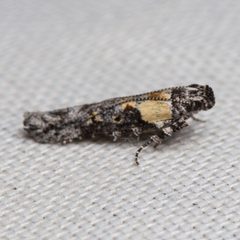
A small gelechiid described by August Busck in 1902, recorded from California and Colorado. have a wingspan of 11.5–14 mm with distinctive forewing patterning combining yellowish-brown basal areas, pale bluish-white ground color with black-tipped , and dark fuscous costal markings. Larvae form false galls on terminal twigs of Ericameria pinifolia.
Pronunciation
How to pronounce Gnorimoschema coquillettella: /nɔːrɪˈmoʊʃɛmə koʊˌkwɪlɪˈtɛlə/
These audio files are automatically generated. While they are not always 100% accurate, they are a good starting point.
Identification
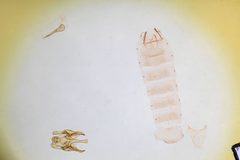
Distinguished from other Gnorimoschema by the specific forewing pattern: pale bluish-white ground color with black-tipped , combined with the distinctive yellowish-brown basal streak and paired dark fuscous costal semicircles with reddish-brown dots. The small size (11.5–14 mm wingspan) and western North American distribution further aid identification. Similar in the require examination of genitalia or larval association for definitive separation.
Images
Habitat
Associated with stands of Ericameria pinifolia, the larval plant. Specific requirements for unknown; likely occurs in scrub or chaparral where the host grows.
Distribution
Recorded from California and Colorado, United States. North American with restricted western range.
Diet
Larvae feed on Ericameria pinifolia, forming false galls on terminal twigs. feeding habits unknown.
Host Associations
- Ericameria pinifolia - larval larvae form false galls on terminal twigs
Life Cycle
Larval stage forms false galls on terminal twigs of Ericameria pinifolia. Complete details unknown; likely includes , larval, pupal, and stages typical of gelechiid moths.
Behavior
Larvae induce gall formation on plant terminal twigs. poorly documented; presumably based on characteristics.
Ecological Role
As a gall-former, larvae alter plant architecture and may influence resource allocation in Ericameria pinifolia. Specific ecological impacts unstudied.
Similar Taxa
- Gnorimoschema gallaesolidaginisAlso forms elongate stem galls, but on goldenrod (Solidago) rather than Ericameria; different association and geographic pattern
- Other Gnorimoschema speciesMany in form galls on Asteraceae; require examination of genitalia or larval plant for reliable identification
More Details
Taxonomic note
Named by August Busck in 1902. The specific epithet coquillettella honors Daniel William Coquillett (1856–1911), American entomologist known for work on Diptera.
Gall morphology
Forms 'false galls' on terminal twigs—abnormal plant growths induced by larval feeding or presence, distinct from 'true galls' initiated by -laying in some related .
Sources and further reading
- BugGuide
- Wikipedia
- GBIF taxonomy match
- iNaturalist taxon
- Catalogue of Life
- Blacklighting at the Bohart: They Saw the Light | Bug Squad
- Meet 'The Moth Man' at Bohart Museum's Moth Night | Bug Squad
- Gnorimoschema gallaesolidaginis Archives - Entomology Today
- How Some Insects Turn Plants Into Pollution Detectors
- goldenrod gall - Entomology Today