
Gnorimoschema gallaesolidaginis
(Riley, 1869)
Goldenrod Elliptical-Gall Moth, Goldenrod Gall Moth, Solidago Gall Moth, Goldenrod Gallmaker
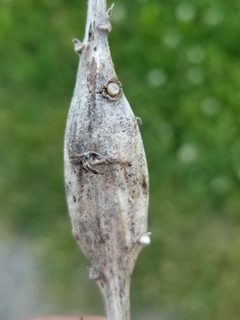
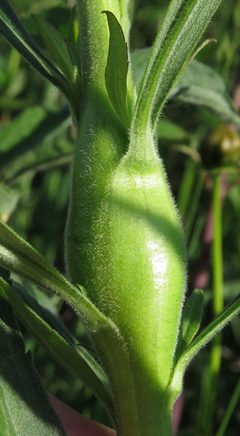
Gnorimoschema gallaesolidaginis is a small in the Gelechiidae that induces distinctive elliptical galls on goldenrod (Solidago) stems. The exhibits -associated genetic differentiation, with on different Solidago species showing significant genetic divergence even when geographically proximate. Research has demonstrated that the galls formed by this moth accumulate soil contaminants at higher concentrations than surrounding plant tissues, making them potentially useful as environmental pollution detectors. The moth is widely distributed across North America and is one of several gall-forming insects associated with goldenrod.
Pronunciation
How to pronounce Gnorimoschema gallaesolidaginis: /ˌnɔrɪmoʊˈskɛmə ˌɡæliˌsɒlɪdæˈdʒaɪnɪs/
These audio files are automatically generated. While they are not always 100% accurate, they are a good starting point.
Identification
Most reliably identified by the elliptical, elongate stem galls induced on goldenrod (Solidago) ; galls are typically formed on stems rather than leaves or buds. Distinguished from the spherical galls of Eurosta solidaginis (goldenrod gall fly) by gall shape—G. gallaesolidaginis produces elongate elliptical galls while E. solidaginis forms round, ball-like galls. May co-occur with other gall-formers on goldenrod; specific identification of the inducer may require rearing or molecular confirmation if gall is ambiguous. require identification and are not readily distinguishable from related Gnorimoschema without dissection or genitalia examination.
Images
Appearance
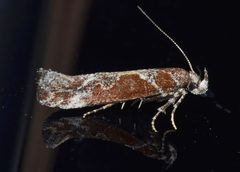
is a small gelechiid with typical characteristics including narrow, often pointed wings and a slender body. The specific adult coloration and pattern are not well-documented in available sources. The is most readily recognized by the distinctive gall it induces rather than adult . Larvae develop within the gall and have not been described in detail in available literature.
Habitat
supporting goldenrod (Solidago) plants, including meadows, prairies, roadsides, disturbed areas, and open woodlands. Occurs in both natural and anthropogenically modified environments where goldenrod grows.
Distribution
North America: recorded from Canada (Alberta, British Columbia, New Brunswick, Ontario, Quebec) and the United States (California, Florida, Illinois, Indiana, Kentucky, Maine, Maryland, Massachusetts, Michigan, Minnesota, Mississippi, Missouri, New Hampshire, New York, North Carolina, Ohio, Oklahoma, Pennsylvania, Tennessee, Texas, Wisconsin).
Host Associations
- Solidago altissima - plant; induces galls on stemsOne of multiple Solidago ; show genetic differentiation across host
- Solidago gigantea - plant; induces galls on stemsOne of multiple Solidago ; show genetic differentiation across host
- Solidago canadensis - plant; induces galls on stemsOne of multiple Solidago ; show genetic differentiation across host
- Solidago juncea - plant; induces galls on stemsOne of multiple Solidago ; show genetic differentiation across host
- Solidago graminifolia - plant; induces galls on stemsOne of multiple Solidago ; show genetic differentiation across host
- Solidago rugosa - plant; induces galls on stemsOne of multiple Solidago ; show genetic differentiation across host
Life Cycle
Induces elliptical galls on goldenrod stems; larval development occurs within the protective gall tissue. Specific details of -laying, larval instars, site, and timing are not well-documented in available sources. The gall provides nutrition and protection for the developing larva.
Behavior
Exhibits strong fidelity, with limited between on different Solidago host even when those hosts occur in sympatry. This host-associated genetic differentiation suggests behavioral or physiological mechanisms that maintain reproductive isolation across host races.
Ecological Role
Gall inducer that manipulates goldenrod plant development to create nutrient-rich protective structures. The galls concentrate plant nutrients and, as demonstrated by recent research, accumulate soil contaminants including heavy metals and organic pollutants at higher concentrations than surrounding plant tissues. This phytoscreening capability suggests potential use in environmental monitoring. The contributes to plant-insect interaction diversity and may drive ecological speciation processes through -associated divergence.
Human Relevance
Research subject in studies of ecological speciation and -associated genetic differentiation. Galls have been investigated as biological indicators for soil detection, showing potential for monitoring pollutants including hexavalent chromium, 1,4-dioxane, and volatile organic compounds. No significant economic impact as a pest or beneficial has been documented.
Similar Taxa
- Eurosta solidaginisAlso forms stem galls on goldenrod, but produces spherical (round, ball-like) galls rather than the elliptical elongate galls of G. gallaesolidaginis; a gall fly (Diptera: Tephritidae) rather than a
- Other Gnorimoschema speciesRelated gelechiid moths that may induce similar galls on Asteraceae; require identification of or molecular analysis to distinguish from G. gallaesolidaginis
More Details
Pollution Detection Research
Wayne State University research led by Glen Ray Hood has demonstrated that galls induced by G. gallaesolidaginis accumulate contaminants at concentrations thousands of times higher than other plant tissues. In studies of industrial pollution sites in Michigan, these galls detected hexavalent chromium and 1,4-dioxane at higher sensitivity than traditional groundwater testing methods, identifying beyond known plume boundaries and detecting pollutants in areas where well water tests were negative.
Host-Associated Speciation
genetic studies using and mitochondrial markers have documented significant genetic divergence between G. gallaesolidaginis populations on different Solidago , maintained despite geographic proximity and potential for . This pattern represents a potential case of ecological speciation in progress, with host fidelity acting as a reproductive isolating mechanism.
Sources and further reading
- BugGuide
- GBIF taxonomy match
- iNaturalist taxon
- NCBI Taxonomy
- Catalogue of Life
- Blacklighting at the Bohart: They Saw the Light | Bug Squad
- Meet 'The Moth Man' at Bohart Museum's Moth Night | Bug Squad
- How Some Insects Turn Plants Into Pollution Detectors
- goldenrod gall - Entomology Today
- Gnorimoschema gallaesolidaginis Archives - Entomology Today
- HOST-ASSOCIATED GENETIC DIFFERENTIATION IN THE GOLDENROD ELLIPTICAL-GALL MOTH, GNORIMOSCHEMA GALLAESOLIDAGINIS (LEPIDOPTERA: GELECHIIDAE)
- HOST-ASSOCIATED GENETIC DIFFERENTIATION IN THE GOLDENROD ELLIPTICAL-GALL MOTH, GNORIMOscHEMA GALLAESOLIDAGINIS (LEPIDOPTERA: GELECHIIDAE)