
Platyedra
Meyrick, 1895
Species Guides
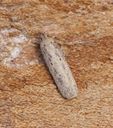
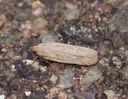
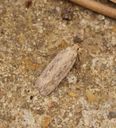
1- Platyedra subcinerea(cotton stem moth)
Platyedra is a of small in the Gelechiidae. Some are significant agricultural pests, particularly Platyedra gossypiella (Pink Bollworm), which attacks cotton, and Platyedra malvella (Hollyhock Seed Moth), which feeds on hollyhock seeds. The genus exhibits variation in strategies, with some species having facultative larval influenced by environmental humidity. Species occur across Europe, Africa, and Asia.
Pronunciation
How to pronounce Platyedra: /ˌplæt.iˈɛd.rə/
These audio files are automatically generated. While they are not always 100% accurate, they are a good starting point.
Images
Habitat
Agricultural fields and cultivated areas; -specific associations with plants including cotton (Gossypium) and hollyhock (Alcea rosea). Platyedra gossypiella occurs in irrigated cotton-growing regions in arid to semi-arid climates. Platyedra malvella is associated with gardens and areas where hollyhocks are cultivated.
Distribution
Europe (including Great Britain, Scandinavia, Denmark, Norway, Sweden); Africa (Sudan); Asia. Distribution varies by : Platyedra malvella expanded from southeastern England northward to Scotland by 1937. Platyedra gossypiella has been documented in Northern Sudan.
Seasonality
Platyedra malvella: on the wing late June to early August (single per year in some , two generations reported in others). Platyedra gossypiella: from diapausing larvae occurs at or near the lowest atmospheric water vapour saturation deficit of the year.
Diet
Seed-feeding: Platyedra gossypiella feeds on cotton seeds within bolls; Platyedra malvella feeds on hollyhock (Alcea rosea) seeds within capsules. One record of P. malvella on cotton.
Host Associations
- Gossypium - cotton seeds in bolls; primary for P. gossypiella
- Alcea rosea - hollyhock seeds in capsules; primary for P. malvella
- Althaea officinalis - marsh mallow; recorded for P. malvella
Life Cycle
Larval development occurs within seed capsules or cotton bolls. Full-grown larvae descend to soil to pupate (P. malvella) or enter (P. gossypiella). Platyedra gossypiella exhibits facultative larval diapause influenced by atmospheric water vapour saturation deficit during larval development; well-fixed diapause lasts until saturation deficit falls, poorly-fixed diapause breaks immediately. Platyedra malvella: larvae overwinter in cocoons in soil, become active in May, tunnel through soil, and pupate in late May to June.
Behavior
Larvae feed concealed within seeds. When disturbed, P. malvella larvae wriggle backward out of capsules and drop to ground on silken threads. of P. malvella are and can be disturbed from vegetation in evening. Rapid crop maturity in cotton allows escape from serious P. gossypiella damage.
Ecological Role
Seed ; agricultural pest causing economic damage to cotton and ornamental hollyhock production. Platyedra gossypiella caused 10.7% yield loss (135 pounds seed cotton per acre) in Northern Sudan in 1948, with disproportionate damage to late-ripening top crop (33.3% loss) versus early bottom crop (3.5% loss).
Human Relevance
Significant agricultural pest of cotton (P. gossypiella, Pink Bollworm) and ornamental hollyhock (P. malvella). Management strategies include rapid crop maturity and even growth to escape damage, and attention to seedling pest damage that may predispose crops to increased bollworm attack. No conclusive evidence for local carry-over as sole source of initial in P. gossypiella.
Similar Taxa
- Earias insulanaSpiny Bollworm; co-occurs as cotton pest in Sudan, causing similar boll damage but distinguished by morphological differences and lower damage levels (2.2% vs 10.7% yield loss in 1948 study)
- Pectinophora gossypiellaPink Bollworm; former name for Platyedra gossypiella, now synonymized but may appear in older literature
More Details
Diapause plasticity
In Platyedra gossypiella, the degree of fixity appears related to the gradient of saturation deficit during resting larva development: rising curves associate with well-fixed diapause, falling curves with poorly-fixed diapause. This represents an adaptive response to arid environments.
Historical nomenclature
Platyedra subcinerea was formerly placed in Anacampsis as A. parviocellatella Bruand, 1850.
Sources and further reading
- BugGuide
- Wikipedia
- GBIF taxonomy match
- iNaturalist taxon
- NCBI Taxonomy
- Catalogue of Life
- Pink Bollworm, Platyedra gossypiella (Saund.), as a Pest of Cotton at Zeidab, Northern Sudan
- THE HOLLYHOCK SEED MOTH (PLATYEDRA MALVELLA HÜBN.), TOGETHER WITH NOTES ON THE DISTRIBUTION OF APION RADIOLUS KIRBY AND AN ASSOCIATED GLINODIPLOSIS SPECIES