
Platyedra subcinerea
(Haworth, 1828)
cotton stem moth, mallow groundling
Platyedra subcinerea is a small gelechiid native to Europe, now established as an introduced in North America (New England, California) and New Zealand. It inhabits wet meadows, marshes, and gardens. The species is known by two : cotton stem moth and mallow groundling.
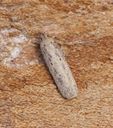
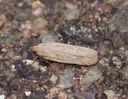
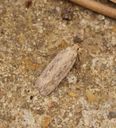
Pronunciation
How to pronounce Platyedra subcinerea: /plætɪˈɛdrə sʌbsɪˈnɪriə/
These audio files are automatically generated. While they are not always 100% accurate, they are a good starting point.
Identification
The combination of small size (14–21 mm wingspan), ash-grey coloration, and association with mallow plants (Malvaceae) and nettles distinguishes this from similar small gelechiids. Specific diagnostic features of genitalia or wing pattern are not documented in available sources.
Images
Appearance
Small with wingspan 14–21 mm. Overall coloration is subcinereous (ash-grey).
Habitat
Wet meadows, marshes, and gardens. The shows for anthropogenic .
Distribution
Native to most of Europe. Introduced and established in North America (recorded from New England and California) and New Zealand. GBIF records confirm presence in Belgium (Flemish and Walloon regions) and the Azores (Pico, Terceira).
Diet
Larvae feed on Parietaria officinalis (pellitory-of-the-wall), Urtica (nettles), Althaea officinalis (marsh-mallow), Lavatera thuringiaca (tree mallow), and Malva sylvestris (common mallow).
Host Associations
- Parietaria officinalis - larval food plantUrticaceae
- Urtica - larval food plantUrticaceae
- Althaea officinalis - larval food plantMalvaceae
- Lavatera thuringiaca - larval food plantMalvaceae
- Malva sylvestris - larval food plantMalvaceae
Human Relevance
The 'cotton stem ' suggests potential association with cotton (Gossypium), though this is not confirmed in available sources. The has been introduced to multiple continents, likely through human-mediated transport.
Similar Taxa
- Other Platyedra speciescongeneric may overlap in distribution and ; specific distinguishing features require detailed examination
- Other small Gelechiidaenumerous small, grey gelechiids occur in similar ; identification to level often requires genitalia dissection or molecular analysis
More Details
Nomenclatural history
Originally described as Recurvaria subcinerea by Haworth in 1828, later transferred to Platyedra.
iNaturalist observations
Over 1,500 observations documented on iNaturalist, indicating moderate observer familiarity with this .