
Antaeotricha fuscorectangulata
Duckworth, 1964
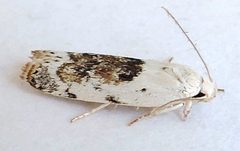
Antaeotricha fuscorectangulata is a small in the Depressariidae, described by W. Donald Duckworth in 1964. It is known from Arizona in North America. The is characterized by distinctive wing patterning that includes a rectangular dark area along the inner margin of the forewing.
Pronunciation
How to pronounce Antaeotricha fuscorectangulata: //ˌæn.tiː.oʊˈtɹaɪ.kə ˌfjuː.skoʊˌɹɛk.tæŋˈɡjuː.lɑː.tə//
These audio files are automatically generated. While they are not always 100% accurate, they are a good starting point.
Identification
Distinguished from similar Antaeotricha by the rectangular (not irregular or rounded) fuscous area on the inner margin of the forewing middle third. The combination of two fuscous costal spots with a row of black dots extending from the spot to the tornus is diagnostic. The two distinct fuscous dots on the wing (one basal, one ) further separate it from .
Images
Appearance
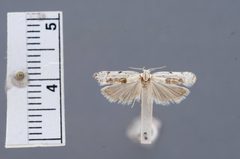
Wingspan 17–19 mm. Forewings white shaded with ochreous, with a rectangular fuscous area along the inner margin of the middle third. Two fuscous costal spots present: one near the middle and one at the fourth. From the apical spot, a row of black dots extends along the termen from apex to tornus. Apical fourth flecked with black scales. Two fuscous dots on the : one basal, one . Hindwings light fuscous with whitish costal margin.
Distribution
Known from Arizona, United States. North American distribution appears restricted to this region based on current records.
Similar Taxa
- Antaeotricha albulellaSimilar pale-winged appearance, but A. albulella has one or two black spots on forewings and lacks the rectangular fuscous area characteristic of A. fuscorectangulata
- Antaeotricha floridellaBoth have pale forewings, but A. floridella has immaculately white forewings without the fuscous patterning and black dots of A. fuscorectangulata