
Agonopterix clemensella
(Chambers, 1876)
Clemens' Agonopterix
Agonopterix clemensella is a small in the Depressariidae. It is distributed across eastern North America from Ontario south to Arkansas and east to the Atlantic states. The inhabits damp woods and meadows. Larvae are specialized feeders on plants in the family Apiaceae (Umbelliferae). overwinter, an unusual trait among moths of this group.
Pronunciation
How to pronounce Agonopterix clemensella: /ˌæɡənɒpˈtɛrɪks klɛmənˈsɛlə/
These audio files are automatically generated. While they are not always 100% accurate, they are a good starting point.
Identification
The can be distinguished from similar Agonopterix species by association with its known larval plants in the Apiaceae . Accurate identification to species level typically requires examination of genitalia or . The eastern North American distribution and association with damp woodland and meadow may help narrow possibilities among .
Images
Appearance
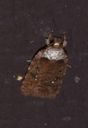
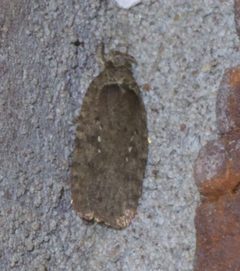
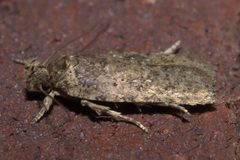
Small with wingspan approximately 19 mm. As with other Depressariidae, have relatively narrow, elongated forewings and broader hindwings. Specific coloration and pattern details are not well documented in available sources.
Habitat
Damp woods and meadows. The shows preference for mesic environments with adequate moisture to support its larval plants.
Distribution
Eastern North America. Recorded from: Arkansas, Illinois, Indiana, Kentucky, Maine, Michigan, Minnesota, Mississippi, Missouri, Ohio, Oklahoma, Ontario (Canada), Pennsylvania, Tennessee, Vermont, Virginia, West Virginia, and Wisconsin.
Seasonality
are present in multiple seasons; the overwinters as an adult, suggesting activity in both autumn and spring. Specific periods are not well documented.
Diet
Larvae feed on various Apiaceae (Umbelliferae) : Sanicula odorata, Osmorhiza longistylis, Zizia aptera, Pastinaca sativa, and Heracleum mantegazzianum. feeding habits are not documented.
Host Associations
- Sanicula odorata - larval
- Osmorhiza longistylis - larval
- Zizia aptera - larval
- Pastinaca sativa - larval
- Heracleum mantegazzianum - larval giant hogweed, an introduced
Life Cycle
Overwinters as an . Larval development occurs during the growing season on plants. details are not documented. The adult strategy is atypical for many and suggests a or partially bivoltine pattern with adults emerging in both late season and early spring.
Ecological Role
Larval herbivore on native and introduced Apiaceae . The use of Heracleum mantegazzianum (giant hogweed), a noxious plant in North America, suggests potential as a biocontrol agent, though this has not been formally evaluated.
Human Relevance
Potential interest for of giant hogweed (Heracleum mantegazzianum), a dangerous plant that causes severe photodermatitis. The has been observed feeding on this introduced , but deliberate management applications have not been reported.
Similar Taxa
- Other Agonopterix speciesMany share similar size, preferences, and general appearance. Accurate separation requires genitalia examination or plant association.
More Details
Nomenclature
Originally described as Gelechia clemensella by Chambers in 1876, later transferred to Agonopterix. The specific epithet honors someone with the surname Clemens, likely an entomological colleague of Chambers.
Conservation Status
Not formally assessed. Widespread distribution and use of both native and introduced plants suggest stable , though specific population trends are unknown.