
Givira
Walker, 1856
carpenter moths
Species Guides
13- Givira anna(Anna Carpenterworm Moth)
- Givira arbeloides(Arbela Carpenterworm Moth)
- Givira cleopatra
- Givira cornelia
- Givira ethela
- Givira francesca(Francesca Carpenterworm Moth)
- Givira lotta(Pine Carpenterworm Moth)
- Givira lucretia
- Givira marga
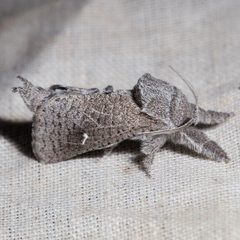
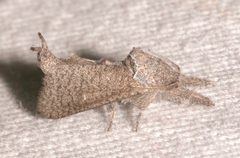
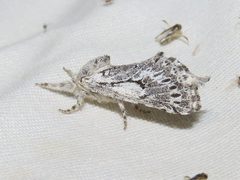
Givira is a of carpenter moths ( Cossidae, Hypoptinae) established by Walker in 1856. The genus contains approximately 70 described distributed across the Neotropics and southwestern North America. Several species are economically significant as wood-boring pests of cultivated plants, including Givira ethela, which damages grapevines in California. are typically with variable wing coloration ranging from dark brown to satiny white.
Pronunciation
How to pronounce Givira: /ɡiˈvi.ra/
These audio files are automatically generated. While they are not always 100% accurate, they are a good starting point.
Identification
-level diagnostic features include characteristics of the male genitalia and wing venation patterns typical of Hypoptinae. within Givira exhibit considerable variation in forewing coloration: most North American species are dark-colored or bear substantial dark smudges, while a minority (including Givira delindae) are predominantly white with reduced dark markings. Accurate species identification requires examination of genitalia and comparison with .
Images
Habitat
vary by . Givira ethela occurs in mature grapevine vineyards (>15-20 years old) in California's Central Valley. Givira delindae is associated with white gypsum dunes at White Sands National Monument, New Mexico. Other species occupy diverse Neotropical environments including forests and scrublands.
Distribution
Neotropical and southwestern Nearctic regions. Documented from North America (southwestern United States including California and New Mexico), Mexico, Central America, and South America (including Brazil, Chile, Argentina, Peru, and other countries). The shows highest diversity in South America.
Seasonality
Givira ethela: eclose late August-September; occurs July-August. Seasonality for other is poorly documented.
Diet
Larvae of Givira ethela feed on phloem and vascular tissues of grapevine trunks and cordons, creating galleries in the cambium layer. Diet of other Givira is largely undocumented.
Host Associations
- Vitis vinifera - primary of Givira ethela; mature grapevines in California vineyards
Life Cycle
Givira ethela: larvae are wood-borers in grapevine trunks and cordons; in summer (July-August); late August-September. Laboratory rearing at 26±2°C, 65±5% RH, 16:8 L:D produced adults from larvae and pupae collected mid-late summer. Full duration and number of per year are unknown.
Behavior
Larvae of Givira ethela create silk-lined feeding galleries under bark in the cambium layer. Signs of include protruding from trunks, , and silk at gallery entrances. Infestation patterns appear scattered rather than clustered within vineyards. Larval galleries facilitate mutualistic associations with the mealybug Planococcus ficus by providing protected access to vine sap.
Ecological Role
Some function as pests of cultivated plants. Givira ethela causes direct damage to grapevines through wood-boring; galleries may promote establishment of phytopathogens. The species serves as for the Digonogastra sp. (Hymenoptera: Braconidae). Larval galleries facilitate secondary pest mealybugs by providing shelter from natural enemies, environmental stress, and .
Human Relevance
Givira ethela is an emerging pest of California's billion-dollar grape industry, affecting table, raisin, and juice grape cultivars. levels vary from 0-37 larvae per vine. Management requires approaches including correct identification, monitoring, and establishment of . The has also been involved in conservation fundraising: Givira delindae was named through an eBay auction benefiting the Western National Parks Association.
Similar Taxa
- Other Hypoptinae generasimilar overall and wood-boring larval habits; distinguished by genitalia and wing venation characters
- Other Cossidaecarpenter members share wood-boring ; Givira distinguished by -level characters of Hypoptinae
More Details
Taxonomic history
The was established by Francis Walker in 1856. A comprehensive review of American was published in 2021, redescribing three species and describing Givira cinnamonea from Brazil. The Hypoptinae, to which Givira belongs, was established by Neumoegen & Dyar in 1894.
Conservation and fundraising
In 2017, the opportunity to name a new (Givira delindae) from White Sands National Monument was auctioned on eBay by the Western National Parks Association, raising funds for conservation. The winning bidder named the species after his mother, Delinda Mix.
Sources and further reading
- BugGuide
- Wikipedia
- GBIF taxonomy match
- iNaturalist taxon
- NCBI Taxonomy
- Catalogue of Life
- Highest bidder names a species after mother | Blog
- Review of Givira Walker, 1856 (Lepidoptera: Cossidae: Hypoptinae) with description of a new species
- Givira ethela (Neumoegen and Dyar, 1893) (Lepidoptera: Cossidae), A Previously Unidentified Pest on Vitis vinifera (L.)