
Givira arbeloides
(Dyar, 1899)
Arbela Carpenterworm Moth
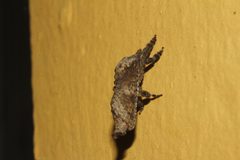
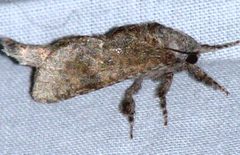
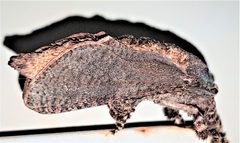
Givira arbeloides is a small carpenterworm moth in the Cossidae. It occurs in the south-central United States, with records from Arizona, Arkansas, Louisiana, Mississippi, and Texas. are active from spring through fall, with a wingspan of approximately 27 mm. The was originally described as Inguromorpha arbeloides by Dyar in 1899.
Pronunciation
How to pronounce Givira arbeloides: //ɡɪˈvaɪrə ˌɑːrbɪˈlɔɪdiːz//
These audio files are automatically generated. While they are not always 100% accurate, they are a good starting point.
Identification
Distinguished from other North American Givira by geographic distribution and, when specimens are available, by genitalic dissection. It is one of four substantially white or pale-colored in the in North America, lacking the dark forewing smudges common in . Similar pale species include Givira delindae, which is restricted to the White Sands gypsum dunes of New Mexico and has a distinctive satiny-white appearance.
Images
Habitat
Specific associations are not documented. Based on recorded localities, it occurs in diverse environments ranging from arid regions (Arizona, western Texas) to more humid areas (Louisiana, Mississippi, Arkansas).
Distribution
Recorded from the south-central United States: Arizona, Arkansas, Louisiana, Mississippi, and Texas. The appears to be absent from the Pacific coast, the Great Plains, and eastern North America.
Seasonality
have been recorded on wing from April to October, indicating a multi-month period spanning spring through fall.
Similar Taxa
- Givira delindaeAlso pale-colored and formerly confused with arbeloides; distinguished by satiny-white appearance, restriction to White Sands National Monument gypsum dunes, and subtle structural differences requiring dissection.
- Other Givira speciesMost North American are dark-colored or have substantial dark smudges on the forewings, unlike the relatively pale arbeloides.
More Details
Original description
First described as Inguromorpha arbeloides by Harrison G. Dyar in 1899, later transferred to Givira.