Sphinx perelegans
Edwards, 1874
elegant sphinx
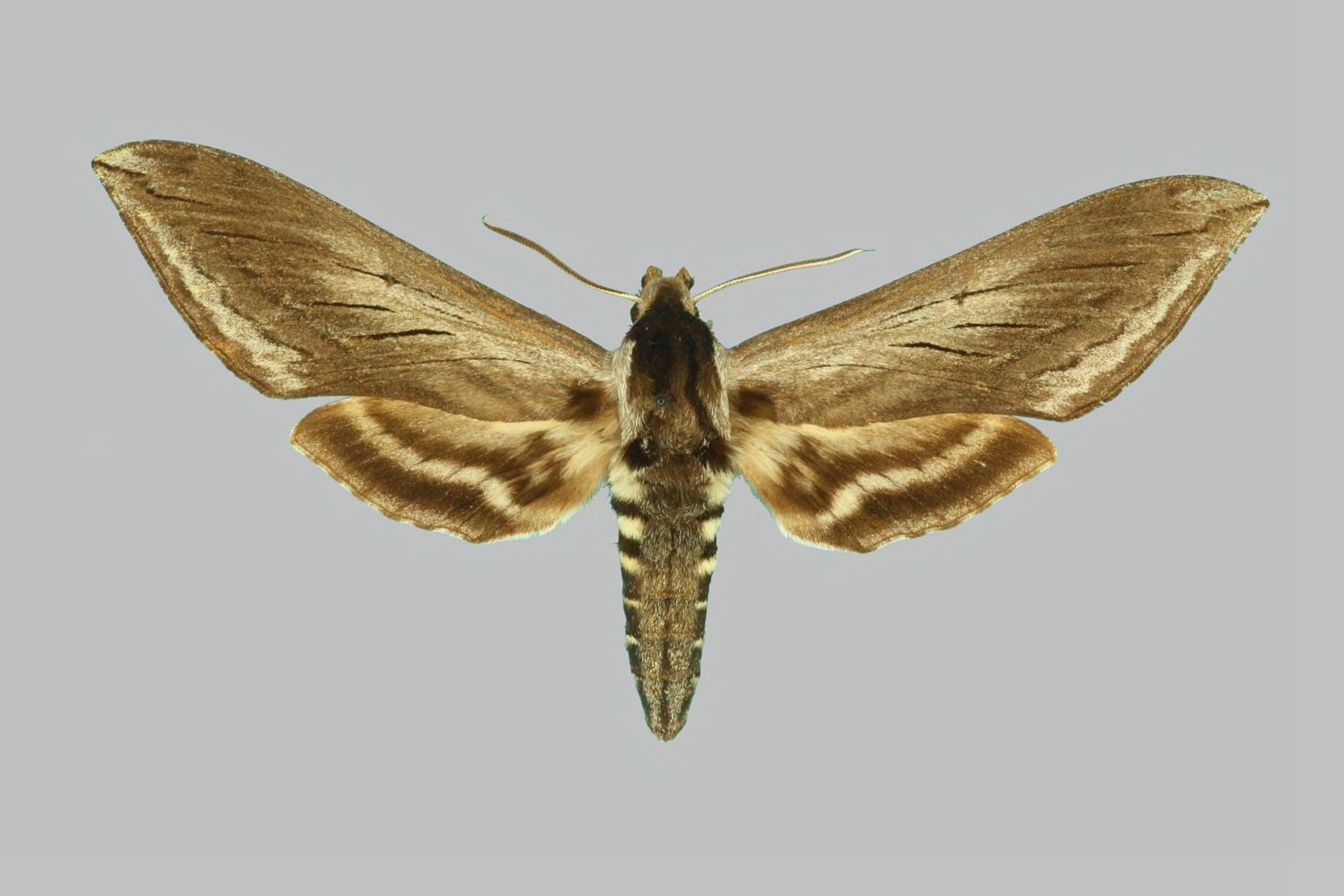
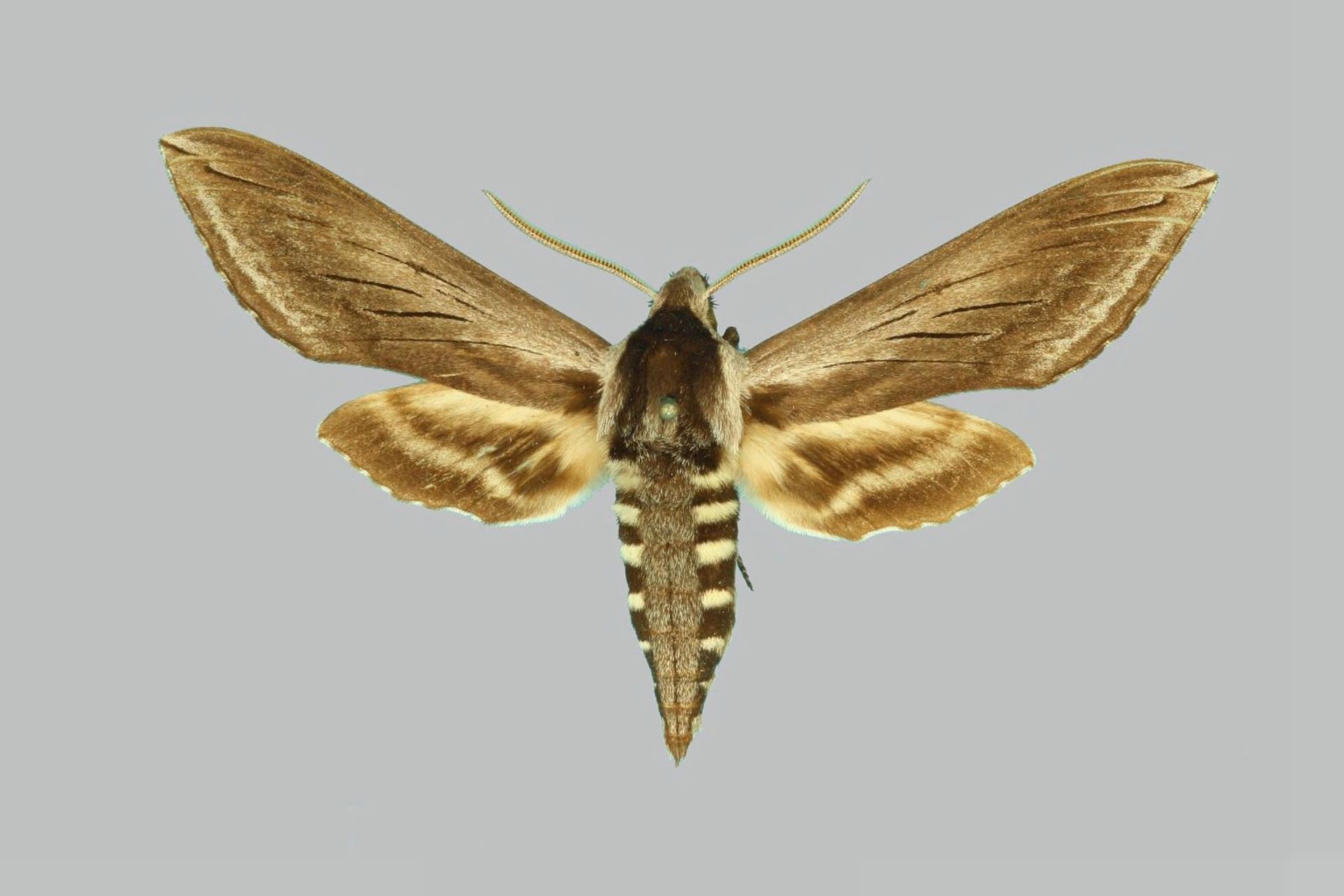
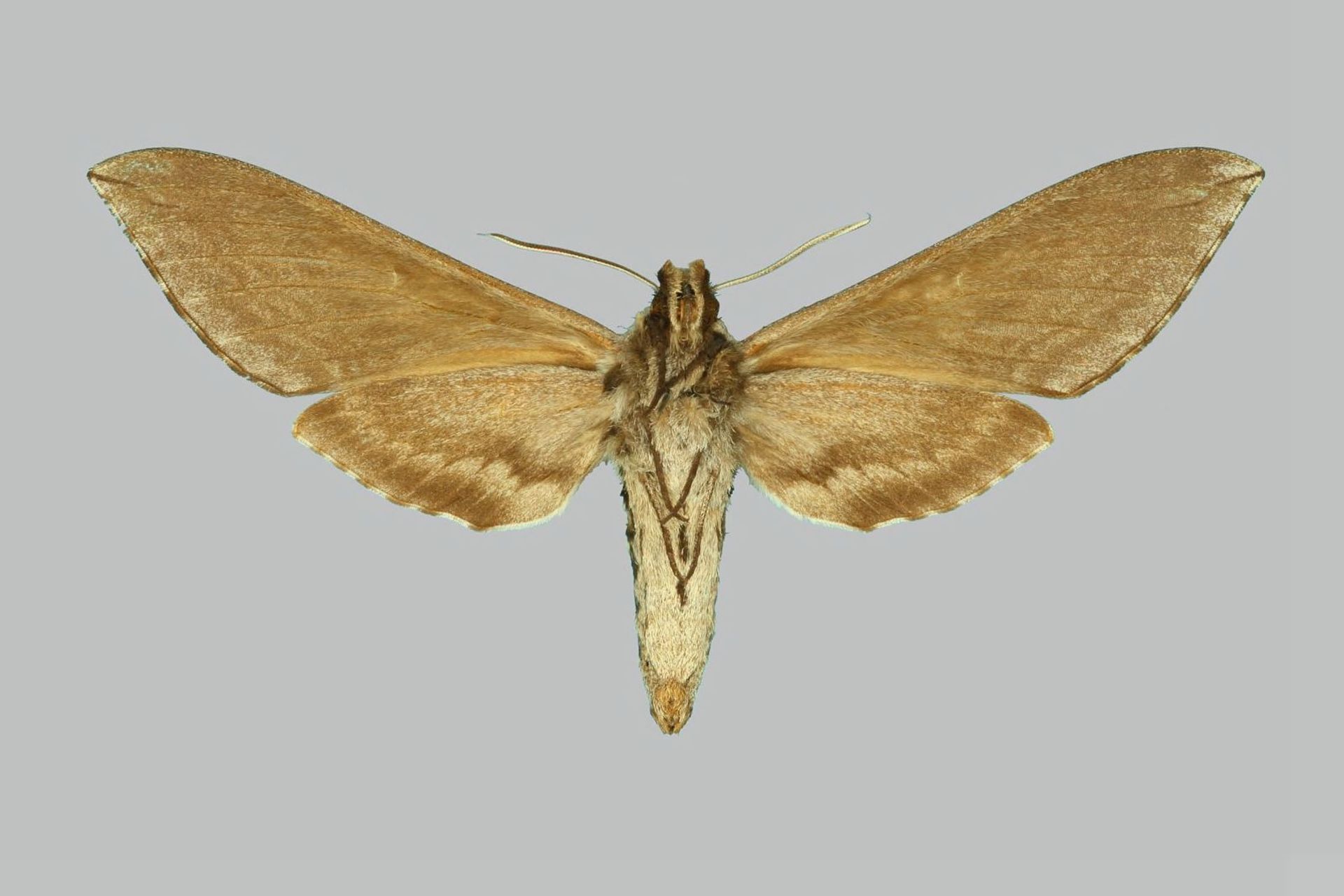
Sphinx perelegans, the elegant sphinx, is a large hawkmoth native to western North America. are active from April to September and are , attracted to light. The larvae feed on a variety of woody plants including Arctostaphylos, Prunus, and Symphoricarpos species.
Pronunciation
How to pronounce Sphinx perelegans: //ˈsfɪŋks ˌpɛrəˈlɛɡænz//
These audio files are automatically generated. While they are not always 100% accurate, they are a good starting point.
Identification
Distinguished from similar sphinx moths by forewing pattern: dark gray ground color with diffuse pale gray basal patch and longitudinal black lines. Hindwing pattern of gray to black with white bands also distinctive. Large size (9–11 cm wingspan) separates it from smaller hawkmoths. Differs from Smerinthus by lack of eyespots on hindwings. Separated from Hyles lineata by absence of prominent white lines on forewings.
Images
Habitat
West of the Cascades: low elevation brushland and oak woodland. At higher elevations of the Cascades and Siskiyou Mountains: mixed hardwood-conifer forests. Around Rocky Mountains and Blue Mountains: hardwood-conifer forests and juniper-hardwood woodlands at middle elevations.
Distribution
Western North America from British Columbia, Canada south to Baja California Sur, Mexico. In the United States: Arizona, California, Colorado, Idaho, Montana, New Mexico, Oregon, and Washington.
Seasonality
active April to September. period spans spring through late summer.
Diet
Larvae feed on Arctostaphylos , Prunus species, Symphoricarpos species, Arbutus menziesii, and Cercocarpus betuloides. sometimes feed on nectar of Oenothera and Rhododendron flowers.
Host Associations
- Arctostaphylos - larval
- Prunus - larval
- Symphoricarpos - larval
- Arbutus menziesii - larval
- Cercocarpus betuloides - larval
Life Cycle
laid singly or in groups of two to three on underside of plant leaves. Larvae feed and grow through several instars. When ready to pupate, larvae create sparsely silk-lined chamber in soil up to 10 cm deep. Overwinters as pupa. Multiple per year possible.
Behavior
. attracted to light. Larvae create underground chambers.
Ecological Role
Larval herbivore on woody shrubs and trees. potential when feeding on nectar.
Human Relevance
Occasionally reared in captivity. Not considered an agricultural pest. attracted to porch lights may be encountered by homeowners.
Similar Taxa
- Smerinthus ophthalmicaSimilar size and gray coloration, but S. ophthalmica has prominent eyespots on hindwings which S. perelegans lacks.
- Hyles lineataBoth large gray hawkmoths, but H. lineata has distinct white lines on forewings and more pointed wing shape; S. perelegans has diffuse pale patches and longitudinal black lines instead.
More Details
Captive Rearing
In captivity, larvae have been successfully reared on Gaultheria shallon, Arbutus unedo, and some Salix .
Sources and further reading
- BugGuide
- Wikipedia
- GBIF taxonomy match
- iNaturalist taxon
- NCBI Taxonomy
- Catalogue of Life
- The Hornworms Are Not Your Friends | Bug Squad
- Don't Miss Bohart Museum Open House on Nov. 2 | Bug Squad
- Bug Eric: White-lined Sphinx ("Hummingbird Moth")
- For Ash-Dependent Insects, Some Plants Make Good Alternatives—But Others Don't
- Bug Eric: Moth Week and "Mothapalooza"
- Bug Eric: National Moth Week Recap, 2015