
Neococytius cluentius
Cramer, 1775
Cluentius sphinx
Neococytius cluentius, commonly known as the Cluentius sphinx, is a large hawkmoth in the Sphingidae. It is the sole in its . The species has a broad distribution across the Neotropics, extending northward into the southern United States. are powerful fliers and are attracted to light.
Pronunciation
How to pronounce Neococytius cluentius: //niː.oʊ.kəˈsaɪ.ti.əs kluˈɛn.ʃəs//
These audio files are automatically generated. While they are not always 100% accurate, they are a good starting point.
Identification
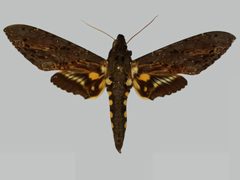
Distinguished from other large Neotropical sphingids by its narrow, elongate forewings and dark, relatively uniform coloration. The pale basal patch on the hindwing is a key field mark. Differs from Cocytius by forewing shape and pattern details. Most similar to Neococytius but is the only species in the ; previously classified within Cocytius.
Images
Appearance
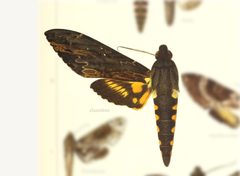
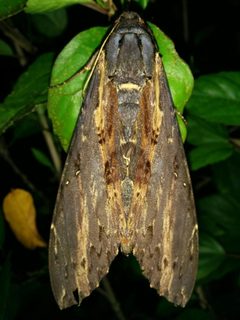
Large-bodied hawkmoth with narrow, elongated forewings and a streamlined . Forewings are dark brown with lighter brown or tan transverse bands and a distinct discal spot. Hindwings are dark with a pale basal patch. The tapers to a point. Wingspan approximately 90–120 mm.
Habitat
Tropical and subtropical lowland forests, forest edges, and riparian corridors. Also recorded in disturbed and urban areas with suitable larval plants. Occurs from sea level to moderate elevations in mountainous regions.
Distribution
Northern South America (widespread in Brazil, Colombia, Venezuela, Ecuador, Peru, Bolivia), Central America, Mexico, the Caribbean (rare on Cuba), and sporadically north to the southern United States (recorded from Mississippi, Michigan, Illinois).
Seasonality
have been recorded year-round in tropical portions of the range. In temperate North America, records are primarily from late spring through summer (May–August).
Host Associations
- Annona - LARVAL_HOSTAnnonaceae; primary
- Annona muricata - LARVAL_HOSTSoursop
- Annona squamosa - LARVAL_HOSTSugar apple
Life Cycle
Complete with four stages: , larva, pupa, . Larvae are large, horned caterpillars typical of Sphingidae, with a caudal horn. occurs in soil or leaf litter. Multiple per year in tropical regions; likely single or partial second generation in northern range.
Behavior
are strong, fast fliers active primarily at dusk and night. Attracted to artificial light sources. Adults have been observed hovering at flowers, suggesting nectar-feeding typical of the . Larvae are solitary feeders.
Ecological Role
may function as of night-blooming flowers. Larvae are herbivores that consume leaves of Annonaceae. Serves as prey for birds, bats, and other .
Human Relevance
Larvae are occasional pests of cultivated Annonaceae including soursop (Annona muricata) and sugar apple (Annona squamosa). are collected by enthusiasts and researchers. Records in the northern United States represent rare vagrant individuals of limited economic concern.
Similar Taxa
- Cocytius antaeusFormerly congeneric; Cocytius antaeus has broader, more triangular forewings and different pattern elements. N. cluentius has narrower forewings and was separated into its own based on morphological and presumably genetic differences.
- Cocytius duponchelOverlapping distribution; distinguished by forewing shape and pattern, with C. duponchel showing more contrasting light and dark markings.
More Details
Taxonomic History
Originally described as Sphinx cluentius by Cramer in 1775. Transferred to Cocytius, then recognized as distinct and placed in the Neococytius. Generic separation based on differences in wing venation, genitalia, and other morphological features.
North American Records
Records from the United States (Mississippi, Michigan, Illinois) represent rare northward or vagrant individuals, not established . These records are noteworthy given the primarily tropical distribution of the .