
Lintneria eremitus
Hübner, 1823
Hermit Sphinx
Lintneria eremitus, commonly known as the hermit sphinx, is a medium-sized hawkmoth native to temperate eastern North America. The has a single with active from late June through August. It is frequently found in gardens and suburban yards where both nectar sources and larval plants occur. Adults are , flying at dusk and visiting deep-throated flowers. The species is readily attracted to artificial light sources.
Pronunciation
How to pronounce Lintneria eremitus: /lɪntˈnɛriə ɛˈrɛmɪtəs/
These audio files are automatically generated. While they are not always 100% accurate, they are a good starting point.
Identification
Distinguished from the similar Canadian sphinx (Sphinx canadensis) by geographic separation—the two do not typically co-occur. Within its range, the hermit sphinx can be identified by its moderate size, single , and association with Lamiaceae plants. fly at dusk and are strongly attracted to light, that aid in detection and identification.
Images
Appearance
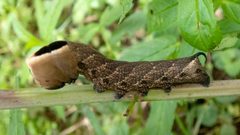
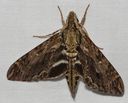
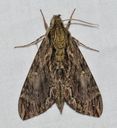
Medium-sized sphinx moth with wingspan of 65–75 mm. Forewings are narrow and elongated, typical of the . Coloration is generally muted and cryptic. Larvae exhibit variable coloration: green, black, or brown forms occur.
Habitat
Gardens, suburban yards, and other areas where nectar sources and larval plants are present. Distribution is tied to the availability of suitable Lamiaceae vegetation for larval development.
Distribution
Temperate eastern United States, extending north into southern Canada across the Great Plains. Present in Vermont and broadly distributed across North America.
Seasonality
One per year. on wing from late June to August.
Diet
nectar at deep-throated, light-colored flowers including Phlox and Asclepias species. Larvae feed on plants in the Lamiaceae, specifically Lycopus, Mentha, Monarda, and Salvia species.
Host Associations
- Lycopus - larval plantLamiaceae
- Mentha - larval plantLamiaceae
- Monarda - larval plantLamiaceae
- Salvia - larval plantLamiaceae
- Phlox - nectar sourceDeep-throated, light-colored flowers
- Asclepias - nectar sourceDeep-throated, light-colored flowers
Life Cycle
(one per year). Larval stage feeds on Lamiaceae plants. occurs in soil or leaf litter. emerge in late June and are active through August.
Behavior
fly at dusk ( activity). Strongly attracted to artificial light. Nectaring involves visiting deep-throated flowers.
Ecological Role
function as of deep-throated flowers. Larvae are herbivores specializing on Lamiaceae, potentially influencing plant composition in areas of high .
Human Relevance
Frequently encountered in suburban gardens and yards due to attraction to light and use of cultivated mints and salvias as plants. Not considered a significant agricultural pest.
Similar Taxa
- Sphinx canadensisCanadian sphinx; similar appearance but geographic ranges do not typically overlap, allowing separation by location