
Proserpinus gaurae
Smith, 1797
proud sphinx moth, Proud Sphinx
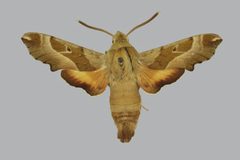
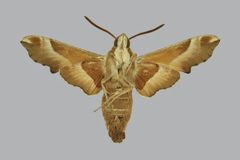
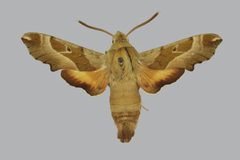
Proserpinus gaurae is a medium-sized sphinx moth with distinctive orange and chestnut coloration. are active primarily from April through August, with one or two per year. The is notable for having the longest labial palps of any Proserpinus species. Larvae feed on evening primrose relatives and pupate in shallow soil burrows to overwinter.
Pronunciation
How to pronounce Proserpinus gaurae: /proʊˈsɜrpɪnəs ˈɡaʊrei/
These audio files are automatically generated. While they are not always 100% accurate, they are a good starting point.
Identification
Distinguished from other Proserpinus by its exceptionally long, projecting labial palps. The combination of sinuate forewing outer margin, brownish orange abdominal underside, and absence of a black discal spot on the forewing underside separates it from . The reddish marginal band on the hindwing upperside and chestnut orange basal areas on both wing surfaces are additional diagnostic features.
Images
Habitat
Associated with open supporting larval plants in the evening primrose (Onagraceae). Specific habitat requirements for are poorly documented, but the likely occurs in prairies, meadows, and disturbed open areas where Oenothera, Gaura, and Epilobium grow.
Distribution
Eastern and south-central United States from Texas and Louisiana east to northern Florida, north to Alabama, Missouri, northern Georgia, and South Carolina. Potential range extension into northern Mexico, though this requires confirmation.
Seasonality
on wing from April to August. Probably one or two per year.
Diet
Larvae feed on of Oenothera, Gaura, and Epilobium (Onagraceae). feeding habits are not documented.
Host Associations
- Oenothera - larval foodplant
- Gaura - larval foodplant
- Epilobium - larval foodplant
Life Cycle
laid on plants. Larvae feed on Onagraceae , then full-grown larvae pupate and overwinter in shallow burrows. emerge the following spring or summer. Probably one or two annually.
Behavior
are . Specific , mating, or oviposition are not documented.
Ecological Role
Larval herbivore on evening primrose relatives. Pollination role of is unknown. Serves as prey for various .
Human Relevance
Occasionally reared by lepidopterists from field-collected larvae. No significant economic or agricultural impact documented.
Similar Taxa
- Proserpinus juanitaSimilar size and coloration, but P. gaurae has longer labial palps and lacks the black discal spot on the forewing underside present in P. juanita.
- Proserpinus terlooiiOverlapping range and general appearance; distinguished by wing pattern details and palp length.
More Details
Rarity
Based on iNaturalist observations (13 records as of source date), the appears to be encountered infrequently, though this may reflect undercollection or habits rather than true rarity.
Taxonomic history
Originally described as Sphinx gaurae by James Edward Smith in 1797, later transferred to Proserpinus.