
Proserpinus juanita
Strecker, 1877
Juanita sphinx
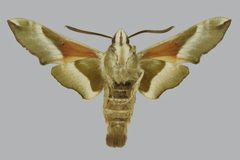
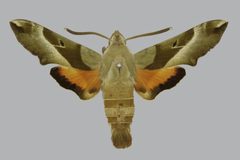
Proserpinus juanita, the Juanita sphinx, is a hawkmoth in the Sphingidae first described by Herman Strecker in 1877. It is a medium-sized with a wingspan of 45–64 mm, distributed across the Great Plains and southwestern United States. The is notable for its specialized larval diet on evening primroses and related plants in the family Onagraceae.
Pronunciation
How to pronounce Proserpinus juanita: /prɔˈsɛrpɪnəs hwɑːˈniːtə/
These audio files are automatically generated. While they are not always 100% accurate, they are a good starting point.
Identification
Distinguished from other Proserpinus by geographic distribution and association with Great Plains and southwestern . may be confused with other small to medium sphingid ; precise diagnostic features require examination of genitalia or detailed wing pattern analysis not available in cited sources.
Images
Appearance
Medium-sized hawkmoth with wingspan of 45–64 mm. Specific coloration and pattern details are not documented in available sources.
Habitat
Native prairie , grasslands, and open areas supporting plants in the Onagraceae. Associated with red clay/gypsum exposures on lower talus slopes in native prairie habitat in at least some parts of its range.
Distribution
North America: found from Montana and North Dakota south to Arizona, and east to Missouri and Texas. Canadian records from Alberta, Manitoba, and Saskatchewan.
Diet
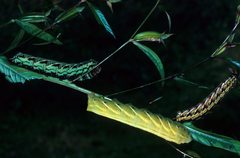
Larvae feed exclusively on Onagraceae , including Oenothera, Gaura, and Epilobium. feeding habits are not documented.
Host Associations
- Oenothera - larval evening primroses
- Gaura - larval
- Epilobium - larval willowherbs
Life Cycle
Complete with , larva, pupa, and stages. Specific developmental timing and stage are not documented.
Behavior
have been observed at blacklight sheets, indicating activity. Larvae have been successfully reared in captivity from field-collected specimens.
Ecological Role
Larval herbivore specializing on Onagraceae; likely serves as as . Specific ecological interactions are not documented.
Human Relevance
Of interest to lepidopterists and naturalists; occasionally reared from field-collected larvae by collectors. Not known as an agricultural pest.
Similar Taxa
- Proserpinus gauraeCongeneric with similar size and plant associations; distinguished by geographic range and subtle morphological differences
More Details
Taxonomic Note
Originally described as Pterogon juanita by Strecker in 1877; later transferred to Proserpinus. Some sources cite 1876 as the publication year, but 1877 is the accepted date.