
Eacles oslari
Rothschild, 1907
Oslar's eacles, Oslar's Imperial Moth
Eacles oslari is a large silk in the Saturniidae, native to the Sky Islands region of southeastern Arizona and adjacent northern Mexico. display variable wing coloration ranging from yellow to purple-brown. The was described by Walter Rothschild in 1907 and named after Ernest J. Oslar, the first entomology curator of the Colorado Museum of Natural History. Adults are active during the summer monsoon season and are known to be vulnerable to bat .
Pronunciation
How to pronounce Eacles oslari: /ˈiː.æ.kliːz ˈɒs.lə.riː/
These audio files are automatically generated. While they are not always 100% accurate, they are a good starting point.
Identification
Distinguished from the closely related imperial moth (Eacles imperialis) by geographic range—E. oslari is restricted to southeastern Arizona and northern Mexico, while E. imperialis occurs broadly across eastern North America. E. oslari fly later in the season (July–August) compared to most E. imperialis . Wing color variation in E. oslari overlaps with some E. imperialis forms, making geographic location the most reliable distinguishing character.
Images
Habitat
Montane and foothill in the Madrean Sky Islands, including oak woodlands and associated vegetation . Associated with canyons and mountain slopes in the Santa Rita, Patagonia, Atascosa, and Huachuca mountain ranges.
Distribution
United States: southern Arizona (Santa Rita Mountains, Patagonia Mountains, Atascosa Mountains, Huachuca Mountains). Mexico: Sonora, Sinaloa, and Chihuahua.
Seasonality
active from July to August, coinciding with the North American monsoon season in the southwestern United States.
Diet
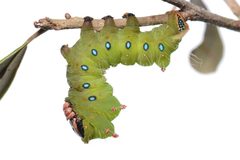
Larvae feed on leaves of Quercus oblongifolia (Mexican blue oak), Quercus emoryi (Emory oak), and Sapindus saponaria drummondii (western soapberry). do not feed.
Host Associations
- Quercus oblongifolia - larval food plantMexican blue oak
- Quercus emoryi - larval food plantEmory oak
- Sapindus saponaria drummondii - larval food plantwestern soapberry
Life Cycle
Complete with , larva, pupa, and stages. Specific details of egg laying, larval instars, site, and stage not documented in available sources.
Behavior
are and attracted to light. They have been observed flying actively at night. Vulnerable to by bats.
Ecological Role
Larvae function as herbivores on oak and soapberry foliage. serve as prey for bats and likely other . Specific roles in pollination or as food source for other not documented.
Human Relevance
Named in honor of Ernest J. Oslar, an early American entomologist who collected specimens for Rothschild. Of interest to lepidopterists and naturalists in the Sky Islands region. Not known to be of economic importance.
Similar Taxa
- Eacles imperialisClosely related congeneric with overlapping wing color variation; distinguished primarily by distribution (eastern North America vs. Arizona/northern Mexico) and
More Details
Etymology
The specific epithet honors Ernest J. Oslar (1861–1936), who served as the first entomology curator for the Colorado Museum of Natural History (now Denver Museum of Nature & Science). Rothschild employed Oslar to provide specimens from western North America, and named the in recognition of his contributions.
Conservation context
The occurs in the Madrean Sky Islands, a region of high biodiversity and that has experienced significant alteration. Climate change and altered fire regimes in these montane habitats may affect plant availability and persistence.