
Parancistrocerus fulvipes
(de Saussure, 1856)
potter wasp
Species Guides
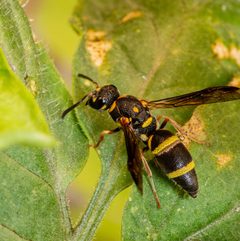
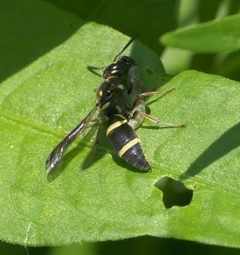
1Parancistrocerus fulvipes is a solitary mason wasp in the Vespidae, commonly known as the potter wasp. The is recognized for its flexible nesting , utilizing pre-existing cavities rather than constructing free-standing mud pots. It provisions nests with paralyzed caterpillars as food for its larvae. Two are recognized: P. f. fulvipes and P. f. rufovestis.
Pronunciation
How to pronounce Parancistrocerus fulvipes: /ˌpærænˌsɪstroʊˈsɪrəs ˈfʊlvaɪps/
These audio files are automatically generated. While they are not always 100% accurate, they are a good starting point.
Identification
Difficult to distinguish from Stenodynerus and other Parancistrocerus species based on live images alone; microscopic examination of specimens is typically required for reliable identification. The Parancistrocerus generally comprises small to medium-sized mason wasps with relatively slender bodies compared to other eumenines.
Images
Habitat
Distribution
Recorded from Hawaii and the continental United States. The P. f. rufovestis was described by Bohart in 1948.
Diet
are known to nectar at flowers. Larvae are provisioned with paralyzed caterpillars from the Tortricidae, Nolidae, Chloephorinae, Crambidae, and Gelechiidae.
Life Cycle
Females construct or occupy nest in pre-existing cavities, provision each cell with multiple paralyzed caterpillars, lay a single , and seal the cell. The larva consumes the stored caterpillars before pupating.
Behavior
Solitary nesting with flexible use of pre-existing cavities. Has been observed utilizing artificial blocks and nest boxes. Does not construct characteristic free-standing mud pots typical of some other "potter wasps."
Ecological Role
of caterpillars in several ; contributes to natural regulation of herbivorous lepidopteran . May serve as for parasitic including sapygids.
Human Relevance
Occasionally observed in artificial blocks and insect hotels. Not considered a pest; may provide incidental of caterpillar pests in gardens and agricultural settings. Capable of stinging but not aggressive toward humans.
Similar Taxa
- Stenodynerus speciesExtremely similar appearance; often impossible to distinguish from live images or even preserved specimens without detailed microscopic examination
- Other Parancistrocerus speciesCongeneric share general and require careful examination for separation
More Details
Subspecies
Two recognized: Parancistrocerus fulvipes fulvipes and Parancistrocerus fulvipes rufovestis Bohart, 1948
Nesting flexibility
Unlike some eumenine that construct free-standing mud nests, this primarily uses pre-existing cavities, demonstrating notable behavioral plasticity in nesting substrate use