
Cladius
Illiger, 1807
Species Guides
1- Cladius pectinicornis(bristly rose sawfly)
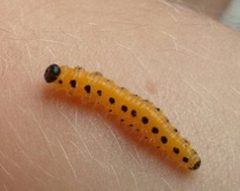
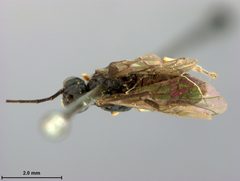
Cladius is a of in the Tenthredinidae, comprising approximately 17 described . These insects are known primarily as pests of rose plants, with larvae that feed on leaf tissue causing skeletonization and defoliation. The genus includes notable species such as the Bristly Rose Slug (Cladius difformis) and the Bristley Rose Sawfly (Cladius pectinicornis), both of which cause significant damage to cultivated roses in gardens and horticultural settings.
Pronunciation
How to pronounce Cladius: /ˈkleɪ.di.əs/
These audio files are automatically generated. While they are not always 100% accurate, they are a good starting point.
Identification
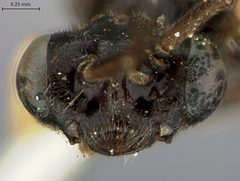
Distinguished from similar by larval characteristics: six or more pairs of without , and in some , presence of bristle-like setae on larvae. identified by pectinate in males and the saw-like ovipositor in females. Differentiated from caterpillars (Lepidoptera) by proleg number and absence of crochets. Cladius difformis specifically identified by bristly larval appearance; C. pectinicornis by male antennae structure.
Images
Habitat
Associated with cultivated and wild rose plants (Rosa spp.). Larvae feed on leaves, buds, and tender shoots. found on or near plants, often basking on leaves adjacent to rose bushes. Some also reported on raspberries and strawberries.
Distribution
Holarctic distribution. Native to northern Europe; introduced to North America where now established on both coasts. In North America, ranges from Nova Scotia to British Columbia, and through the northern third of the United States with extensions to coastal areas. Distribution records include Denmark, Norway, Sweden, and Vermont, USA.
Seasonality
active in spring when rose foliage emerges. Larval feeding occurs primarily May through June. Some produce two per year, with second generation larvae active later in summer. Overwinter as immatures in soil beneath plants.
Diet
Larvae are herbivorous, feeding on rose leaves, causing skeletonization (removal of soft tissue between leaf ) and marginal defoliation. Some also feed on raspberry and strawberry plants. do not feed; their mouthparts are not adapted for feeding.
Host Associations
- Rosa - primary Main plant for larval feeding; causes skeletonization and defoliation
- Rubus - secondary Some reported to feed on raspberry and strawberry plants
Life Cycle
Holometabolous development. emerge in spring, mate, and females use saw-like ovipositor to cut pockets in leaf midribs where are deposited. Larvae hatch and proceed through five instars, feeding on leaves. Final instar larvae pupate in papery cocoons, either in bored twigs or in soil. Some have one per year; others have two generations. Overwinter as stages in soil.
Behavior
Larvae exhibit cryptic : when not feeding, they curl on undersides of leaves or on buds, blending with plant tissue. Larval feeding increases in intensity with each . bask in sunlight on leaves. Females display precise oviposition behavior, cutting into leaf with ovipositor to create pockets.
Ecological Role
Herbivore and plant pest in rose . Larvae serve as prey for ground beetles and lightning (firefly) larvae. Contributes to nutrient cycling through leaf damage and subsequent plant tissue decomposition. may serve as minor though they do not feed.
Human Relevance
Significant pest of cultivated roses in gardens and horticultural settings. Damage includes skeletonized leaves that turn brown and crinkled, reducing aesthetic value and plant vigor. Control methods include hand-picking larvae, strong water sprays to dislodge larvae, and application of OMRI-listed such as insecticidal soap and spinosad. Bt (Bacillus thuringiensis) is not effective against larvae. Some introduced to North America and considered in horticultural contexts.
Similar Taxa
- Endelomyia aethiopsAlso a roseslug sawfly causing similar skeletonization damage; distinguished by larval and characteristics
- Allantus cinctusCurled rose sawfly with similar association; distinguished by larval curling and different
- Lepidoptera larvaeCaterpillars resemble Cladius larvae but have five or fewer pairs of with , versus six or more prolegs without crochets in
More Details
Taxonomic Note
Cladius difformis has been synonymized with Cladius pectinicornis by some authorities, but North American expert David R. Smith asserts they are distinct . C. difformis is considered introduced to North America from northern Europe.
Control Considerations
When using , precautions must be taken to safeguard bees and other that may visit rose flowers. Strong directed streams of water are an effective non-chemical method for dislodging larvae.
Sources and further reading
- BugGuide
- Wikipedia
- GBIF taxonomy match
- iNaturalist taxon
- NCBI Taxonomy
- Catalogue of Life
- Bug Eric: Wasp Wednesday: Bristly Rose Slug
- Bug Eric: Fall (Bug) Colors
- Archive — Bug of the Week
- Rosie defoliators: Roseslug sawfly, Endelomyia aethiops, Curled rose sawfly, Allantus cinctus, and Bristley rose sawfly, Cladius pectinicornis — Bug of the Week
- Rosie defoliators - Roseslug sawfly, Endelomyia aethiops, Curled rose sawfly, Allantus cinctus, and Cladius pectinicornis — Bug of the Week