
Phymatocerini
Genus Guides
7Phymatocerini is a small tribe of within the Tenthredinidae, comprising approximately 7 and 11 described . Members of this tribe are part of the suborder , characterized by a broad connection between the and rather than the constricted waist seen in most other Hymenoptera. The tribe is taxonomically compact and represents a distinct lineage within the common sawflies.
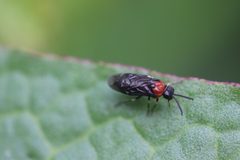
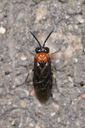

Pronunciation
How to pronounce Phymatocerini: /ˌfaɪmətəˈsɛrɪnaɪ/
These audio files are automatically generated. While they are not always 100% accurate, they are a good starting point.
Identification
Phymatocerini can be distinguished from other Tenthredinidae tribes by genitalic and wing venation patterns, though specific diagnostic features require detailed examination. The tribe lacks the constricted petiole ( waist) characteristic of , instead showing the broad - junction typical of . Species-level identification generally requires examination of male genitalia and structure.
Images
Habitat
within Phymatocerini have been recorded in temperate forest and woodland , often associated with specific plants. The tribe shows a preference for mesic environments where their larval host plants occur.
Distribution
The tribe has a primarily Holarctic distribution, with records from Europe, Asia, and North America. Specific range boundaries vary by and .
Seasonality
activity occurs during the spring and summer months in temperate regions, with peak typically synchronized with plant . Larval stages are present during the growing season.
Diet
Larvae feed on vascular plants; specific associations vary by . Some have been recorded feeding on ferns and related plants.
Host Associations
- ferns - larval food plantsome
- vascular plants - larval food plantgeneral association
Life Cycle
Development includes , larval, prepupal, pupal, and stages. Larvae are free-living and feed externally on plant foliage. occurs in soil or concealed locations. The is typically , with one per year.
Behavior
are and have been observed visiting flowers for nectar. Larvae are solitary feeders on plant foliage.
Ecological Role
As primary consumers, larvae contribute to nutrient cycling and energy flow in forest and woodland . flower visitation may contribute to pollination, though this has not been quantified.
Human Relevance
No significant economic importance has been documented. Larval feeding damage to ornamental or crop plants appears minimal.
Similar Taxa
- other Tenthredinidae tribesPhymatocerini is distinguished by genitalic and wing venation characteristics; other tribes may share general but differ in detailed anatomical features
More Details
Taxonomic status
The tribe Phymatocerini was established based on morphological studies of genitalic structures and represents a well-supported clade within Tenthredinidae. The small number of described (11) relative to (7) suggests many species remain undescribed or the genera are morphologically distinct but species-poor.
Research needs
The and associations of most Phymatocerini are poorly documented. studies and molecular phylogenetic work would improve understanding of this tribe.