
Monophadnus
Hartig, 1837
Species Guides
2- Monophadnus aequalis
- Monophadnus pallescens(Pallid Buttercup Sawfly)
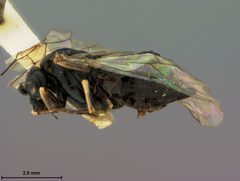
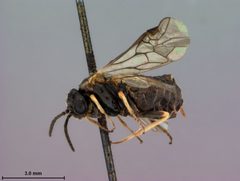
Monophadnus is a of in the Tenthredinidae. in this genus are specialized herbivores of Ranunculaceae plants, particularly Helleborus species. Larvae sequester plant secondary metabolites—including furostanol saponins and, in some species, phytoecdysteroids—into their haemolymph for chemical defense against . This represents a documented case of bioaccumulation, with concentrations in larval haemolymph reaching levels thousands of times higher than in host plant tissues.
Pronunciation
How to pronounce Monophadnus: //ˌmɒnəˈfædnəs//
These audio files are automatically generated. While they are not always 100% accurate, they are a good starting point.
Images
Habitat
Associated with Helleborus plants in the Ranunculaceae; larvae feed on leaf undersides of their host plants.
Distribution
Recorded from Denmark, Norway, and Sweden (GBIF).
Diet
Specialized on Ranunculaceae plants; larvae of different feed specifically on Helleborus foetidus or Helleborus viridis. Compound 1, a furostanol saponin, serves as the primary non-nutritional phagostimulant for larvae feeding on H. foetidus; β-sitosterol acts as a nutritional phagostimulant for larvae feeding on H. viridis.
Host Associations
- Helleborus foetidus - plantFed upon by one Monophadnus (species A); contains furostanol saponins but lacks
- Helleborus viridis - plantFed upon by another Monophadnus (species B); contains 20-hydroxyecdysone and polypodine B
- Ranunculaceae - plant All Monophadnus are specialized on plants in this
Life Cycle
Larval stage feeds on plant leaves. Larvae employ 'easy bleeding' defense, exuding haemolymph droplets upon attack. Survival rates drop from 89% after a first simulated attack to 23% after a second consecutive attack, indicating limited capacity to replenish defensive compounds rapidly.
Behavior
Easy bleeding defense—exuding haemolymph droplets containing sequestered plant compounds when bitten by . Larvae sequester furostanol saponins (compound 1) into haemolymph; some additionally sequester phytoecdysteroids as glycosides. glycoside levels are maintained at approximately 175 mM effective deterrent concentration for 1–2 days after simulated attack, declining to approximately 75 mM by day 3.
Ecological Role
Herbivore; chemical defense against via sequestered plant compounds. The sequestered -containing haemolymph has been shown to deter predators (Myrmica rubra) at concentrations of 0.8 mg/mL.
More Details
Chemical sequestration and bioaccumulation
Larvae feeding on H. viridis sequester phytoecdysteroids (20-hydroxyecdysone and polypodine B) as glycosides into haemolymph at concentrations of 2.5–6.8 µmol/g fresh weight, representing bioaccumulation levels approximately 10,000 times higher than in plant leaves. Larvae cannot synthesize endogenously; is facultative and host-plant dependent. This is the first documented case of phytoecdysteroid sequestration in Monophadnus.
Combined chemical defense
Furostanol saponins and act together as repellents against . Compound 1 possesses both defensive and phagostimulant activities, demonstrating dual functionality of sequestered compounds.