
Phymatocera
Dahlbom, 1835
Species Guides
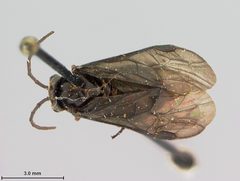
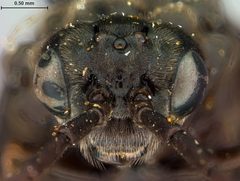
1Phymatocera is a of in the Tenthredinidae, established by Dahlbom in 1835. The genus comprises distributed across East Asia and northern Europe, with taxonomic revisions recognizing two primary species groups based on morphological characters. Japanese fauna includes five species divided into the P. aterrima group and P. fumipennis group, with several new combinations and synonymizations proposed in recent taxonomic work.

Pronunciation
How to pronounce Phymatocera: //ˌfaɪməˈtoʊsərə//
These audio files are automatically generated. While they are not always 100% accurate, they are a good starting point.
Identification
Generic characters of Phymatocera include features distinguishing it from related such as Rhadinoceraea and Neotomostethus; specific diagnostic traits require examination of morphological details detailed in taxonomic revisions. The genus is divided into two groups: the P. aterrima group and the P. fumipennis group, based on shared morphological characteristics among constituent species.
Images
Distribution
Recorded from Japan (Hokkaido, Honshu, Shikoku, Kyushu, Shikotan Island, Rishiri Island, Tsushima Island), China (Henan), Korea, Russia (Sakhalin, Kamchatka), Denmark, Norway, and Sweden.
Similar Taxa
- RhadinoceraeaFormerly confused with Phymatocera; Japanese R. fuscata transferred to Phymatocera as P. fuscata, and excluded from Japanese fauna based on this reassignment.
- NeotomostethusN. peregrinator transferred to Phymatocera as P. peregrinator, with P. hokkaidonis synonymized under this combination; generic boundaries clarified through taxonomic revision.
More Details
Taxonomic History
The has undergone significant taxonomic revision, with transferred from Rhadinoceraea and Neotomostethus. Two Chinese species (P. foveata, P. sinica) were transferred to Rhadinoceraea as new combinations, while Japanese species were consolidated within Phymatocera.
Species Groups
Japanese are organized into two groups: P. aterrima group (P. membra, P. nipponica, P. satoi) and P. fumipennis group (P. fuscata, P. peregrinator). This grouping reflects morphological affinities among species.