
Ammophila azteca
Cameron, 1888
Aztec Thread-waisted Wasp
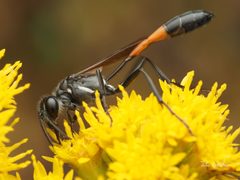
Ammophila azteca is a thread-waisted wasp in the Sphecidae, native to Canada, Mexico, and the continental United States. It ranges from near sea level to over 6,000 feet in elevation. The exhibits distinctive nesting involving pebble-mediated burrow closures and of caterpillar prey for its larvae.
Pronunciation
How to pronounce Ammophila azteca: //ˌæ.moʊˈfiː.lə æzˈteɪ.kə//
These audio files are automatically generated. While they are not always 100% accurate, they are a good starting point.
Identification
Distinguished from by geographic range and nesting ; definitive morphological diagnostic features not documented in available sources. Two recognized : A. a. azteca (Cameron, 1888) and A. a. clemente (Menke, 1967).
Images
Habitat
Nests in moderately firm soil. Occurs across varied elevations from coastal areas to montane regions above 6,000 feet.
Distribution
Native to Canada, Mexico, and the continental United States.
Diet
feed on nectar. Larvae are provisioned with paralyzed caterpillar larvae (Lepidoptera).
Life Cycle
hatches after approximately two days. Larva feeds for five days before maturing into a cocoon. Female provides parental care throughout development.
Behavior
Females excavate burrows in soil and provision them with paralyzed caterpillars. Multiple nests may be initiated concurrently with concurrent hunting for larvae. Nests are closed using a distinctive pebble-mediated technique: an initial hard closure involves placing a pebble at the entrance followed by scraping sand over it; a temporary closure for active provisioning places a pebble deeper in the tunnel with soil packed above using the ; final closure resembles temporary closures but with pebble placed further down and more extensive soil packing. When returning prey to the nest, flies approximately one meter above ground.
Ecological Role
of caterpillars; contributes to lepidopteran . Nesting activities may influence soil structure.
Similar Taxa
- Ammophila abertiSimilar nesting with pebble-mediated closures and concurrent nest initiation, but A. aberti ranges through western North America and exhibits prey-stealing behavior not documented for A. azteca.
- Ammophila pictipennisShares -level traits of pebble tool use in nest closure, but distinguished by orange wings, red abdominal coloration, and eastern North American distribution.
- Ammophila proceraLargest eastern Ammophila with distinctive silver thoracic stripes; exhibits similar caterpillar provisioning and pebble-mediated nest closure .
More Details
Subspecies
Two recognized: Ammophila azteca azteca Cameron, 1888 and Ammophila azteca clemente Menke, 1967.
Nesting Substrate
Unlike some that prefer sand, A. azteca specifically digs in moderately firm soil.
Sources and further reading
- BugGuide
- Wikipedia
- GBIF taxonomy match
- iNaturalist taxon
- NCBI Taxonomy
- Catalogue of Life
- 'When I Grow Up, I Want to Be an Entomologist' | Bug Squad
- Bug Eric: Wasp Wednesday: Ammophila procera
- Bug Eric: Ammophila in Action
- Bug Eric: Wasp Wednesday: Ammophila pictipennis
- Bug Eric: Wasp Wednesday: Ammophila aberti
- Accidental tree wound reveals novel symbiotic behavior