
Ephuta spinifera
Ephuta spinifera is a of velvet ant ( Mutillidae), a group of solitary known for their dense, velvety and aposematic coloration. Like other mutillids, females are wingless and often mistaken for ants, while males are winged. The Ephuta is part of the diverse North American velvet ant fauna, though specific biological details for E. spinifera remain poorly documented in published literature.
Pronunciation
How to pronounce Ephuta spinifera: /ɛfˈhuːtə spɪˈnɪfərə/
These audio files are automatically generated. While they are not always 100% accurate, they are a good starting point.
Identification
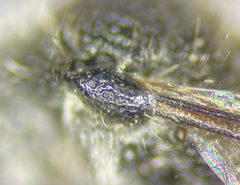
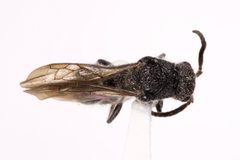
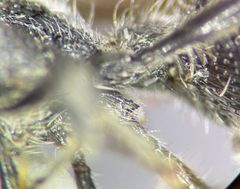
Ephuta spinifera can be distinguished from other mutillid by features typical of Ephuta, including body proportions and patterns. However, -level identification within Ephuta requires examination of microscopic characters such as antennal segmentation, mandibular structure, and genitalia. The specific epithet "spinifera" suggests presence of spines or spinose structures, though the exact location and nature of these spines (whether on the mesosoma, metasoma, or legs) would require direct specimen examination. Females lack wings and have a compact, -like body form with dense setae; males possess wings and more elongate bodies.
Images
Distribution
Observations of Ephuta spinifera have been recorded in North America, though specific locality data is limited based on available sources. The Ephuta occurs across much of the United States, with typically associated with various terrestrial including sandy soils and open woodlands.
Behavior
As with other velvet ants, females are solitary and ground-dwelling, actively searching for nests. Males are typically observed flying in search of mates. Both sexes are capable of delivering a painful sting, a defensive common in the .
Ecological Role
Ephuta spinifera likely functions as a or of other insects, as is characteristic of the Mutillidae. Velvet ants typically attack the stages of ground-nesting bees, , and occasionally beetles or , though specific records for this are not documented.
Human Relevance
Velvet ants including Ephuta are occasionally encountered by humans due to their ground-dwelling habits and conspicuous appearance. The sting is considered medically significant in terms of pain severity, though not typically dangerous except to individuals with allergies. No specific economic importance is documented for E. spinifera.
Similar Taxa
- Dasymutilla spp.Larger, more brightly colored velvet ants with different antennal club structure and more extensive geographic overlap; females often have more contrasting aposematic patterns
- Pseudomethoca spp.Similar-sized velvet ants with which Ephuta may co-occur; distinguished by antennal structure and male genitalia
- Timulla spp.Another of North American velvet ants with wingless females; Timulla often have distinctive color patterns and differ in antennal segmentation
More Details
Taxonomic Uncertainty
The -level of Ephuta is complex and has undergone revision. Some sources suggest that Ephuta may be or require further systematic study. The specific epithet "spinifera" implies diagnostic spination, but without access to the original description, the precise nature of this character remains unclear.
Observation Rarity
With only 2 observations recorded in iNaturalist as of the source date, E. spinifera appears to be rarely encountered or underreported. This may reflect genuine rarity, cryptic habits of females, or difficulty in field identification to level.