
Pseudomethoca
Ashmead, 1896
Species Guides
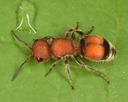
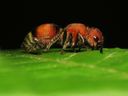
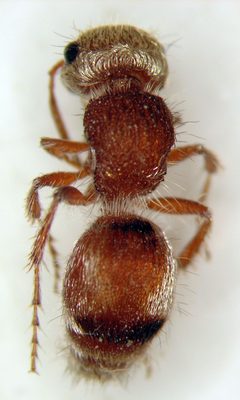
24Pseudomethoca is a of velvet ants ( Mutillidae) comprising at least 20 described . These solitary are known from the Neotropical region, Central America, and North America. Some species have been documented as of halictine bees, with field observations in southern Brazil recording attempts at in nests of Dialictus seabrai. The genus has been subject to recent taxonomic revision, including the transfer of species from Mutilla and the first description of males for some species through laboratory mating trials.
Pronunciation
How to pronounce Pseudomethoca: //ˌsjuːdoʊməˈθoʊkə//
These audio files are automatically generated. While they are not always 100% accurate, they are a good starting point.
Images
Habitat
Montane Atlantic forest in southern Brazil has been documented as for some . Additional habitat information is not well established across the .
Distribution
Neotropical region; Central America; North America (including Vermont, USA). Specific distribution varies by .
Host Associations
- Dialictus seabrai (Halictidae) - potential attempts observed in nests; described as 'potential record' in literature
Life Cycle
Sexes are separate (males winged, females wingless). Sex association in at least one (P. pumila) confirmed through laboratory mating trials.
Behavior
Females have been observed zigzagging urgently on dry sand deposits. Attempts at in nests have been documented in the field. Males and females have been successfully mated in laboratory conditions to confirm identity.
Ecological Role
of halictine bees; specific role not fully characterized across .
Similar Taxa
- DasymutillaBoth are of velvet ants (Mutillidae) with similar overall ; Dasymutilla quadriguttata has been suggested as an alternative model for mimicry by Enoclerus ichneumoneus where Pseudomethoca simillima was also considered
- Enoclerus ichneumoneus (Cleridae)This checkered beetle has been suggested to mimic Pseudomethoca simillima in appearance; however, the frequency of encounter and size differences complicate this interpretation
More Details
Taxonomic history
have been transferred from Mutilla to Pseudomethoca, including M. pumila and M. pergrata. Lectotype designated for M. pumila.
Research challenges
Females are reportedly highly uncooperative subjects for photography due to constant movement.
Sources and further reading
- BugGuide
- Wikipedia
- GBIF taxonomy match
- iNaturalist taxon
- NCBI Taxonomy
- Cleridae | Beetles In The Bush | Page 2
- New species and new distribution records for Pseudomethoca Ashmead (Hymenoptera: Mutillidae) from Central America
- New combinations, sex association, behavioural notes and potential host record for two Neotropical species of Pseudomethoca Ashmead, 1896 (Hymenoptera: Mutillidae)