
Phytodietus
Gravenhorst, 1829
Species Guides
3Phytodietus is a -rich of ichneumonid wasps in the Tryphoninae, distributed across all zoogeographical regions. Members are koinobiont ectoparasitoids of semi-concealed Lepidoptera larvae, with documented associations primarily to Tortricidae and Pyralidae. The genus was recently recorded from Thailand for the first time, expanding Oriental region documentation. Several species have been investigated for of agricultural pests.
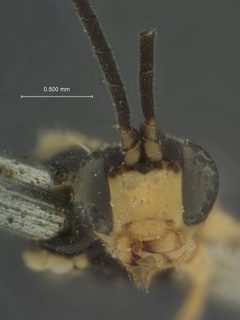
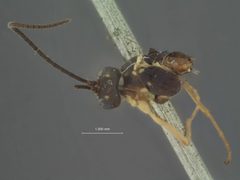
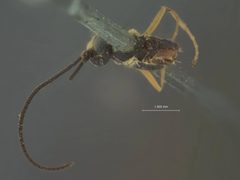
Pronunciation
How to pronounce Phytodietus: /faɪtəˈdaɪətəs/
These audio files are automatically generated. While they are not always 100% accurate, they are a good starting point.
Images
Habitat
Forest including mixed deciduous forest, moist evergreen montane forest, hill evergreen forest, and pine forest; recorded at elevations 455–2286 m in Thailand. Agricultural systems including sugar-beet fields in the Great Plains region of North America.
Distribution
across all zoogeographical regions. Confirmed records include: Thailand (new record), China, India, Japan, Myanmar, Russia, Taiwan, Philippines, Sri Lanka, Indonesia, North America, Denmark, Norway, Sweden.
Seasonality
Multivoltine with extended activity periods: P. longicauda recorded May–December; P. pitambari April–August; P. spinipes January–June and October. P. vulgaris produces multiple annually with facultative regulated by .
Diet
do not feed; larvae are obligate feeding on Lepidoptera larvae.
Host Associations
- Argyrotaenia citrana - Tortricidae; primary of P. vulgaris
- Homona coffearia - Tortricidae; tea Tortrix, of P. spinipes in Sri Lanka, Taiwan, India
- Homona sp. - Tortricidae; of P. spinipes in Java
- Loxostege sticticalis - Pyraustidae; sugar-beet pest, of P. pulcherrimus
- Loxostege frustalis - potential Pyraustidae; investigated as target for introduction, not confirmed natural
Life Cycle
to development takes 24–31 days in P. vulgaris. Mature larval stage serves as the stage; diapause is facultative and regulated by . Multiple per year. Adult lifespan approximately 10 days. Sex ratio 1:1.
Behavior
Females exhibit -seeking including antennal drumming on leaf surfaces to locate concealed host larvae. have limited capability. Koinobiont ectoparasitoid lifestyle: larvae feed externally on hosts that continue developing for a period.
Ecological Role
agent of tortricid and pyralid pests, particularly in agricultural systems. Documented role in suppression of tea Tortrix (Homona coffearia) and sugar-beet pest Loxostege sticticalis.
Human Relevance
Investigated and utilized as agent for agricultural pest management. P. pulcherrimus studied in 1941 for potential introduction to South Africa to control Loxostege frustalis damaging Karroo bush, important sheep-fodder. P. spinipes contributes to control of tea Tortrix, a significant tea pest.
Sources and further reading
- BugGuide
- GBIF taxonomy match
- iNaturalist taxon
- NCBI Taxonomy
- Catalogue of Life
- First report of the genus Phytodietus Gravenhorst, 1829 (Hymenoptera: Ichneumonidae: Tryphoninae) from Thailand
- Diapause and Life History Attributes of Phytodietus vulgaris (Hymenoptera: Ichneumonidae), a Parasitoid of Argyrotaenia citrana (Lepidoptera: Tortricidae)
- The biology of Phytodietus pulcherrimus (Cress.) (Ichneumonidae, Tryphoninae) parasitic of Loxostege sticticalis L. in North America