
Pimpla aquilonia
Cresson, 1870
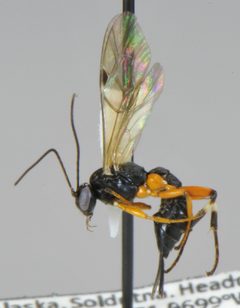
Pimpla aquilonia is a of ichneumon in the Ichneumonidae. It is a wasp that targets caterpillars, including several agricultural and forestry pests. The species has been recorded in western North America, with distribution records from multiple Canadian provinces including Alberta and British Columbia.
Pronunciation
How to pronounce Pimpla aquilonia: //ˈpɪm.plə ˌæk.wɪˈloʊ.ni.ə//
These audio files are automatically generated. While they are not always 100% accurate, they are a good starting point.
Images
Distribution
Western North America. Distribution records include: Bilby, Alberta; Calgary, Alberta; Cooking Lake, Alberta; Edmonton, Alberta; and George Lake, Alberta, Canada.
Diet
Larval of caterpillars. include tent caterpillars (Malacosoma spp.), buck moths (Hemileuca sp.), Virginia Tiger Moth (Diacrisia virginica), Douglas Fir Tussock Moth (Orgyia pseudotsugata), Western Tussock Moth (Orgyia vetusta), Codling Moth (Cydia pomonella), Genista Broom Moth (Uresiphita reversalis), Gooseberry Fruitworm (Zophodia convolutella), Barberry Geometer (Coryphista meadii), Oak Looper (Lambdina punctata), and geometer moths Eucaterva variaria and Prochoerodes forficaria.
Host Associations
- Malacosoma spp. - tent caterpillars
- Hemileuca sp. - buck moths
- Diacrisia virginica - Virginia Tiger Moth
- Orgyia pseudotsugata - Douglas Fir Tussock Moth
- Orgyia vetusta - Western Tussock Moth
- Cydia pomonella - Codling Moth
- Uresiphita reversalis - Genista Broom Moth
- Zophodia convolutella - Gooseberry Fruitworm
- Coryphista meadii - Barberry Geometer
- Lambdina punctata - Oak Looper
- Eucaterva variaria -
- Prochoerodes forficaria -
Ecological Role
agent. The parasitizes multiple species that are agricultural and forestry pests, potentially reducing pest .
Human Relevance
Considered beneficial to agriculture and forestry due to of pest including the Codling Moth and Douglas Fir Tussock Moth.
Similar Taxa
- Pimpla sanguinipesClosely related with similar and ; historical taxonomic confusion between these . Pimpla sanguinipes occurs in arid areas west of the Rocky Mountains from Idaho to New Mexico and west to the Pacific coast, including southern California and British Columbia.
- Pimpla sanguinipes erythropusFormerly treated as a of P. sanguinipes, occurring in forested areas rather than arid . May represent a distinct based on habitat differences and morphological distinctions in punctation.
More Details
Taxonomic Note
The Pimpla has undergone significant taxonomic revision. Coccygomimus was previously treated as a synonym of Pimpla, and some sources may still use this name. The Pimpla sanguinipes and its former erythropus may represent distinct species based on partitioning and morphological differences, though they have not been formally elevated to species status.
Observation Records
As of the data source date, iNaturalist contained 6 observations of this .