
Calliephialtes
Ashmead, 1900
Species Guides
3Calliephialtes is a of ichneumonid wasps comprising at least 20 described . Members are with documented associations across multiple insect orders, including Lepidoptera and Diptera. The genus exhibits considerable diversity, with some species targeting concealed lepidopteran larvae while others parasitize tephritid fruit flies.
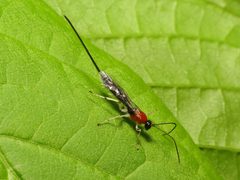
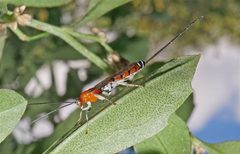
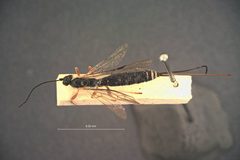
Pronunciation
How to pronounce Calliephialtes: /kæl.iː.ɛˈfaɪ.æl.tiːz/
These audio files are automatically generated. While they are not always 100% accurate, they are a good starting point.
Identification
Small to medium-sized ichneumonid wasps. Distinguishing features from other ichneumonid require examination of wing venation, structure, and genitalia . Specific diagnostic characters for the genus are not documented in available sources.
Images
Distribution
have been recorded from North America (United States, Mexico) including Veracruz, Tamaulipas, and Kansas.
Host Associations
- Cydia caryana - Larval ; is a tortricid pest of pecan
- Anastrepha spatulata - First record of any Calliephialtes from Diptera; idiobiont ectoparasitoid of tephritid fruit fly larvae in fruits of Schoepfia schreberi
- Chalcoela iphitalis - probable Inferred from rearing from paper wasp nest containing this larva; moth larvae are of Polistes larvae
- Acrobasis betulella - Recorded for C. grapholithae
- Acrobasis juglandis - Recorded for C. grapholithae
- Acrobasis rubrifasciella - Recorded for C. grapholithae
- Carmenta texana - Recorded for C. grapholithae
- Meskea dyspteraria - Recorded for C. grapholithae
- Periploca ceanothiella - Recorded for C. grapholithae
- Thyridopteryx ephemeraeformis - Recorded for C. grapholithae
- Megalopyge opercularis - Recorded for C. grapholithae; concealed host in bagworm case
Ecological Role
of insect larvae, including agricultural pests such as Cydia caryana (pecan pest) and Anastrepha spatulata (tephritid fruit fly). Potential agents for fruit fly management.
Human Relevance
Calliephialtes grapholithae is studied for of Cydia caryana in pecan orchards. Calliephialtes sittenfeldae shows potential as a biological control agent for tephritid fruit flies in Mexico and Florida.
Similar Taxa
- Other Ichneumonidae generaDistinguished by combination of morphological characters including wing venation and genitalia; specific comparisons not documented in available sources
More Details
Host diversity
The exhibits unusual breadth across insect orders. Calliephialtes grapholithae is primarily associated with Lepidoptera, while C. sittenfeldae represents the first documented Diptera association for the genus. The apparent association of C. grapholithae with paper wasps (Polistes metricus) is indirect, mediated through the predatory Chalcoela iphitalis.
Rearing methods
Laboratory maintenance of C. grapholithae requires rearing of Cydia caryana on artificial diets; successful diets include soybean and cotton protein .
Sources and further reading
- BugGuide
- Wikipedia
- GBIF taxonomy match
- iNaturalist taxon
- NCBI Taxonomy
- Catalogue of Life
- Bug Eric: A Potential New Host Record for Calliephialtes grapholithae (Hymenoptera: Ichneumonidae) from a Paper Wasp nest (Hymenoptera: Vespidae: Polistes metricus)
- Incidencia del parasitoide Calliephialtes grapholithae Cresson (Hymenoptera: Ichneumonidae) en larvas de Cydia caryana Fitch (Lepidoptera: Tortricidae)
- First Record ofCalliephialtes sittenfeldaeAssociated with the Tephritid Fruit FlyAnastrepha spatulatain Mexico
- EVALUACIÓN DE TRES DIETAS ARTIFICIALES PARA LA CRÍA DE Cydia caryana (FITCH, 1856) (LEPIDOPTERA: TORTRICIDAE) EN LABORATORIO DESTINADA PARA MANTENER POBLACIONES DEL PARASITOIDE Calliephialtes grapholithae CRESSON (HYMENOPTERA: ICHNEUMONIDAE). EVALUATION OF THREE ARTIFICIAL DIETS FOR THE REARING OF Cydia caryana (FITCH, 1856) (LEPIDOPTERA: TORTRICIDAE) IN LABORATORY CONDITIONS AIMED AT MAINTAINING PARASITOID Calliephialtes grapholithae CRESSON (HYMENOPTERA: ICHNEUMONIDAE).