
Periploca ceanothiella
(Cosens, 1908)
Ceanothus stem gall moth
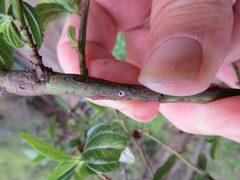
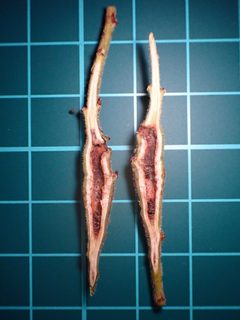
A small gall-forming in the Cosmopterigidae that induces stem galls on Ceanothus . The species has been recorded across much of North America, with active primarily from March to August. Larvae bore into stems, causing distinctive gall formations, and overwinter within these structures.
Pronunciation
How to pronounce Periploca ceanothiella: //ˌpɛrəˈploʊkə ˌsiənoʊˈθiɛlə//
These audio files are automatically generated. While they are not always 100% accurate, they are a good starting point.
Identification
Distinguished from similar small by its association with Ceanothus stem galls; the larval damage is more readily detected than the moth itself. The name 'ceanothiella' reflects its -specific relationship with Ceanothus. Adults are small (10 mm wingspan) and fly during spring and summer months.
Images
Appearance
Small with a wingspan of approximately 10 mm. Detailed coloration and pattern descriptions are not available in the provided sources.
Habitat
Associated with Ceanothus in both natural stands and ornamental plantings. Larval is confined to the internal tissues of plant stems where gall formation occurs.
Distribution
Recorded from Arizona, California, Florida, Kansas, Indiana, Louisiana, Mississippi, New York, Ontario, Oregon, South Carolina, and Texas. Distribution corresponds broadly with the range of Ceanothus plants in North America.
Seasonality
fly from March to August, with additional December records. Larvae overwinter within stem galls. occurs in summer.
Diet
Larvae feed internally on Ceanothus stem tissues, inducing gall formation. Young larvae bore into stems; continued feeding causes the development of stem galls.
Host Associations
- Ceanothus species - primary Larvae induce stem galls; feeding causes damage to ornamental plantings
Life Cycle
are laid on Ceanothus. Young larvae bore into stems and induce gall formation. Larvae develop within galls, in this stage. occurs in summer within the gall. emerge from March through August.
Behavior
Larvae are concealed feeders that bore into stems and induce gall formation. The overwinters as larvae within the protective gall structure.
Ecological Role
Gall-forming herbivore that can impact of Ceanothus plants. Serves as host for including Calliephialtes grapholithae. Economic significance as a pest of ornamental ceanothus plantings.
Human Relevance
Recognized as a pest of ornamental Ceanothus plantings due to gall-induced damage. Has been studied for potential control measures.
Similar Taxa
- Other CosmopterigidaeSimilar small size and characteristics; distinguished by association with Ceanothus and stem gall formation
- Other gall-forming LepidopteraSimilar concealed larval feeding habit; distinguished by specific gall on Ceanothus stems and small size
More Details
Parasitoid associations
Documented as a for the ichneumonid Calliephialtes grapholithae, which attacks concealed larvae including gall-formers and bagworms.
Taxonomic history
Originally described as Stagmatophora ceanothiella by Cosens in 1908; later transferred to Periploca.
Sources and further reading
- BugGuide
- Wikipedia
- GBIF taxonomy match
- iNaturalist taxon
- Catalogue of Life
- Bug Eric: A Potential New Host Record for Calliephialtes grapholithae (Hymenoptera: Ichneumonidae) from a Paper Wasp nest (Hymenoptera: Vespidae: Polistes metricus)
- Biology of the ceanothus stem-gall moth, Periploca ceanothiella (Cosens), with consideration of its control