
Chrysopeleiinae
Mosher, 1916
Genus Guides
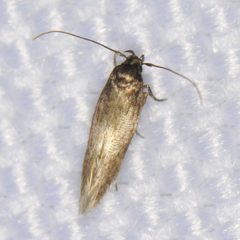
8Chrysopeleiinae is a of small within the Cosmopterigidae, though some taxonomic treatments recognize it as the distinct family Chrysopeleiidae. The subfamily contains approximately 20 distributed across Central Asia, southern Asia, Africa, and the Americas. Members are characterized by their small size and association with the Gelechioidea superfamily of microlepidoptera.
Pronunciation
How to pronounce Chrysopeleiinae: /ˌkrɪsoʊˈpiːlaɪəˌniː/
These audio files are automatically generated. While they are not always 100% accurate, they are a good starting point.
Images
Distribution
Central Asia, southern Asia, Africa, and the Americas. In the , over 50 occur, with 16 species in six recorded from Europe. Nearctic distribution includes genera Afeda, Chrysopeleia, Ithome, Nepotula, Obithome, Perimede, Periploca, Pristen, Siskiwitia, and Walshia. The genus Stilbosis is predominantly Palearctic with two species in the Americas.
Host Associations
- Ceanothus - plantPeriploca ceanothiella (recorded as Stagmatophora ceanothiella) is a known of the Calliephialtes grapholithae, indicating larval feeding on Ceanothus
Similar Taxa
- CosmopteriginaePlacement of Leptozestis, Orthromicta, Synploca, and Trachydora is alternatively placed in Cosmopteriginae, indicating taxonomic uncertainty and morphological similarity between
More Details
Taxonomic instability
The has unstable taxonomic placement, with some authorities treating Chrysopeleiinae as a full (Chrysopeleiidae). Additionally, several (Leptozestis, Orthromicta, Synploca, Trachydora) have uncertain placement between Chrysopeleiinae and Cosmopteriginae.
Notable genera
Ascalenia has a broad distribution spanning Palearctic, African, and Australian regions. Sorhagenia occurs in both Palearctic and Nearctic realms. Gisilia is restricted to Palearctic and African regions.