
Banchus
Fabricius, 1798
Species Guides
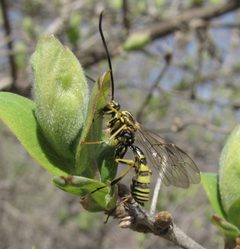
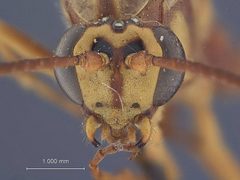
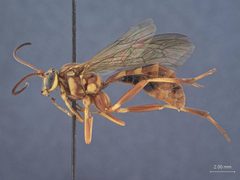
3Banchus is a of in the Ichneumonidae, first described by Fabricius in 1798. occur in Europe, North America, and Asia. The genus comprises at least eight described species, with Banchus flavescens being the most abundant hymenopteran parasitoid of the bertha armyworm in western Canada. Members are endoparasitoids of lepidopteran larvae, particularly Noctuidae.
Pronunciation
How to pronounce Banchus: //ˈbæŋ.kəs//
These audio files are automatically generated. While they are not always 100% accurate, they are a good starting point.
Images
Habitat
Agricultural and natural associated with Lepidoptera; soil for in cocoons.
Distribution
Europe, North America, and Asia. Specific records include Denmark, Norway, Sweden, and western Canada (Manitoba).
Host Associations
- Mamestra configurata - primary Bertha armyworm (Lepidoptera: Noctuidae); for Banchus flavescens in western Canada
- Panolis flammea - Pine beauty (Lepidoptera: Noctuidae); for Banchus femoralis
Life Cycle
Females attack early instar larvae (1st–3rd instars). Development is synchronized so the 's second instar completes when the host finishes feeding. Has an obligatory ; overwinters as within a cocoon buried in soil.
Behavior
-finding involves locating resting places of host larvae on food plants. Courtship and host identification behaviors have been observed in Banchus femoralis.
Ecological Role
of lepidopteran larvae, particularly noctuid pests. Banchus flavescens is the most abundant hymenopteran parasitoid of the bertha armyworm in western Canada.
Human Relevance
Potential agent for agricultural pests such as the bertha armyworm on rapeseed (canola) crops.
Sources and further reading
- BugGuide
- Wikipedia
- GBIF taxonomy match
- iNaturalist taxon
- NCBI Taxonomy
- Catalogue of Life
- HOSTS OF BANCHUS FLAVESCENS (HYMENOPTERA: ICHNEUMONIDAE) AND ATHRYCIA CINEREA (DIPTERA: TACHINIDAE) IN MANITOBA
- Notes on the biology of Banchus femoralis Thomson (Hym., Ichneumonidae) an endoparasitoid of Panolis flammea (D. & S.) (Lep., Noctuidae)
- THE LIFE HISTORY AND IMMATURE STAGES OF BANCHUS FLAVESCENS (HYMENOPTERA: ICHNEUMONIDAE), A PARASITOID OF THE BERTHA ARMYWORM, MAMESTRA CONFIGURATA (LEPIDOPTERA: NOCTUIDAE) IN WESTERN CANADA