
Mamestra configurata
Walker, 1856
Bertha Armyworm Moth, Bertha armyworm
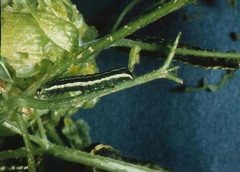
, commonly known as the or Bertha Armyworm , is a noctuid moth native to western North America. The is recognized as an agricultural pest, with larvae feeding on a range of crop plants. It has been documented in line research for biopharmaceutical applications, though less prominently than related species such as Mamestra brassicae. The species occurs from Canada through the western United States into Mexico.
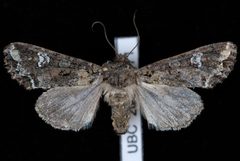
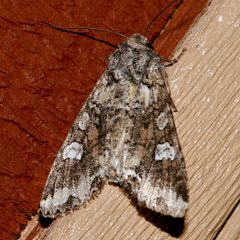
Pronunciation
How to pronounce Mamestra configurata: /məˈmɛstrə kənˈfɪgjʊˌreɪtə/
These audio files are automatically generated. While they are not always 100% accurate, they are a good starting point.
Images
Distribution
Western North America including Canadian provinces of Alberta, British Columbia, Manitoba, and Saskatchewan; western United States including Washington, New Mexico, and California; and Mexico.
Human Relevance
Larvae are recognized as agricultural pests on crop plants. The has been used in laboratory research, with lines developed for scientific applications including studies of cellular processes and potential screening. cell lines are included in the University of Kentucky Insect Cell Lines database, which catalogs lines from agricultural pests for research purposes.
Similar Taxa
- Mamestra brassicaeCongeneric with overlapping ('cabbage ' vs. ''); both used in line research for biopharmaceutical production, though M. brassicae is more frequently cited in recombinant protein production literature.
- Spodoptera frugiperdaAnother noctuid used extensively in line research; cell lines from both appear in databases of agricultural pest-derived lines, though S. frugiperda lines are more widely established for industrial applications.
More Details
Cell Line Research Context
While the provided sources emphasize lines from Bombyx mori, Mamestra brassicae, Spodoptera frugiperda, Trichoplusia ni, and Drosophila melanogaster for recombinant protein production, is included in the broader Insect Cell Lines database as a from which cell lines have been established. The database specifically targets agricultural pests and includes lines from insects that feed on crops, supporting research into sustainable pest control alternatives.