
Pholetesor
Mason, 1981
Species Guides
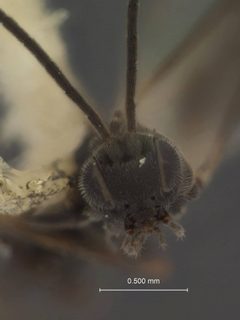
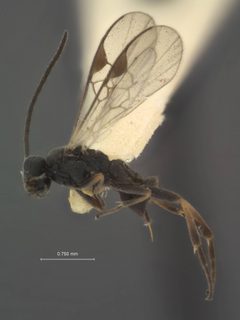
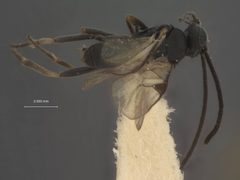
1Pholetesor is a of microgastrine braconid wasps containing more than 50 described , distributed primarily in the Holarctic region. The genus was established by Mason in 1981 and includes species previously placed in Teremys, which has been tentatively synonymized. All known species are koinobiont endoparasitoids of concealed-feeding Lepidoptera larvae, with the majority specializing on leafmining and needlemining species in such as Gracillariidae.
Pronunciation
How to pronounce Pholetesor: /fəʊlɛtəzɔr/
These audio files are automatically generated. While they are not always 100% accurate, they are a good starting point.
Identification
Pholetesor are distinguished from other microgastrine by a combination of morphological characters established by Mason (1981), including features of the mesoscutum, scutellum, and propodeum. The genus is divided into eight species groups based on morphological affinities, some of which appear restricted to the Nearctic region. Species-level identification requires examination of microscopic characters and is supported by published keys for regional faunas, including a key to Indian species reared from lepidopteran leafminers.
Images
Habitat
correspond to those of their lepidopteran , including forests, orchards, and other environments where leafmining and needlemining occur. Specific documented habitats include apple orchards where Pholetesor ornigis parasitizes the spotted tentiform leafminer.
Distribution
Primarily Holarctic, with the majority of described from the Nearctic and Palearctic regions. The Nearctic fauna has been comprehensively revised, recognizing 21 valid species including two (P. viminetorum and P. circumscriptus) previously known only from the Palearctic. Some species groups appear restricted to the Nearctic. Distribution records include Canada (Nova Scotia, Ontario, Quebec), United States (Vermont, western states), and Europe (Denmark, Norway, Sweden). Three species have been described from India (P. acrocercophagus, P. camerariae, P. indicus), suggesting broader geographic representation than initially recognized.
Seasonality
activity is closely synchronized with larval development. In Pholetesor ornigis, flight activity peaks 3–6 days after peak flight of the host leafminer , with adult active when host larvae are in the sap-feeding stage (instars 1–3) and before host cocoon formation. A bimodal flight pattern has been documented, with peaks at 0800–1000 hours and 1600–1800 hours.
Host Associations
- Lepidoptera: Gracillariidae - Primary including leafmining such as Phyllonorycter blancardella (spotted tentiform leafminer), Acrocercops spp., Acrocercops phaeospora, and Cameraria virgulata
- Lepidoptera: needlemining species - Needlemining larvae, particularly on conifers
- Lepidoptera: concealed leaf skeletonizers - P. powelli specifically attacks concealed lepidopteran leaf skeletonizers rather than leafminers
Life Cycle
Koinobiont endoparasitoid development. emerge from larvae before host cocoon formation. Successful depends on host instar, with vulnerability varying across larval development stages. Laboratory studies have documented , development, and longevity parameters for P. ornigis.
Behavior
males are attracted to female-produced ; extracts containing 10–100 female equivalents have been demonstrated to attract males in field trapping studies. activity shows a bimodal pattern with morning and late afternoon peaks.
Ecological Role
Important agents of leafmining Lepidoptera, particularly in agricultural systems such as apple orchards where they help regulate of tentiform leafminers. The contributes to natural suppression of concealed-feeding lepidopteran larvae in both forest and agricultural .
Human Relevance
Significant value in of apple orchards, particularly for control of spotted tentiform leafminer (Phyllonorycter blancardella). Conservation of Pholetesor ornigis is a consideration in orchard management in Ontario and other regions. ELISA-based detection methods have been developed to identify parasitized larvae without destructive sampling, facilitating monitoring of activity.
Similar Taxa
- Other Microgastrinae generaPholetesor is distinguished by morphological characters of the mesoscutum, scutellum, and propodeum as defined by Mason (1981); groups within the share affinities that separate them from related microgastrine genera
- TeremysTentatively synonymized with Pholetesor; T. masneri and T. hanniae transferred to Pholetesor based on morphological similarities, though this synonymy remains provisional
More Details
Species diversity
The contains more than 50 described globally, with 21 valid species recognized in the Nearctic region alone. Eleven Nearctic species were described as new in the 2006 revision: P. caloptiliae, P. chiricahuensis, P. dixianus, P. longicoxis, P. masoni, P. pinifoliellae, P. powelli, P. rhygoplitoides, P. thuiellae, P. variabilis, and P. zelleriae.
Taxonomic history
Pholetesor was established by Mason in 1981. The Teremys Mason is tentatively placed in synonymy with Pholetesor, resulting in the transfer of T. masneri Mason (Nearctic/Neotropical) and T. hanniae Valerio and Whitfield (Neotropical) into Pholetesor.
Research methods
Studies of Pholetesor ornigis have employed -baited sticky traps for monitoring activity, demonstrating the feasibility of -based surveillance for this .
Sources and further reading
- BugGuide
- Wikipedia
- GBIF taxonomy match
- iNaturalist taxon
- NCBI Taxonomy
- Catalogue of Life
- Revision of the Nearctic species of the genus Pholetesor Mason (Hymenoptera: Braconidae)
- Monitoring Adult Flight of Pholetesor ornigis (Hymenoptera: Braconidae, a Parasitoid of the Spotted Tentiform Leafminer (Lepidoptera: Gracillariidae)
- Patterns in Host Ranges Within the Nearctic Species of the Parasitoid Genus Pholetesor Mason (Hymenoptera: Braconidae)
- Elisa Used Without Host Trituration to Detect Larvae of Phyllonorycter blancardella (Lepidoptera: Gracillariidae) Parasitized by Pholetesor ornigis (Hymenoptera: Braconidae)
- Parasitoids of the genus Pholetesor Mason, 1981 (Hymenoptera: Braconidae: Microgastrinae) from the leafminers Lepidoptera, with the description of three new species from India
- Effect of Host Instar on Successful Parasitism by Pholetesor ornigis (Hymenoptera: Braconidae), Parasitoid of Phyllonorycter blancardella (Lepidoptera: Gracillariidae)
- Reproduction, Development, and Longevity of Pholetesor ornigis (Hymenoptera: Braconidae), a Parasitoid of Spotted Tentiform Leafminer (Lepidoptera: Gracillariidae), in the Laboratory
- Conservation of <i>Pholetesor ornigis</i> (Hymenoptera: Braconidae), a Parasitoid of <i>Phyllonorycter blancardella</i> (Lepidoptera: Gracillariidae) in Ontario