Agathidinae
agathidine wasps
Tribe Guides
6Agathidinae is a large of braconid wasps comprising koinobiont endoparasitoids of lepidopteran larvae. Members are distinguished by elongated facial structures in several , bright coloration in tropical , and specialized mouthpart adaptations for nectar feeding. The subfamily is taxonomically complex, with phylogenetic studies revising tribal arrangements from 2 to 7 tribes. Species have been successfully employed in programs against agricultural and forestry pests.
Pronunciation
How to pronounce Agathidinae: /ˌæɡəˈθɪdɪniː/
These audio files are automatically generated. While they are not always 100% accurate, they are a good starting point.
Identification
Agathidinae can be distinguished from other braconid by the combination of: forewing M+CU not tubular in basal third or more; forewing vein RS complete to wing margin (except Mesocoelus and Plesiocoelus); occipital carina absent; and second submarginal of forewing usually present. with elongate genae (Agathis, Cremnops, Disophrys, Bassus) have distinctive narrow, extended . The subfamily is noncyclostome, separating it from cyclostome braconids. Bright coloration and flower-visiting in contrast with the typically dull, non-floral habits of most other braconids. Tropical species often participate in mimicry complexes.
Images
Appearance
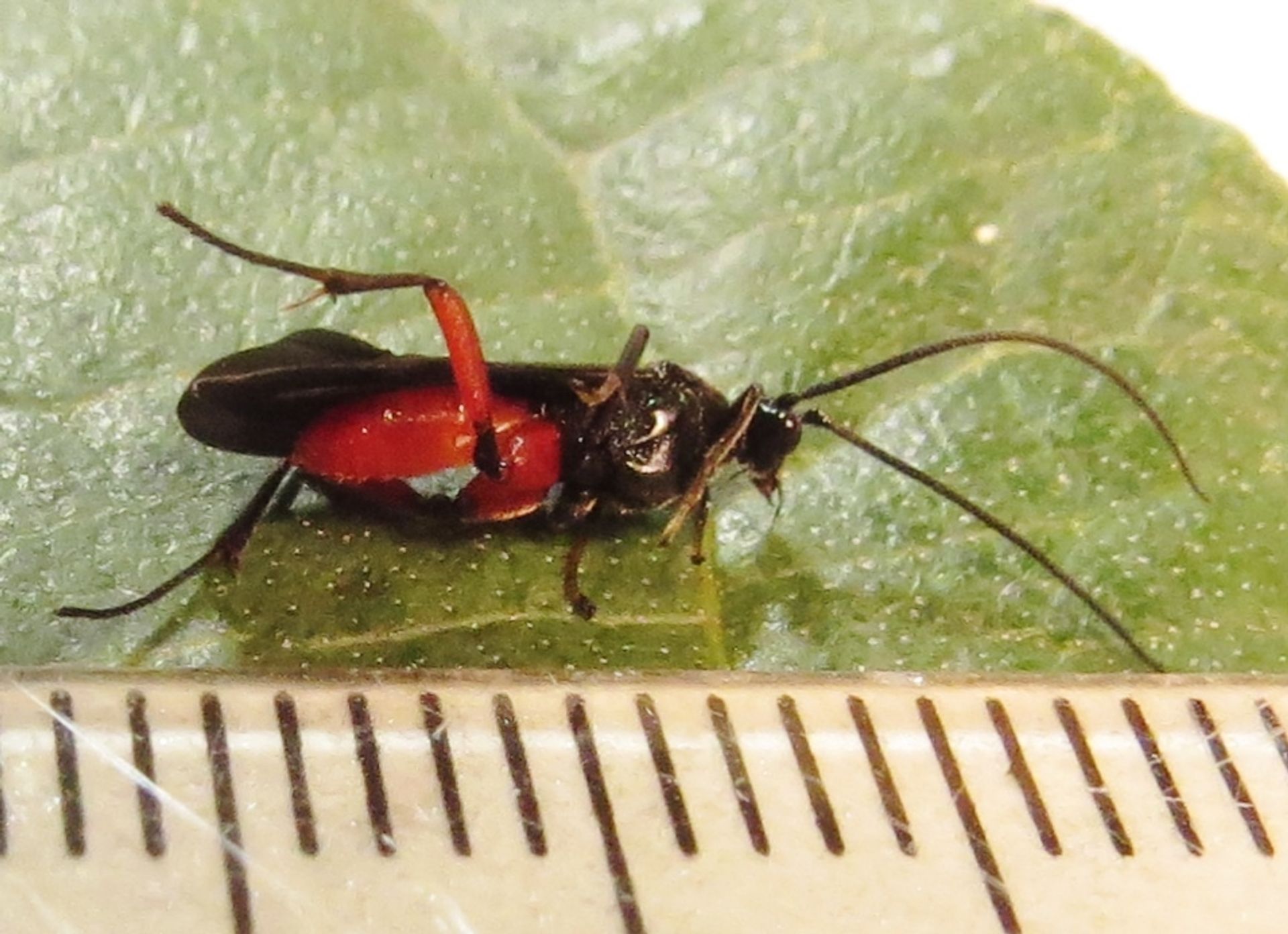
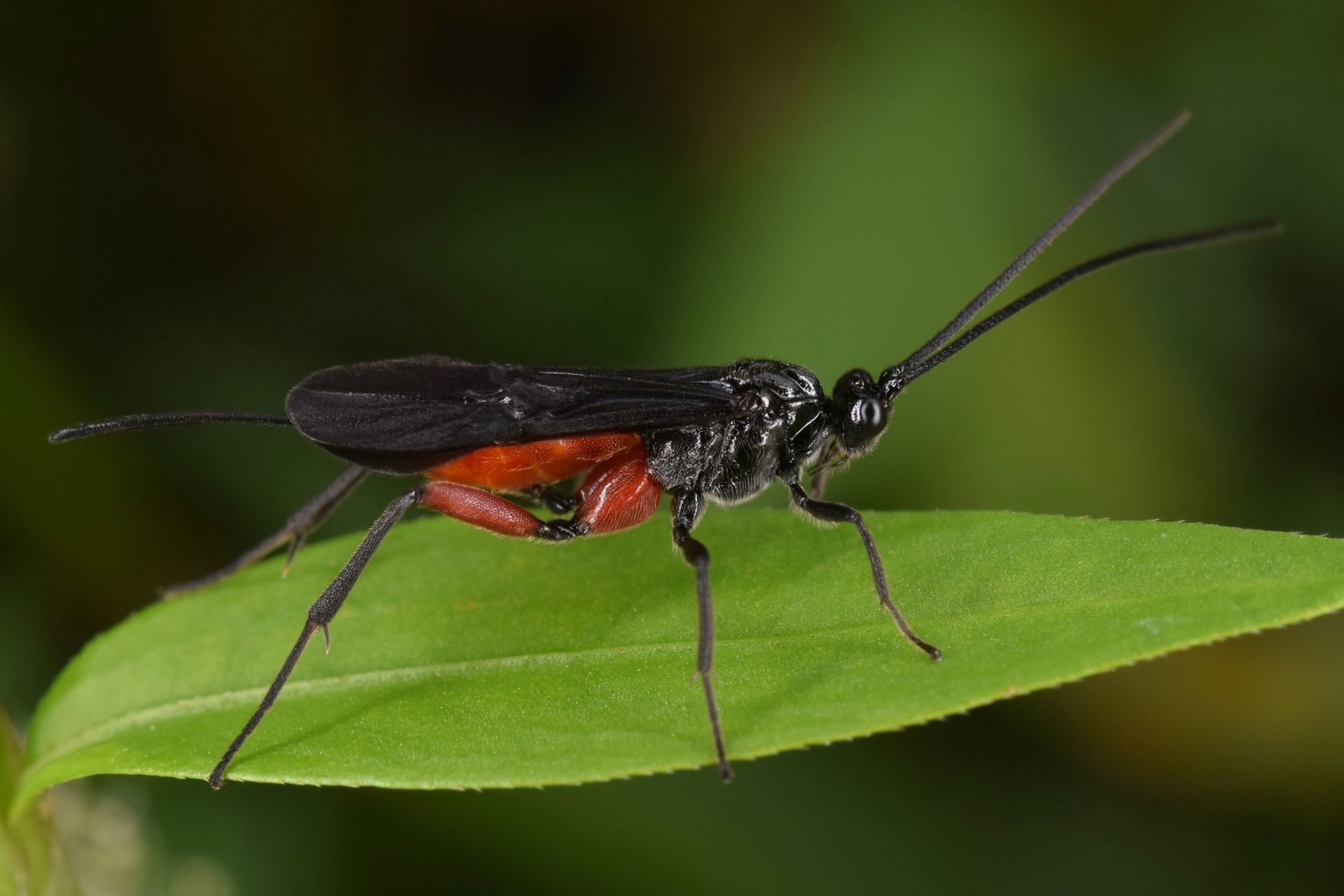
Agathidines are among the larger braconids, typically 6–10 mm in length. members often exhibit bright red and black color patterns. Diagnostic wing venation includes: forewing M+CU not tubular in the basal third or more; forewing vein RS complete to the wing margin (except in Mesocoelus and Plesiocoelus); and second submarginal of forewing usually present (90% of ). The occipital carina is absent. Several (Agathis, Cremnops, Disophrys) possess elongate genae, creating a distinctive narrow, extended facial profile. Members belong to the noncyclostome group of braconids.
Habitat
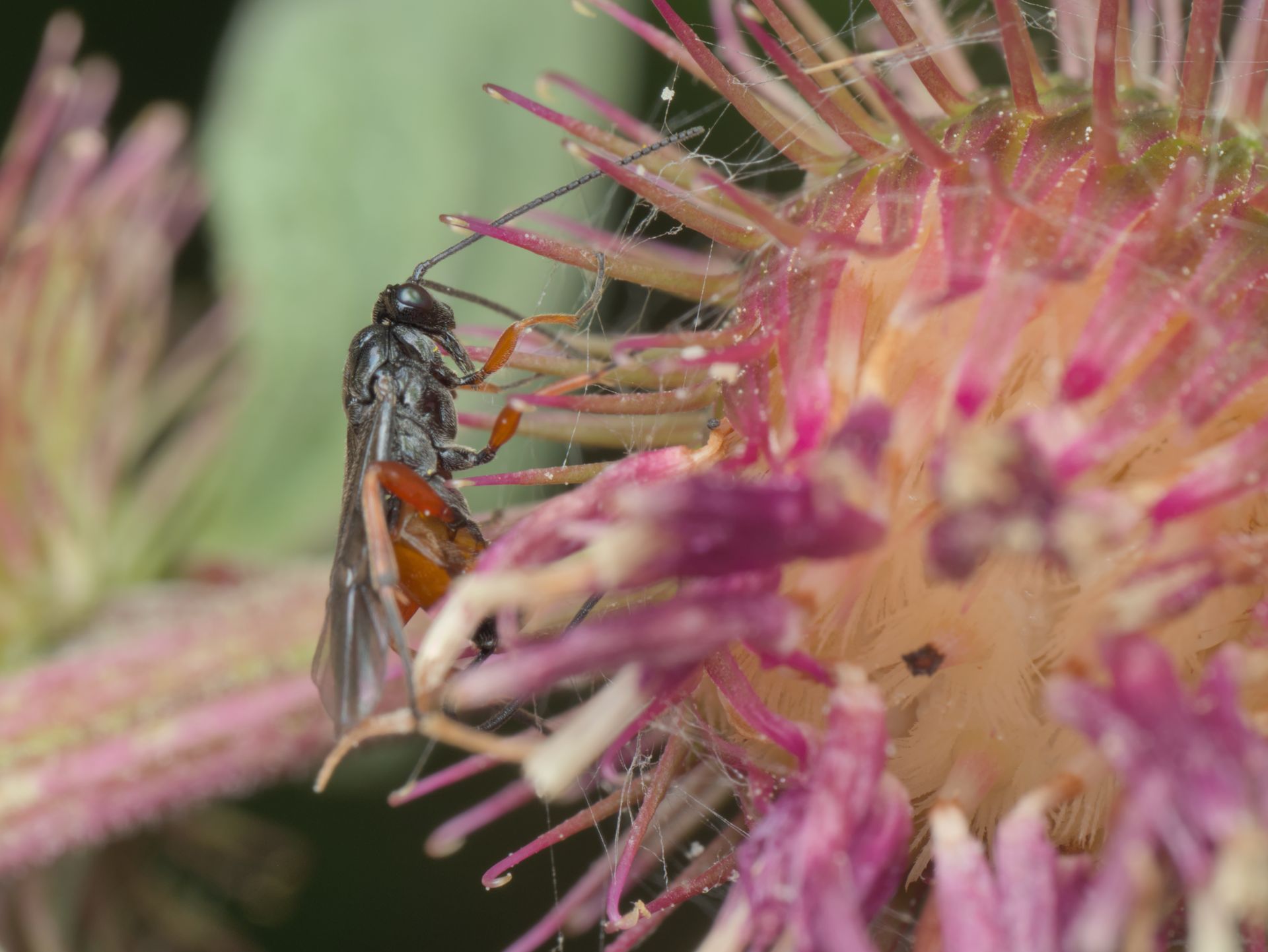
Agathidines occupy diverse terrestrial worldwide, with highest diversity in tropical regions. They are frequent visitors to flowers, particularly Asteraceae, where they employ concealed nectar extraction adaptations. Habitat associations reflect caterpillar distributions, including semi-concealed hosts such as leaf-rollers. Temperate overwinter within host larvae during first instar. Disophrini occupy habitats where free-living lepidopteran larvae occur.
Distribution
Worldwide distribution with greater diversity in tropical regions. Some (Agathis, Earinus) are more speciose in temperate regions. Ten genera occur in Australia: Amputostypos, Baeognatha, Biroia, Braunsia, Coccygidium, Cremnops, Disophrys, Euagathis, Lytopylus, and Therophilus. Mexico records 24 genera and 127 . Western Black Sea Region of Turkey has documented 16 species in 3 genera. New World Cremnops species revised across the Americas.
Seasonality
Temperate such as Earinus elator emerge and seek early in the year, coinciding with bud-burst of host plants' food plants. These species complete before winter to enable early-season host location. Tropical species exhibit year-round activity correlated with host availability.
Diet
feed on nectar obtained through specialized concealed nectar extraction adaptations (CNEAs), including elongate malar regions, , , and maxillary palps forming a tube. These elongate mouthparts have evolved independently six times within the . Larvae are internal consuming tissues.
Host Associations
- Lepidoptera larvae - koinobiont endoparasitoidPrimary ; most attack concealed larvae, with Disophrini attacking free-living larvae
- Elasmopalpus lignosellus (Pyralidae) - Lesser cornstalk borer; recorded of Trachagathis rubricincta
- Western larch case-bearer - targetControlled by Agathis pumila
- Sugarcane borer - targetControlled by Alabagrus stigma
- Potato tuberworm - targetControlled by Bassus unicoloratus and Agathis gibbosa
- Gypsonoma aceriana - targetForestry pest controlled by Bassus tumidulus
Life Cycle
Agathidines have three larval instars. First instars likely seek out and kill competitors within the . As final instars, they emerge from host caterpillars, feed externally, then spin cocoons. Temperate overwinter in hosts during first instar. Earinus elator and related temperate species complete before winter, enabling early-season host-seeking. To prevent freezing, some species secrete glycerol- and -rich substance over nitrogen-filled meconium, reducing freezing point and preventing ice formation.
Behavior
Most are and frequent flower visitors. Many Disophrini are with pale coloration and enlarged ocelli. Mating system in Agathis clavatus involves males searching for females at feeding sites (SFF), a strategy rarely documented in Ichneumonoidea. Males of Alabagrus texanus exhibit short-term memory regarding sites of female ; early-arriving males are more successful, while very young and very old males are unsuccessful. Tropical species participate in mimicry complexes. First instar larvae are aggressive competitors, likely killing rival in multiparasitized .
Ecological Role
Agathidines function as important agents of lepidopteran in natural and agricultural . Their abundance increases in ecosystems where fluids are harder to obtain, suggesting to resource-limited environments. Flower-visiting contributes to pollination services, though this role is secondary to function.
Human Relevance
Multiple employed in successful programs: Agathis pumila against western larch case-bearer; Alabagrus stigma against sugarcane borer; Bassus unicoloratus and Agathis gibbosa against ; Bassus tumidulus against forestry pest Gypsonoma aceriana. The represents a significant source of natural enemies for programs.
Similar Taxa
- IchneumonidaeSimilar size and general appearance; distinguished by Agathidinae's noncyclostome condition, specific wing venation patterns, and frequent flower-visiting
- Other Braconidae subfamiliesAgathidinae distinguished by combination of wing venation characters (M+CU not tubular basally, RS complete, second submarginal usually present), occipital carina absent, and noncyclostome condition
More Details
Tribal classification
Tribal arrangement revised multiple times: originally 2 tribes (Agathidini, Microdini); expanded to 5 tribes by Sharkey (1992); reduced to 4 tribes by Simbolotti and van Achterberg (1999); revised to 7 tribes by Sharkey and Chapman (2017). Asperagathis, Bassus, and Zosteragathis found non-monophyletic. Nearctic Bassus annulipes represents a , with members placed in Lytopylini (New World) versus Agathidini (Old World).
Mouthpart evolution
Concealed nectar extraction adaptations (CNEAs) have evolved independently six times within Agathidinae, involving elongation of malar regions, , , and maxillary palps forming a tubular structure.
Host attack strategies
Tribes differ in instar preference: Agathidini and Earinini attack first and second instar larvae; Disophrini attack later instars; Cremnoptini parasitize every larval stage.
Sources and further reading
- BugGuide
- Wikipedia
- iNaturalist taxon
- NCBI Taxonomy
- Bug Eric: March 2011
- biodiversity | Blog - Part 44
- Quiz Yourself: 2020 Entomology Games Questions
- Synopsis of Australian agathidine wasps (Hymenoptera: Braconidae: Agathidinae)
- Agathidinae (Hymenoptera: Braconidae) de México, incluyendo nuevos registros
- Review of the systematics of Trachagathis Viereck (Hymenoptera: Braconidae: Agathidinae)
- Studies on the fauna of Agathidinae (Hymenoptera: Braconidae) in the Western Black Sea Region of Turkey Batı Karadeniz Bölgesi Agathidinae (Hymenoptera: Braconidae) Faunası üzerinde araştırmalar
- A revision of the New World species of Cremnops Förster (Hymenoptera: Braconidae: Agathidinae)
- New records of endoparasitoidBassus fabricius, 1804 (Hymenoptera: Braconidae: Agathidinae) species from Turkey
- The genus Aerophilus Szépligeti, 1902 (Hymenoptera, Braconidae, Agathidinae) in China.
- Description of Chilearinus Sharkey gen. nov. and status of Nearctic Earinus Wesmael, 1837 (Braconidae, Agathidinae) with the description of new species.