Agapostemon coloradinus
(Vachal, 1903)
Colorado Striped Sweat Bee
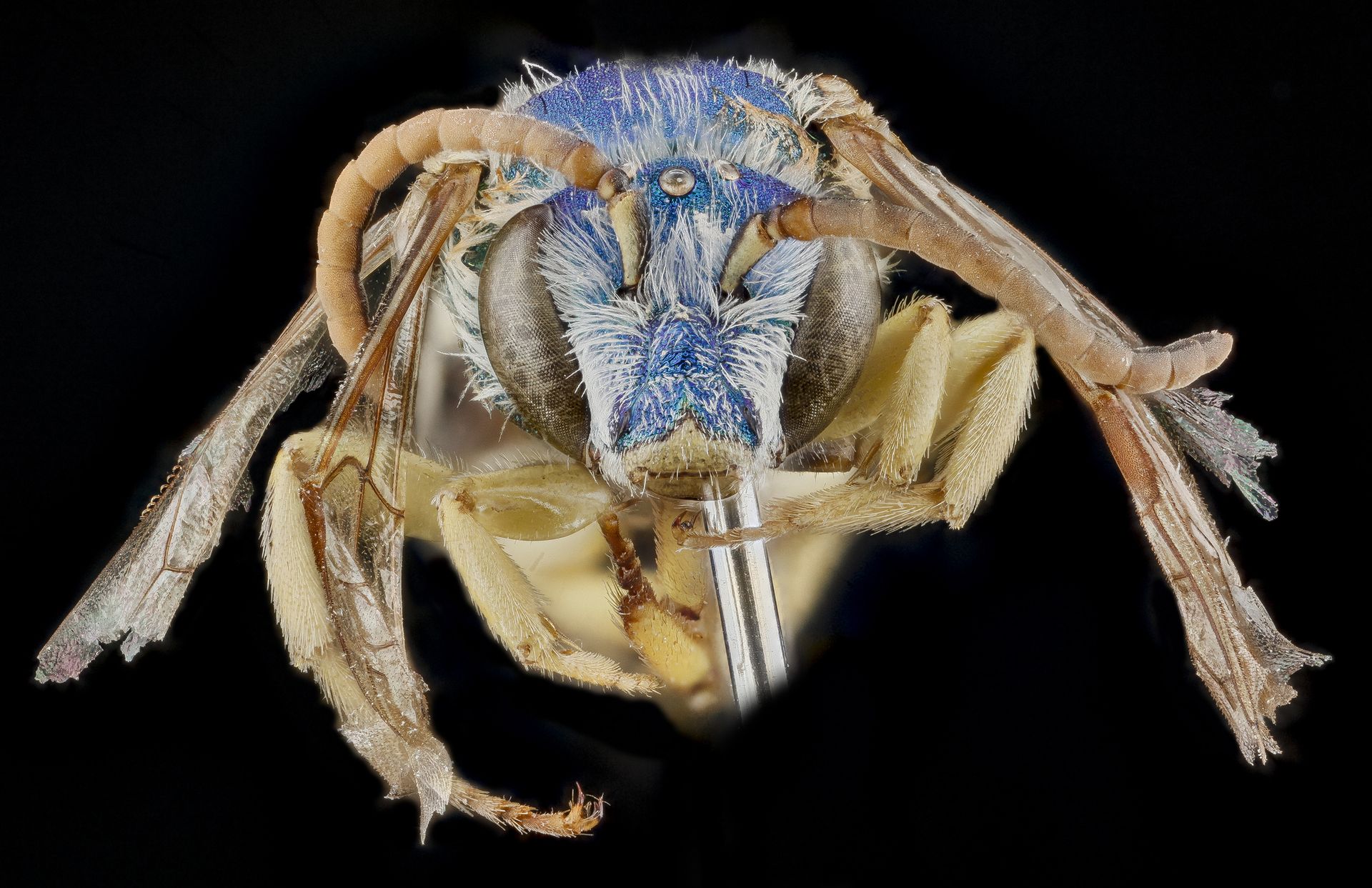
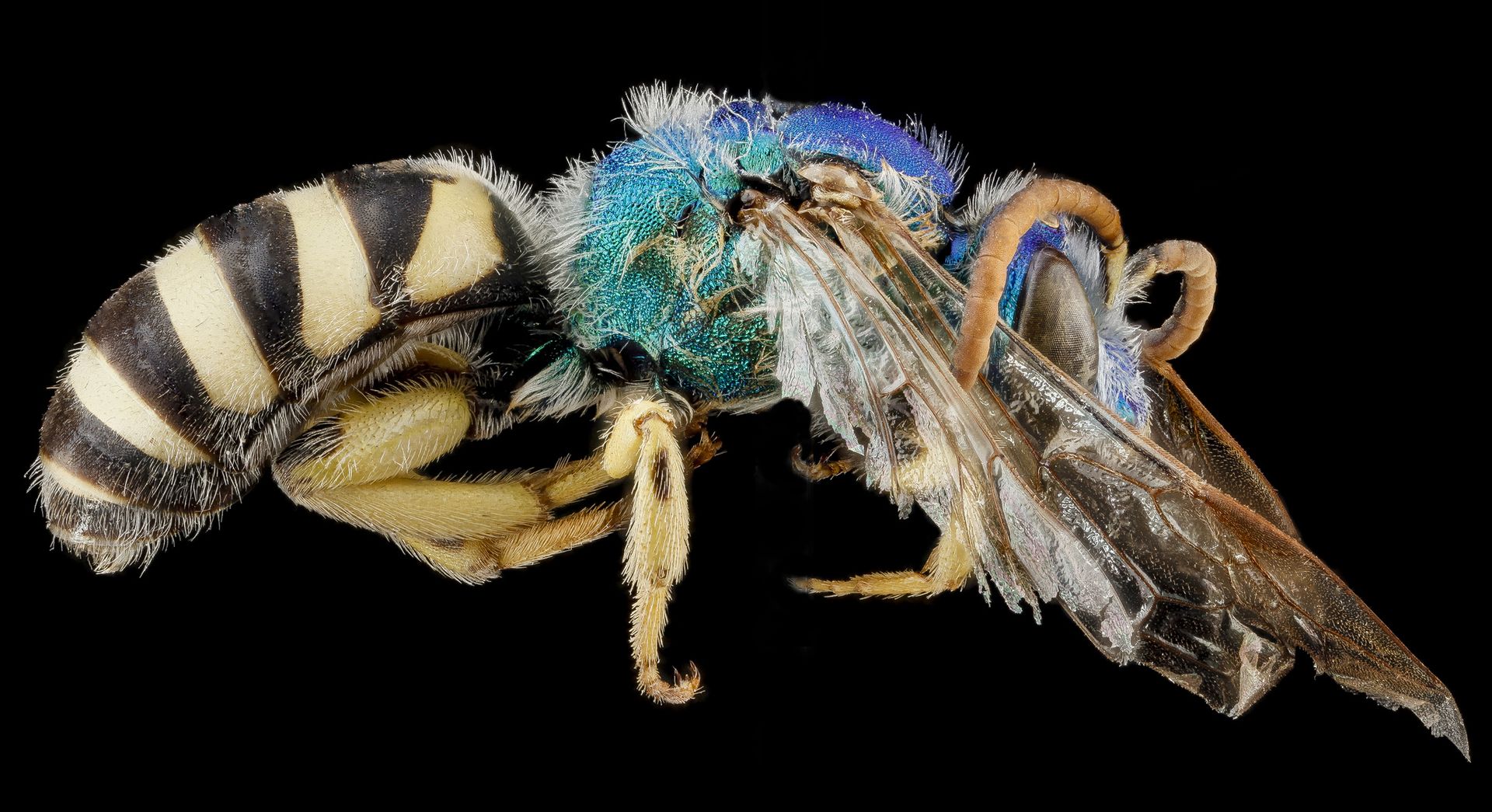
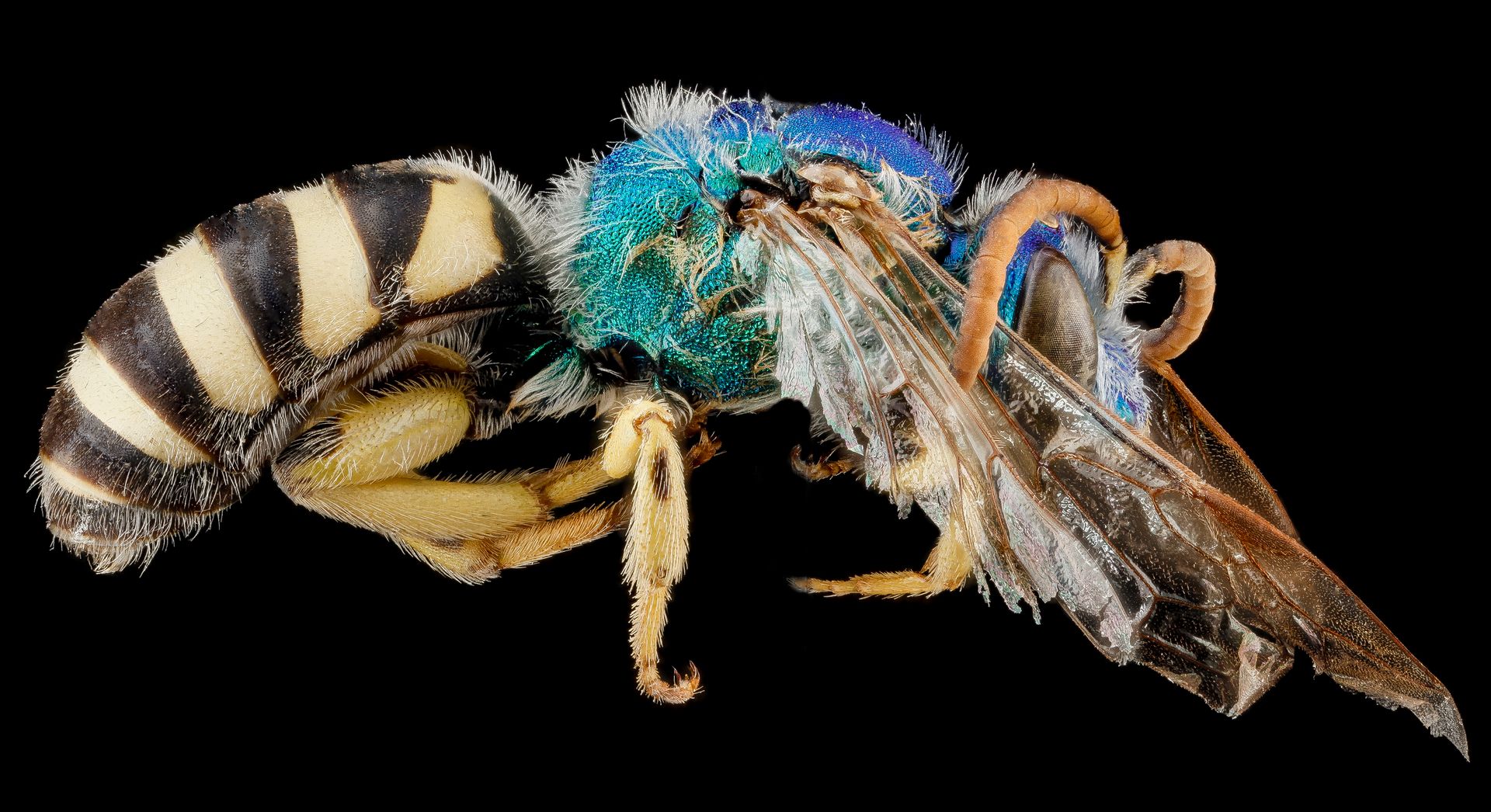
Agapostemon coloradinus, the Colorado striped-sweat bee, is a of metallic green sweat bee in the Halictidae. It is one of approximately 20 species in the Agapostemon, which are distributed across North America. Members of this genus are commonly known as "green sweat bees" due to their distinctive metallic coloration. The specific epithet "coloradinus" suggests a connection to Colorado, though the full geographic range extends more broadly. Like other halictid bees, it is a solitary or primitively eusocial that nests in soil.
Pronunciation
How to pronounce Agapostemon coloradinus: //ˌæɡəˈpɒstəmən kəˌlɔːrəˈdaɪnəs//
These audio files are automatically generated. While they are not always 100% accurate, they are a good starting point.
Identification
Females can be distinguished from males by having a completely metallic green or blue-green body, while males show black and yellow banding on the . The Agapostemon can be separated from the superficially similar Augochlorini tribe (Augochlora, Augochlorella, Augochloropsis) by subtle morphological features, including details of wing venation and facial structure, often requiring microscopic examination. Agapostemon coloradinus specifically may require examination of diagnostic characters such as punctation patterns and genitalia to distinguish from like A. texanus or A. virescens. The name and associated geographic information can aid in identification, though precise species-level identification within the genus is challenging without specimen examination.
Images
Appearance
Females are wholly metallic green or blue-green, often with a relatively hairy body. Males have the and metallic green, with the banded in black and yellow pigments rather than being entirely metallic. The is characterized by this in coloration. Body size is small to medium for bees, typical of the Halictidae . The metallic sheen can appear green, blue-green, or occasionally with coppery tones depending on lighting and individual variation.
Habitat
Nests are constructed in soil, with females excavating burrows. The favors sunny, well-drained locations with sparse vegetation that allow for ground nesting. Like other Agapostemon species, it may form where multiple females nest in close proximity in favorable patches. Urban and suburban gardens with appropriate soil conditions and floral resources can support .
Distribution
Recorded from North America. The specific epithet "coloradinus" indicates a type locality or strong association with Colorado, though the likely occurs more broadly in western North America. Distribution records are sparse in the provided sources, with only 9 observations documented in iNaturalist at the time of source capture.
Diet
feed on nectar from flowers. Females collect pollen using scopae (brushes of hairs) on their hind legs to provision nest for their larvae. The is a forager, visiting diverse flowering plants. Specific floral associations are not documented in the provided sources for this species, though are frequently observed on Asteraceae such as Echinacea (coneflowers) and other garden plants.
Life Cycle
The follows the typical pattern for solitary or primitively eusocial halictid bees. Females excavate nest burrows in soil, creating multiple . Each cell is provisioned with a pollen and nectar mass, onto which an is laid. Larvae develop within the cells, feeding on the stored provisions. The likely produces one or more per year depending on climate, with some individuals as or in the nest. Specific details of social organization for A. coloradinus are not documented; some Agapostemon species are solitary while others show communal nesting or primitive eusociality.
Behavior
Females are active foragers on flowers, collecting pollen and nectar for nest provisioning. Males may perch on vegetation to watch for passing females. Both sexes may visit flowers for nectar throughout the day. Like other "sweat bees," individuals may occasionally alight on human skin to obtain moisture and salts from perspiration, though this is more commonly associated with other halictid such as Lasioglossum and Halictus.
Ecological Role
As a , the contributes to the of flowering plants in its . It is part of the diverse native fauna that provides pollination services in natural and anthropogenic landscapes. The soil-nesting contributes to soil aeration and nutrient cycling in local .
Human Relevance
The is a native that may contribute to pollination in gardens and agricultural settings, though specific crop associations are not documented. Its metallic green appearance makes it a subject of interest for nature observation and photography. The species has been included in educational materials about native bees, such as the UC Davis Haven mural project, which featured Agapostemon species to illustrate the diversity of native pollinators.
Similar Taxa
- Agapostemon texanusAnother widespread western North American with similar metallic green coloration and ; requires detailed morphological examination to distinguish
- Agapostemon virescensEastern and central North American with similar appearance; females have black with white hair bands rather than wholly metallic green
- Augochlora puraMember of tribe Augochlorini with similar metallic green coloration; distinguished by different wing venation, facial features, and nesting in rotten wood rather than soil
- Augochlorella spp.Virtually identical metallic green appearance; requires microscopic examination of morphological characters to distinguish
- Augochloropsis spp.Virtually identical metallic green appearance; requires microscopic examination of morphological characters to distinguish
More Details
Taxonomic history
The was described by Vachal in 1903. The Agapostemon was revised by Radclyffe B. Roberts in his 1972 work "Bees of Northwestern America: Agapostemon (Hymenoptera: Halictidae)."
Observation rarity
As of the source date, only 9 observations were recorded in iNaturalist, suggesting the is either genuinely rare, underreported, or difficult to identify to species level from photographs alone.
Sources and further reading
- BugGuide
- GBIF taxonomy match
- iNaturalist taxon
- Catalogue of Life
- California Has No State Bee--Yet! | Bug Squad
- The Native Bees in the UC Davis Bee Haven | Bug Squad
- Going Native: Do You Know the Native Bees of California? | Bug Squad
- Attracting Pollinators to Your Garden | Bug Squad
- Sweet times for sweat bees: Sweat bees, Halictus ligatus and Agapostemon virescens — Bug of the Week
- Bug Eric: Metallica