
Pachycondyla
Smith, 1858
Panther Ants
Species Guides
1- Pachycondyla harpax(rapacious panther ant)
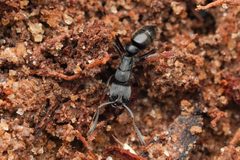
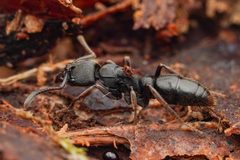
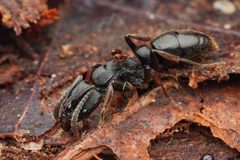
Pachycondyla is a of ponerine ants found in the Neotropics. Following a major taxonomic revision by Schmidt & Shattuck (2014), the genus was drastically reduced from hundreds of to eleven extant species, with many former members moved to revived genera. The genus now contains primarily Neotropical species distributed from the southern United States to northern Argentina. Some species, such as P. chinensis (Asian needle ant), have become beyond their native ranges. The genus includes both ground-nesting and arboreal species, with some forming mutualistic relationships with plants.
Pronunciation
How to pronounce Pachycondyla: //ˌpækɪˈkɒndɪlə//
These audio files are automatically generated. While they are not always 100% accurate, they are a good starting point.
Identification
Pachycondyla are characterized by their placement in the poneromorph clade, typically exhibiting a robust body form with a well-developed sting. Following the 2014 revision, identification to species level requires careful examination of morphological characters, as many species show significant variation across their ranges. P. harpax in particular remains taxonomically problematic due to extensive morphological variation. Species-level identification keys are available for regional faunas including Brazil and Ecuador.
Images
Habitat
Most extant Pachycondyla occupy terrestrial in Neotropical forests and woodlands. Some species nest directly in the ground with entrances surrounded by excavated soil. At least one species, P. tarsata, has been documented as primarily ground-nesting. Certain species have established mutualistic relationships with myrmecophytic plants; for example, Pachycondyla species have been recorded as secondary inhabitants of Cecropia trees alongside Azteca ants.
Distribution
Native range extends from the southern United States (Texas, Louisiana, Georgia) through Mexico and Central America to northern Argentina. The is absent from Chile and Uruguay. P. harpax has been recorded from every South and Central American country except Chile and Uruguay, plus several West Indian islands including Grenada, Guadeloupe, Jamaica, Margarita, Trinidad, and Tobago. Some on Caribbean islands may be . Fossil are known from European deposits (Eocene). The Asian needle ant (P. chinensis) has spread to eastern North America, with records as far north as Wisconsin and Washington state.
Diet
Ponerine ants are generally predatory. Pachycondyla tarsata has been observed carrying dead arthropods as food items. Specific dietary details for most Pachycondyla are not well documented in the literature.
Host Associations
- Cecropia - mutualismSome Pachycondyla inhabit hollow stems of Cecropia trees, serving as secondary partners alongside the more common Azteca mutualists; ants receive shelter and Müllerian bodies in exchange for defense
Life Cycle
Colonies are established by mated queens. In at least one documented case involving a related poneromorph , queens may initiate colonies in pre-existing cavities such as mounds. Development proceeds through complete with , larva, pupa, and stages. males and females are produced for mating , with timing varying by .
Behavior
forage singly rather than in organized trails. Pachycondyla tarsata is known as the 'Stink Ant' and has been observed transporting dead nestmates and other remains. Some exhibit aggressive territorial defense of nest sites. Stridulation has been documented in some ponerine ants and may occur in Pachycondyla. The includes species capable of delivering painful stings.
Ecological Role
As , Pachycondyla contribute to in forest . Their ground-nesting habits influence soil structure and nutrient cycling. Species associated with Cecropia trees function as secondary defenders of these myrmecophytes, supplementing the primary Azteca mutualists. The P. chinensis may compete with native species in introduced ranges.
Human Relevance
Pachycondyla chinensis, the Asian needle ant, is a venomous that has spread extensively in eastern North America, posing health risks due to its painful sting and potential for allergic reactions. P. sennaarensis (Samsum ) is an economically damaging in Saudi Arabia and surrounding regions, causing agricultural harm and health issues. Some have been used in citizen science projects to track ant diversity and invasion patterns.
Similar Taxa
- ParaponeraBoth are large, robust ponerine ants with powerful stings; Paraponera contains the (P. clavata), which is sometimes confused with large Pachycondyla but differs in and distribution
- OdontomachusBoth are poneromorph ants with elongated ; Odontomachus is distinguished by its trap-jaw mechanism, which Pachycondyla lacks
- NeoponeraFormerly included in Pachycondyla before the 2014 revision; many were transferred to this revived based on phylogenetic evidence
More Details
Taxonomic History
Pachycondyla formerly contained hundreds of , but Schmidt & Shattuck (2014) revised the ponerines and resurrected many former synonyms as valid , leaving only eleven species in Pachycondyla sensu stricto. More than twenty additional species remain incertae sedis in the genus, acknowledged as likely misplaced.
Conservation
The Pachycondyla wasmannii-group in Madagascar includes of conservation concern, with eight recognized species in the Malagasy region, four of them newly described, highlighting the importance of this in biodiversity assessment of high-priority conservation areas.
Sources and further reading
- BugGuide
- Wikipedia
- GBIF taxonomy match
- iNaturalist taxon
- NCBI Taxonomy
- Catalogue of Life
- Rookies use Cookies in Science Alliance to Track Ants' Advance
- Formicidae | Beetles In The Bush | Page 4
- Predatory Wasp and Giant Walkingstick Among Top New Species for 2015
- If you be my body guard, I will be your pal: Azteca ants and Cecropia — Bug of the Week
- Geographic range of Pachycondyla harpax (Fabricius) (Hymenoptera, Formicidae)
- Taxonomic revision of the Pachycondyla apicalis species complex (Hymenoptera: Formicidae)
- Ants of thePachycondylagenus group in Ecuador: Phylogeny, taxonomy, and distribution
- Evaluation of Nerium oleander extracts against Pachycondyla sennaarensis (Hymenoptera, Formicidae) adults
- Revision of the Pachycondyla wasmannii-group (Hymenoptera: Formicidae)
- Review of ant genus Pachycondyla Smith, 1858 in Brazil (Hymenoptera: Formicidae)
- The hunting behavior of the African ponerine ant Pachycondyla pachyderma