
Pachycondyla harpax
(Fabricius, 1804)
rapacious panther ant
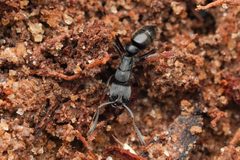
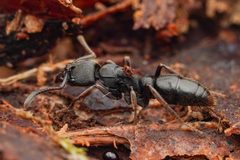
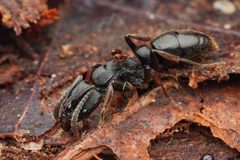
Pachycondyla harpax is a widespread New World ponerine ant known from South America, Central America, the Caribbean, and the southern United States. It is a conspicuous ground-nesting that forages singly rather than in trails. The species has been documented from over 1,500 collection sites and shows a broad latitudinal range from approximately 32°N in Texas to 32°S in southern Brazil.
Pronunciation
How to pronounce Pachycondyla harpax: /ˌpækɪˈkɒndɪlə ˈhɑːrpæks/
These audio files are automatically generated. While they are not always 100% accurate, they are a good starting point.
Identification
Pachycondyla harpax can be distinguished from other Pachycondyla by its combination of widespread distribution and ground-nesting habits. It is a relatively large, dark-colored ponerine ant. Specific diagnostic morphological features for field identification are not documented in available sources.
Images
Habitat
Ground-nesting that excavates nests directly in soil. Found in diverse terrestrial across its broad geographic range, including tropical and subtropical forests, savannas, and disturbed areas.
Distribution
South America: all countries except Chile and Uruguay, from Rio Grande do Sul, Brazil (31.8°S) northward. Central America: all countries. Caribbean: Grenada, Guadeloupe, Jamaica, Margarita, Trinidad, and Tobago. United States: Texas, Louisiana, and Georgia. The continental range is essentially continuous; island on Grenada, Guadeloupe, and Jamaica may be introduced.
Behavior
Forages solitarily rather than in organized trails. hunt individually for prey items.
Ecological Role
in terrestrial across its range.
Sources and further reading
- BugGuide
- Wikipedia
- GBIF taxonomy match
- iNaturalist taxon
- NCBI Taxonomy
- Catalogue of Life
- Rookies use Cookies in Science Alliance to Track Ants' Advance
- Formicidae | Beetles In The Bush | Page 4
- Predatory Wasp and Giant Walkingstick Among Top New Species for 2015
- If you be my body guard, I will be your pal: Azteca ants and Cecropia — Bug of the Week
- Geographic range of Pachycondyla harpax (Fabricius) (Hymenoptera, Formicidae)