
Pogonomyrmex subdentatus
Mayr, 1870
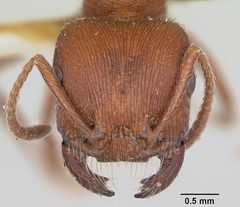
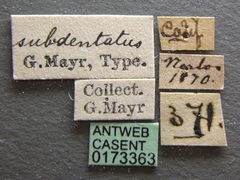
Pogonomyrmex subdentatus is a of in the Pogonomyrmex, described by Mayr in 1870. It is native to the western United States, with records from California and Nevada, and possibly Oregon and Colorado. As a harvester ant, it belongs to a group known for seed collection, nest construction, and potent defensive stings. The species is one of at least six native species documented in the vicinity of the Häagen-Dazs Haven at UC Davis, California.

Pronunciation
How to pronounce Pogonomyrmex subdentatus: /ˌpoʊ.ɡə.noʊˈmɜr.mɛks ˌsʌb.dɛnˈteɪ.təs/
These audio files are automatically generated. While they are not always 100% accurate, they are a good starting point.
Images
Habitat
Found in arid and semi-arid regions of the western United States. Observed in the vicinity of the Häagen-Dazs Haven at UC Davis, California, where it occurs alongside other native including Formica aerata and Solenopsis xyloni.
Distribution
Native to California and Nevada, with possible occurrence in Oregon and Colorado. Documented in the vicinity of UC Davis, California.
Diet
As a (Pogonomyrmex), seed collection is the primary foraging . Specific dietary preferences for P. subdentatus have not been documented.
Similar Taxa
- Pogonomyrmex californicusBoth are California-native harvester ants in the same , sharing seed-harvesting and ecological roles as engineers
- Pogonomyrmex occidentalisWestern harvester ant with similar geographic range and nest-building ; both are large, conspicuous harvester ants in western North America
- Pogonomyrmex rugosusAnother western North American with similar seed-collecting and preferences in arid regions
More Details
Taxonomic history
Described by Gustav Mayr in 1870, with the specific epithet 'subdentatus' referring to the subdentate (partially toothed) condition of mandibular or clypeal structures characteristic of this
Research context
Documented by Phil Ward during surveys of native ants at the Häagen-Dazs Haven, UC Davis, where it was noted as one of six native ant in the vicinity, distinguished from the introduced Argentine ant (Linepithema humile) which had not colonized the garden
Sources and further reading
- BugGuide
- Wikipedia
- GBIF taxonomy match
- iNaturalist taxon
- NCBI Taxonomy
- Catalogue of Life
- Ants and Moths: Think Noon and Night! | Bug Squad
- Carbo-loading here and there: Odorous house ants, Tapinoma sessile, and harvester ants, Pogonomyrmex — Bug of the Week
- The Painful but Fascinating Stings of Harvester Ants
- Harvester Ant Nest Rims Boost Native, Nonnative Plants Alike
- Harvester Ants Have a Taste for Exotic Seeds
- Heroes, Not Headaches: Reframing the Reputation of Harvester Ants