
Liometopum
Mayr, 1861
Velvety Tree Ants
Species Guides
3- Liometopum apiculatum(Escamolera Ant)
- Liometopum luctuosum
- Liometopum occidentale(velvety tree ant)
Liometopum is a of medium-sized ants in the Dolichoderinae, distributed across the Holarctic region including North America, Europe, and Asia. typically measure 3–6 mm. The genus includes 11 described , with notable members such as L. apiculatum (velvet tree or escamolera ant) in North and Central America and L. microcephalum (European velvety tree ant). Several species form large colonies with polydomous nesting structures and exhibit ecological interactions with hemipterans, larvae, and gut .
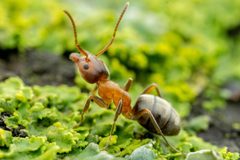
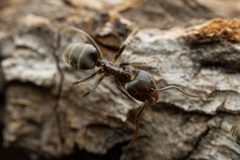
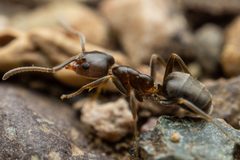
Pronunciation
How to pronounce Liometopum: /liːoʊˈmɛtəpəm/
These audio files are automatically generated. While they are not always 100% accurate, they are a good starting point.
Identification
Distinguished from other dolichoderine ants by the dense on the that produces a velvety appearance. L. apiculatum specifically identified by its pointed petiole. Separated from the related Iridomyrmex by morphological details of the petiole and pubescence pattern. L. microcephalum distinguished by its specific associations and distribution in Europe and western Asia. Identification to level often requires examination of nest structure, geographic location, and detailed morphological analysis.
Images
Appearance
Medium-sized ants with measuring 3–6 mm in length. The is characterized by dense on the , giving a velvety appearance. L. apiculatum possesses a pointed petiole. Coloration varies by ; L. occidentale appears dark with a velvety texture. exists between , with males and reproductive females showing distinct morphological features including detailed genital structures.
Habitat
varies by . L. apiculatum occupies arid and semi-arid including oak forests, pinyon pine forests, and desert scrub at elevations from 30 to 2,900 meters above sea level. Nests constructed in soil, under stones, in rock crevices, dead tree trunks, and at plant bases. L. microcephalum has specific habitat requirements with isolated, irregularly distributed across its European and western Asian range. The shows flexibility in nesting substrate but generally requires stable, protected locations for colony establishment.
Distribution
Holarctic distribution spanning North America, Europe, and Asia. L. apiculatum ranges from southwestern USA through Mexico to Central America. L. microcephalum occurs from Italy to Israel in the south, and from Czechia to Russia (Lower Volga) in the north. Additional distributed across temperate regions of the Northern Hemisphere.
Seasonality
L. apiculatum shows reproductive activity with typically following summer rains. Foraging activity primarily . L. apiculatum of the escamol stage (larvae and pupae of reproductive ) occurs once annually in spring, with some nests producing two harvests in a single season depending on biotic and abiotic conditions. Seasonal variation in profiles documented between pre-season, season, and post-season periods.
Diet
feeding habits documented for L. apiculatum: honeydew from hemipterans (aphids, scale insects, ), floral nectar, seeds, pollen, fruits, plant material, insect pupae, crustaceans, annelids, mollusks, and animal droppings. Gut consortium (Proteobacteria, Firmicutes, Actinobacteria) contributes to digestion of biopolymers including cellulose and lignin. Tending of multiple hemipteran is a consistent foraging strategy.
Host Associations
- Hemiptera (aphids, scale insects, mealybugs) - mutualisticAnts tend hemipterans for honeydew; specific documented association with Toumeyella martinezae scale insects in central Mexico
- Lepidoptera larvae (certain butterfly species) - mutualisticCaterpillars produce secretions that ants feed upon; similar to mutualism with Iridomyrmex
Life Cycle
Colony foundation and development varies by . L. apiculatum colonies range from a few hundred to hundreds of thousands of . occur following summer rains. Colonies are polygynous with multiple queens. Nesting structure can be monodomous or polydomous with extensive tunnel systems and multiple entrances. Colony longevity appears substantial given the large colony sizes and complex nest architecture. Sexual show distinct morphological differentiation with detailed genital structures characterized in L. apiculatum.
Behavior
Primarily foraging activity. Exhibits mass recruitment to food sources. Trail-following mediated by communication; 32 semiochemicals identified in L. apiculatum nests associated with trail-following, alarm, aggression, and nestmate recognition. Colony defense of territories documented in L. microcephalum. Tending of hemipterans involves active protection and transportation of these partners. Building entry behavior observed in some , leading to pest status in agricultural and urban settings.
Ecological Role
Significant roles in seed and nutrient cycling documented for L. apiculatum. Soil aeration through extensive tunneling activities. Prey source for other organisms. Contribution to biopolymer degradation through gut enzymatic activities (cellulases, ligninases, , ). Potential for phthalate ester degradation by associated microorganisms suggests bioremediation applications. Mutualistic relationships with hemipterans influence local structure and plant health.
Human Relevance
L. apiculatum larvae and pupae of the reproductive , known as escamoles, constitute a traditional Mexican food item with high market value. Nutritional composition: 42–51% protein, 30–35% lipids, 6–8% minerals on dry weight basis. Consumption concentrated in Puebla, Tlaxcala, and Hidalgo states. Excessive harvesting has caused overexploitation and declines, leading to conservation concern. assessed as "Subject to Special Protection" under Mexican risk assessment methodology. Considered agricultural and urban pest in some areas due to building entry and promotion of hemipteran pests. Gut show biotechnological potential for lignocellulosic hydrolysis.
Similar Taxa
- IridomyrmexSimilar mutualistic relationships with larvae that produce feedable secretions; distinguished by morphological differences in petiole structure and
- Other Dolichoderinae genera (Tapinoma, Technomyrmex)Shared characteristics; Liometopum separated by velvety and specific petiole
More Details
Conservation Status
L. apiculatum assessed as "Subject to Special Protection" (Pr) under Mexican Risk Assessment Methodology (MER) due to restricted distribution, medium human impact from harvesting, and biological characteristics. declines documented from overexploitation for escamol trade.
Phylogeographic History
L. microcephalum represents an ancient that speciated in Anatolia during the Pliocene, with European clades diverging during Pleistocene glaciations. Multiple refugial contributed to current genetic structure.
Semiochemical Communication
L. apiculatum employs complex chemical communication with 48 volatile organic compounds identified in and 32 in nests. Trail traffic peaks in post-season period with specific compound profiles characterizing each seasonal phase.
Sources and further reading
- BugGuide
- Wikipedia
- iNaturalist taxon
- NCBI Taxonomy
- Catalogue of Life
- The Bee and the Ant | Bug Squad
- Intriguing Topic: Social Evolution in Social Insects | Bug Squad
- Bug Squad
- Phylogeography of the rare velvety tree ant Liometopum microcephalum (Formicidae: Dolichoderinae)
- Review of the Current State of Knowledge on Liometopum apiculatum Mayr, 1870 (Hymenoptera: Formicidae)
- Biodegradation of recalcitrant compounds and phthalates by a consortium of Liometopum apiculatum gut microbiota
- New geographic distribution records of Liometopum apiculatum Mayr, 1870 (Hymenoptera, Formicidae) in central northern Mexico
- First detailed description and comparative morphology of male and female genitalia of Liometopum apiculatum (Hymenoptera: Formicidae)
- Volatile organic compounds in the habitat of the escamolera ant (Liometopum apiculatum Mayr) in Zacatecas, Mexico
- Influence of environmental conditions on insect reproduction and chemical composition of escamoles (Liometopum apiculatum M)
- Semiochemical Compounds of <em>Liometopum apiculatum</em> (Mayr) (Hymenoptera: Formicidae: Dolichoderinae) during the Development of Larvae of the Reproductive Caste
- DETERMINATION OF THE CONSERVATION STATUS OF THE “ESCAMOLERA” ANT (Liometopum apiculatum MAYR) IN MEXICO BY THE SPECIES RISK ASSESSEMENT METHODOLOGY – MER
- Effects of Parasitism on the Population Growth of Toumeyella martinezae (Coccidae) in the Presence of Its Mutualistic Ant Liometopum apiculatum (Formicidae) in an Arid Region of Central Mexico.