
Dorymyrmex smithi
Cole, 1936
Smith's Pyramid Ant
Dorymyrmex smithi is a of pyramid ant in the Dorymyrmex, described by Cole in 1936. The species is to the United States and Mexico. Pyramid ants are known for their distinctive conical nest mounds and preference for open, dry . Dorymyrmex smithi is part of a genus that exhibits high diversity in the Neotropics and has undergone rapid evolutionary radiation in North America.
Pronunciation
How to pronounce Dorymyrmex smithi: //ˌdɔːrɪˈmɜːrmɛks ˈsmɪθaɪ//
These audio files are automatically generated. While they are not always 100% accurate, they are a good starting point.
Identification
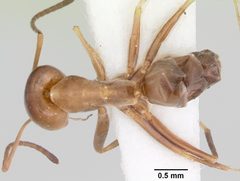
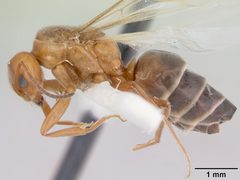
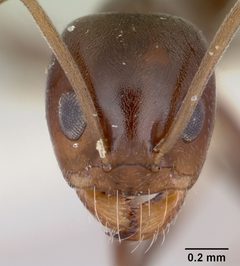
Dorymyrmex smithi belongs to the 'pyramid ant' , characterized by with a single petiolar node and the propodeum often bearing paired spines or teeth. -level identification within Dorymyrmex typically requires examination of subtle morphological characters including mesosomal , pilosity patterns, and coloration. D. smithi can be distinguished from other North American Dorymyrmex species through detailed morphometric analysis, though specific diagnostic characters are not widely documented in accessible literature.
Images
Habitat
Dorymyrmex generally inhabit dry temperate regions including deserts, shrublands, and open sandy areas. They construct conspicuous crater-shaped nest mounds in bare soil. Based on the pattern and the species' distribution across the southwestern United States and Mexico, D. smithi likely occupies arid and semi-arid environments with sparse vegetation.
Distribution
to the United States and Mexico. Specific range details within these countries are not well-documented in the provided sources, though the Dorymyrmex is broadly distributed across the Americas with highest diversity in dry temperate regions.
Behavior
Constructs conspicuous crater-shaped nests in bare soil, typical of the . Foraging activity patterns and specific behavioral repertoires for D. smithi have not been documented in accessible sources.
Ecological Role
As a member of the Dorymyrmex , likely contributes to soil turnover through nest construction and participates in dynamics as both and scavenger in arid . Specific ecological functions for D. smithi remain undocumented.
Similar Taxa
- Dorymyrmex insanusSimilar small size (~3 mm ), black coloration, and crater-shaped nest architecture in bare soil; distinguished by subtle morphological differences in mesosomal and pilosity
- Dorymyrmex bicolorShares bicolored body pattern in some and similar nest construction; differs in having dull orange and black coloration rather than uniform dark coloration
More Details
Taxonomic Context
Dorymyrmex smithi was described by Cole in 1936. The Dorymyrmex has been the subject of recent phylogenomic research by Oberski (2023), which characterized major lineages and nearly doubled the number of recognized in North America, suggesting that the true diversity of D. smithi and related may be greater than currently recognized.
Research Significance
The Dorymyrmex serves as a model system for studying rapid evolutionary radiations and biogeographic patterns, including intercontinental range expansions that occurred millions of years ago. D. smithi is part of this broader research context, though it has not been individually highlighted in major studies.
Sources and further reading
- BugGuide
- Wikipedia
- iNaturalist taxon
- NCBI Taxonomy
- Catalogue of Life
- Myrmecologist Jill Oberski: A Dream Come True | Bug Squad
- Let's All Appreciate Ants! Don't Miss These Biodiversity Museum Programs | Bug Squad
- Encyrtid Holdings | Entomology Research Museum
- Don't Miss This Virtual Seminar About an Ant Genus from the Amazon | Bug Squad
- Ants and Moths: Think Noon and Night! | Bug Squad
- Grasshoppers of Colorado