
Leptomyrmecini
Emery, 1913
Genus Guides
4- Dorymyrmex(pyramid ants)
- Forelius
- Linepithema
- Ochetellus
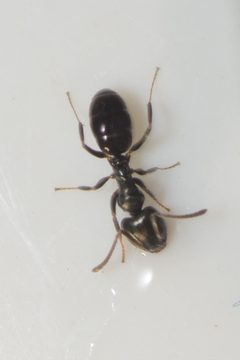
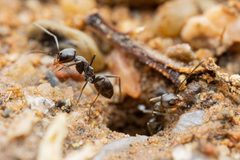
Leptomyrmecini is a tribe of ants within the Dolichoderinae, established by Emery in 1913. It encompasses 16 extant and two extinct genera, including well-known ants such as Azteca, Linepithema, Iridomyrmex, and Dorymyrmex. The tribe exhibits considerable diversity in form and across its constituent genera.

Pronunciation
How to pronounce Leptomyrmecini: /lɛptoʊmɪərməsɪnaɪ/
These audio files are automatically generated. While they are not always 100% accurate, they are a good starting point.
Identification
Members of Leptomyrmecini can be distinguished from other Dolichoderinae tribes by the combination of: a single petiolar node (reduced or absent in some ); acidopore at the apex of the (a characteristic of Dolichoderinae); and typically 12-segmented with a distinct three-segmented club. The tribe includes both slender, elongate forms (Leptomyrmex) and more compact, robust forms (Iridomyrmex, Dorymyrmex).
Images
Distribution
The tribe has a broad distribution, with constituent occurring across the Americas (Azteca, Dorymyrmex, Forelius, Linepithema), Australia and Oceania (Iridomyrmex, Ochetellus, Froggattella), and parts of Asia (Turneria). The extinct genus †Chronomyrmex is known from Canadian amber.
Human Relevance
Several within Leptomyrmecini have significant interactions with humans. Linepithema humile (Argentine ant) is a globally pest . Azteca species are arboreal ants in Neotropical forests and form protective mutualisms with Cecropia trees. Iridomyrmex species are ecologically dominant in Australian .
Similar Taxa
- TapinominiAnother tribe within Dolichoderinae; Tapinomini typically lack the pronounced petiolar node reduction seen in some Leptomyrmecini and have different mandibular patterns.
- PlagiolepidiniDistinguished from Leptomyrmecini by the presence of a bispinose or otherwise modified propodeum in many , and generally different antennal club structure.
More Details
Extinct genera
The tribe includes two extinct : †Chronomyrmex, described from Eocene Canadian amber (McKellar, Glasier & Engel, 2013), and †Leptomyrmex may be with respect to extant .
Taxonomic history
The composition of Leptomyrmecini has been revised multiple times; Gracilidris was described as a new in 2006 based on previously misidentified material, and several genera have been transferred in or out of the tribe based on phylogenetic studies.