
Dorymyrmex flavopectus
Smith, 1944
Yellow-chested Pyramid Ant
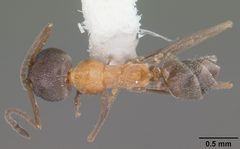
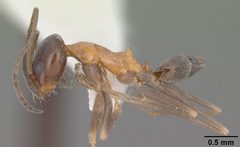
Dorymyrmex flavopectus is a of pyramid ant described by Smith in 1944. The species is to Florida, where it is restricted to scrub . It belongs to the Dorymyrmex, commonly known as pyramid ants due to their distinctive nest mounds. The specific epithet "flavopectus" refers to the yellowish coloration of the (pectus).

Pronunciation
How to pronounce Dorymyrmex flavopectus: /ˌdɔːrɪˈmɜːrmɛks ˌflævəʊˈpɛktəs/
These audio files are automatically generated. While they are not always 100% accurate, they are a good starting point.
Identification
The name "flavopectus" indicates yellowish (flavo-) (-pectus) coloration, distinguishing it from . As a member of Dorymyrmex, it likely shares the -characteristic single-node petiole and tendency to construct crater-shaped nest mounds in bare soil. Definitive identification requires examination of morphological details such as pilosity patterns and mesosomal , which are critical for distinguishing among superficially similar North American Dorymyrmex species.
Images
Habitat
Florida scrub —xeric, fire-maintained characterized by sandy soils, low-growing oaks, and sparse . This specialized habitat requirement contributes to the ' restricted distribution.
Distribution
to the US state of Florida. The has been documented exclusively within Florida's scrub , with no confirmed records from other states or regions.
Similar Taxa
- Dorymyrmex bureniAnother native Florida Dorymyrmex ; both occur in sandy and require careful morphological examination to distinguish, particularly regarding thoracic coloration and pilosity.
- Dorymyrmex insanusWidespread North American with which D. flavopectus shares general body plan and nesting habits; differs in distribution (D. insanus is broadly distributed, not Florida-) and likely in thoracic coloration.
More Details
Taxonomic Note
The was described by Marion R. Smith in 1944. Its restricted range and specificity make it a subject of interest for studies of Florida's fauna and scrub conservation.
Nomenclatural Clarification
The epithet "flavopectus" is derived from Latin: flavus (yellow) + pectus (breast/), referring to the yellowish thoracic coloration that characterizes this .
Sources and further reading
- BugGuide
- Wikipedia
- GBIF taxonomy match
- iNaturalist taxon
- NCBI Taxonomy
- Catalogue of Life
- Myrmecologist Jill Oberski: A Dream Come True | Bug Squad
- Let's All Appreciate Ants! Don't Miss These Biodiversity Museum Programs | Bug Squad
- Don't Miss This Virtual Seminar About an Ant Genus from the Amazon | Bug Squad
- Ants and Moths: Think Noon and Night! | Bug Squad
- Dorymyrmex bureni Archives - Entomology Today
- Ants in the Nest: A Possible Emerging Pressure on Sea Turtles