Evania
Fabricius, 1775
ensign wasps
Species Guides
1- Evania appendigaster(blue-eyed ensign wasp)
Evania is a of ensign wasps in the Evaniidae, comprising more than 60 described . All members of this genus are , with females laying eggs inside cockroach oöthecae (egg capsules). The most widespread and well-studied species, Evania appendigaster, has been introduced globally and is frequently associated with urban environments where its cockroach occur. These are recognized by their distinctive flag-like , which they characteristically wave while .
Pronunciation
How to pronounce Evania: //ɛˈveɪniə//
These audio files are automatically generated. While they are not always 100% accurate, they are a good starting point.
Identification
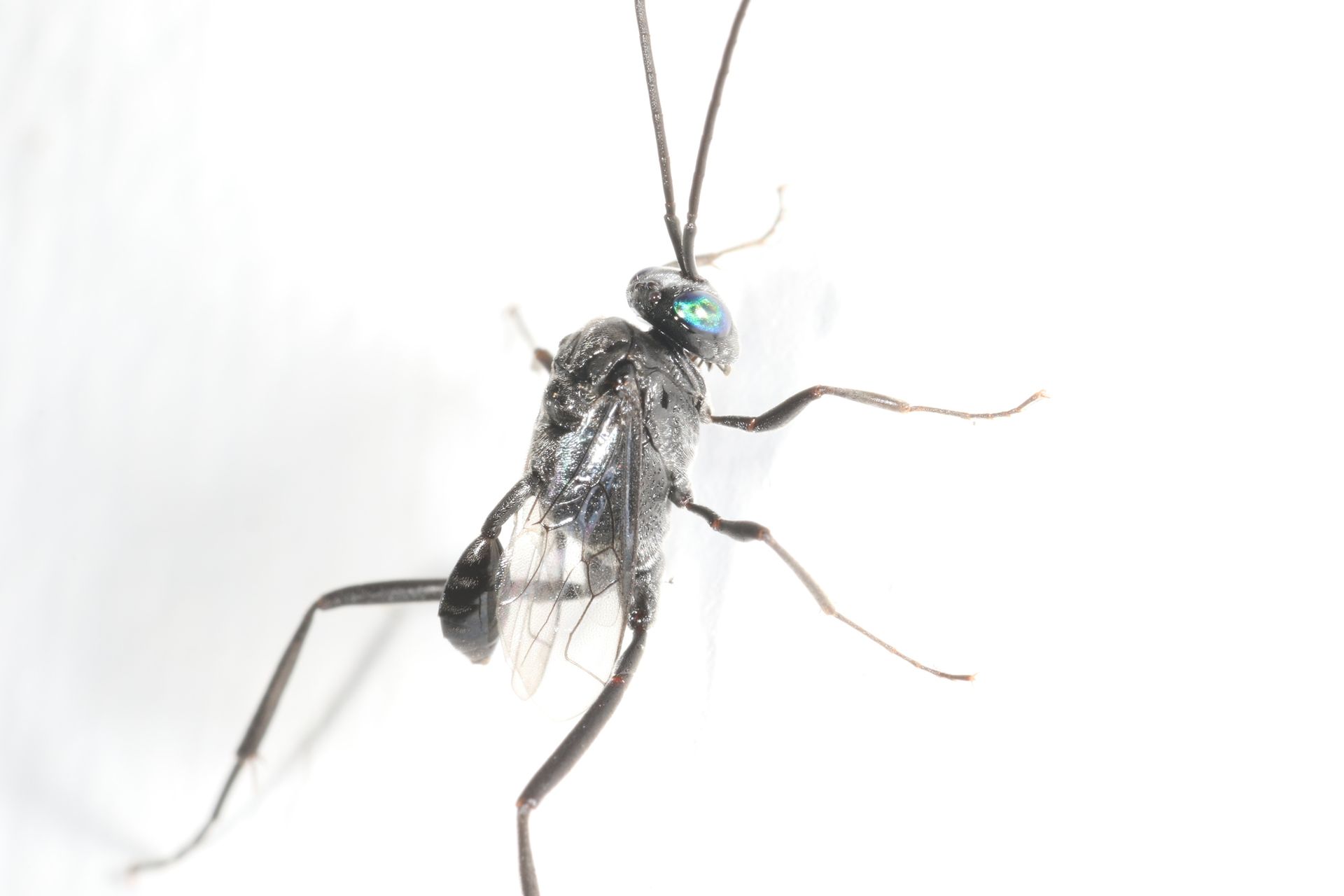
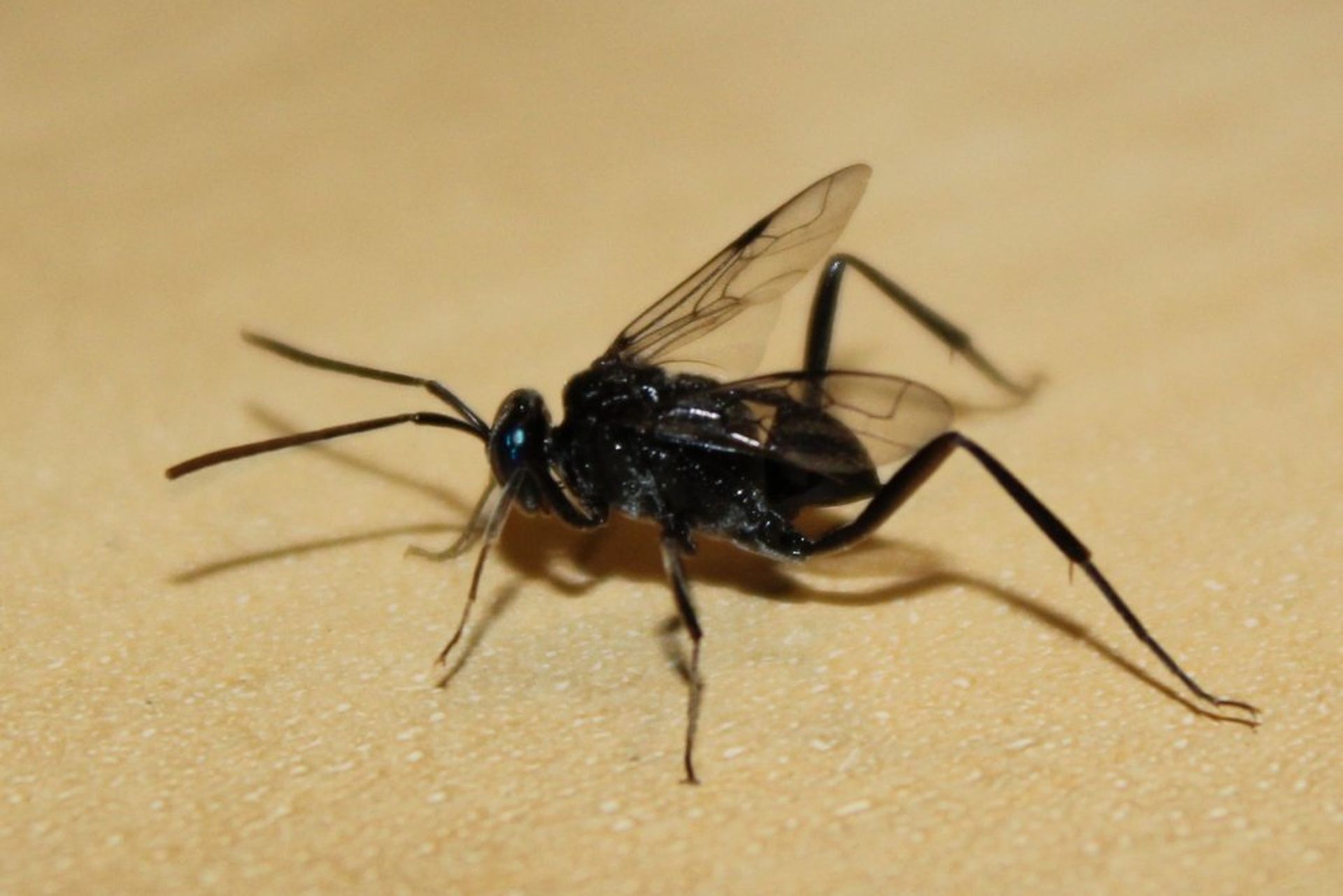
Members of Evania can be distinguished from other evaniid by their characteristic ensign-like , which is small, flag-shaped, and habitually waved or bobbed during their start-and-stop gait. Evania appendigaster, the most commonly encountered , is notably larger than most evaniids, with reaching up to 11 mm in body length. Living specimens of E. appendigaster display bright turquoise , a striking diagnostic feature. The abdomen is held in a raised position, giving these their of "ensign wasps."
Images
Habitat
Strongly associated with where occur, particularly urban and indoor environments. In North America, Evania appendigaster is found almost exclusively inside buildings and urban areas, tracking the distribution of its introduced cockroach . The occurs in tropical and subtropical regions globally, with some extending into temperate zones.
Distribution
Widespread in tropical and subtropical regions worldwide. Evania appendigaster, the most broadly distributed , occurs across Europe, the Middle East, Asia, the Pacific (Hawaii, Fiji), the Americas (Atlantic and Gulf Coast states, Arizona, California), and the West Indies. The is native to the Old World, with E. appendigaster probably originating from Asia.
Seasonality
varies by region. In Saudi Arabia, adults of E. appendigaster emerge in February, May, and October, indicating at least three per year. In temperate regions, activity likely tracks the breeding cycles of and indoor temperatures.
Diet
Larvae are obligate of . The female lays a single egg inside a cockroach oötheca; upon hatching, the larva consumes all eggs within the capsule. E. appendigaster has been observed feeding on honeydew secreted by aphids.
Host Associations
- Periplaneta americana - of oöthecaeAmerican cockroach; primary in many regions
- Periplaneta australasiae - of oöthecaeAustralian cockroach
- Blatta orientalis - of oöthecaeOriental cockroach
- Cutilia soror - of oöthecae
- Neostylopyga rhombifolia - of oöthecae
Life Cycle
Females locate oöthecae and deposit a single inside after penetrating the tough with their ovipositor. The larva develops through five instars, consuming all cockroach eggs in the oötheca before pupating. The chews its way out of the empty egg capsule. E. appendigaster completes three to four per year, with development from egg to adult taking approximately one week after . Instars are distinguishable by : first instar with serried small denticles; second and third tridentate and gauntlet-shaped; fourth and fifth sub-triangular and bidentate.
Behavior
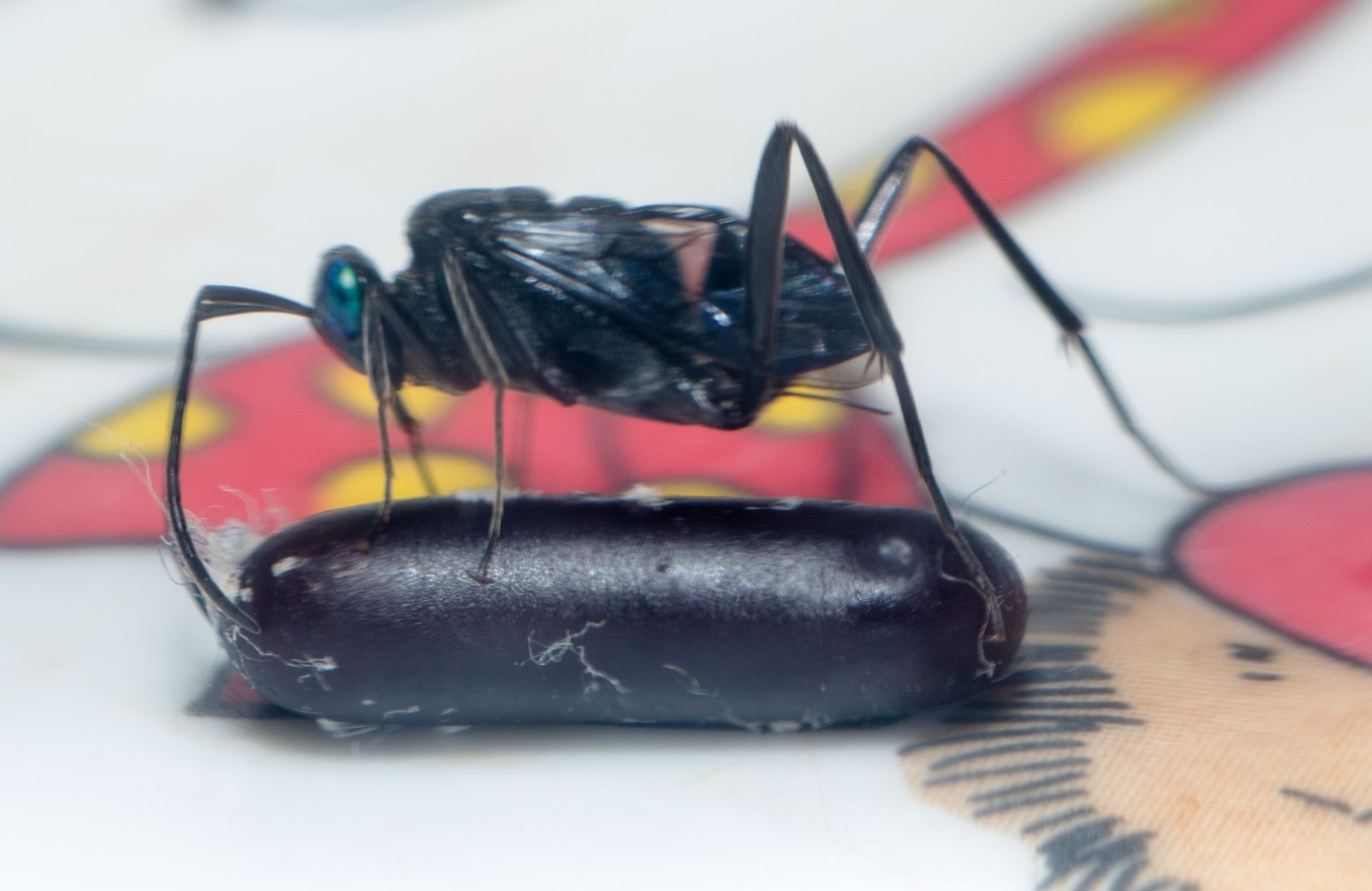
Females exhibit a distinctive oviposition posture, lying on their side with legs braced against the oötheca while penetrating the capsule wall, a process taking approximately 30 minutes. display a characteristic start-and-stop gait with rhythmic bobbing or waving of the flag-like . Larvae are solitary, with only one individual developing per oötheca despite the multiple available.
Ecological Role
agent of . rates of 25–29% have been documented for E. appendigaster in field studies, with potential to destroy up to half of local cockroach populations when combined with other such as Tetrastichus hagenowii. The 's rapid time (3–4 per year) provides advantage over slower-breeding cockroach .
Human Relevance
Considered for of pest in urban environments. The are non-toxic and self-dispersing, offering potential as an alternative to chemical . However, they are not commercially available for this purpose. Their presence indoors often indicates nearby cockroach , serving as an indicator of hidden pest problems.
Similar Taxa
- ProsevaniaRelated of ensign wasps also parasitizing oöthecae; distinguished by morphological features of the and ovipositor structure
- ZeuxevaniaRelated evaniid with similar ; differs in abdominal proportions and geographic distribution
- BrachygasterRelated evaniid ; morphological differences in wing venation and abdominal shape
- HyptiaRelated evaniid with similar ; -level identification requires examination of wing and abdominal characters
More Details
Taxonomic history
The Indian fauna of Evania was revised in 2017, reducing eight previously described (E. abrahami, E. agraensis, E. johni, E. nurseana, E. rubrofasciata, E. simlaensis, E. trivandrensis, and E. unipunctata) to synonymy under E. appendigaster, leaving only E. mukerjii as a second valid Indian species.
Introduction history
Evania appendigaster was first recorded in the United States on June 5, 1879, from Washington, DC. Its spread has followed the global distribution of introduced pests, particularly through maritime and urban transport networks.
Sources and further reading
- BugGuide
- Wikipedia
- GBIF taxonomy match
- iNaturalist taxon
- NCBI Taxonomy
- Catalogue of Life
- Bug Eric: Wasp Wednesday: Evaniidae
- A Cockroach Egg Parasitoid, Evania appendigaster (Linnaeus) (Hymenoptera: Evaniidae)
- Review of the Indian Species of Evania (Hymenoptera: Evanioidea: Evaniidae)
- On the Parasites and Predators of the Cockroach. II.—Evania appendigaster (L.)
- First California Record of the cockroach ootheca parasitoid, Evania appendigaster (Linnaeus, 1758) (Hymenoptera: Evaniidae)