
Pristaulacus strangaliae
Rohwer, 1917
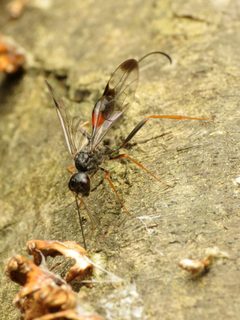
Pristaulacus strangaliae is a of aulacid in the Aulacidae, order Hymenoptera. It is a wasp native to North America, with confirmed records from Canada including Manitoba. Like other members of its family, it is and associated with wood-boring . The species was described by Rohwer in 1917.
Pronunciation
How to pronounce Pristaulacus strangaliae: /ˌprɪstaʊˈleɪkəs stræŋˈɡaliˌaɪ/
These audio files are automatically generated. While they are not always 100% accurate, they are a good starting point.
Identification
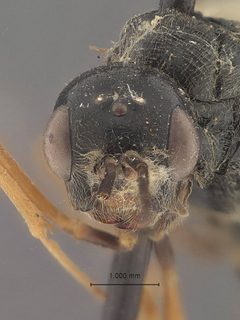
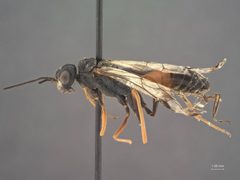
Members of the Pristaulacus can be distinguished from superficially similar ichneumon wasps by three key characters: the is attached high on the (not low as in ichneumons), there is a short "neck" behind the , and the ovipositor is downcurved or sinuous at the tip rather than straight. The specific identification of P. strangaliae requires reference to specialized keys for North American Aulacidae.
Images
Habitat
Associated with forested environments where wood-boring beetles occur, particularly in areas with freshly cut or damaged wood that attracts cerambycid (longhorned beetle) and buprestid (jewel beetle) .
Distribution
North America; confirmed records from Canada (Manitoba).
Host Associations
- wood-boring beetles - Based on -level ; specific records for this not documented in available sources
Behavior
. Based on congeneric , females likely search for by haltingly across logs, probing cracks and crevices with their to locate larvae, then inserting their ovipositor to parasitize hosts.
Ecological Role
of wood-boring beetles; contributes to of forest pest .
Similar Taxa
- ichneumon wasps (Ichneumonidae)Superficially similar appearance and , but distinguished by low abdominal attachment, straight ovipositor, and lack of short neck
- Pristaulacus fasciatus with overlapping distribution; requires detailed morphological examination for separation
More Details
Taxonomic note
The specific epithet 'strangaliae' refers to the longhorned beetle Strangalia, suggesting the original description may have been based on specimens reared from that genus, though this inference requires verification from the original literature.