Dolichomitus
Smith, 1877
ichneumon wasps
Species Guides
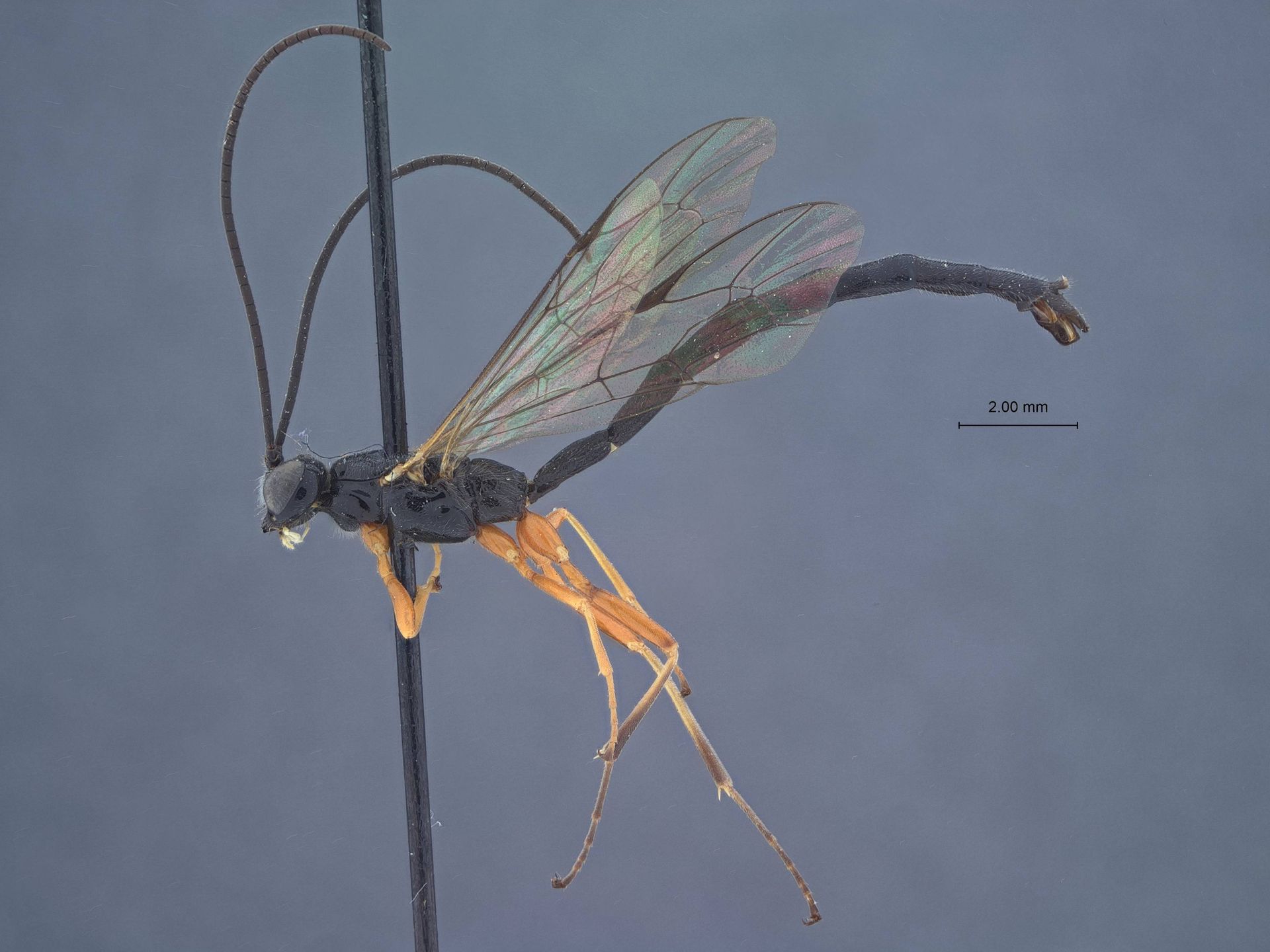
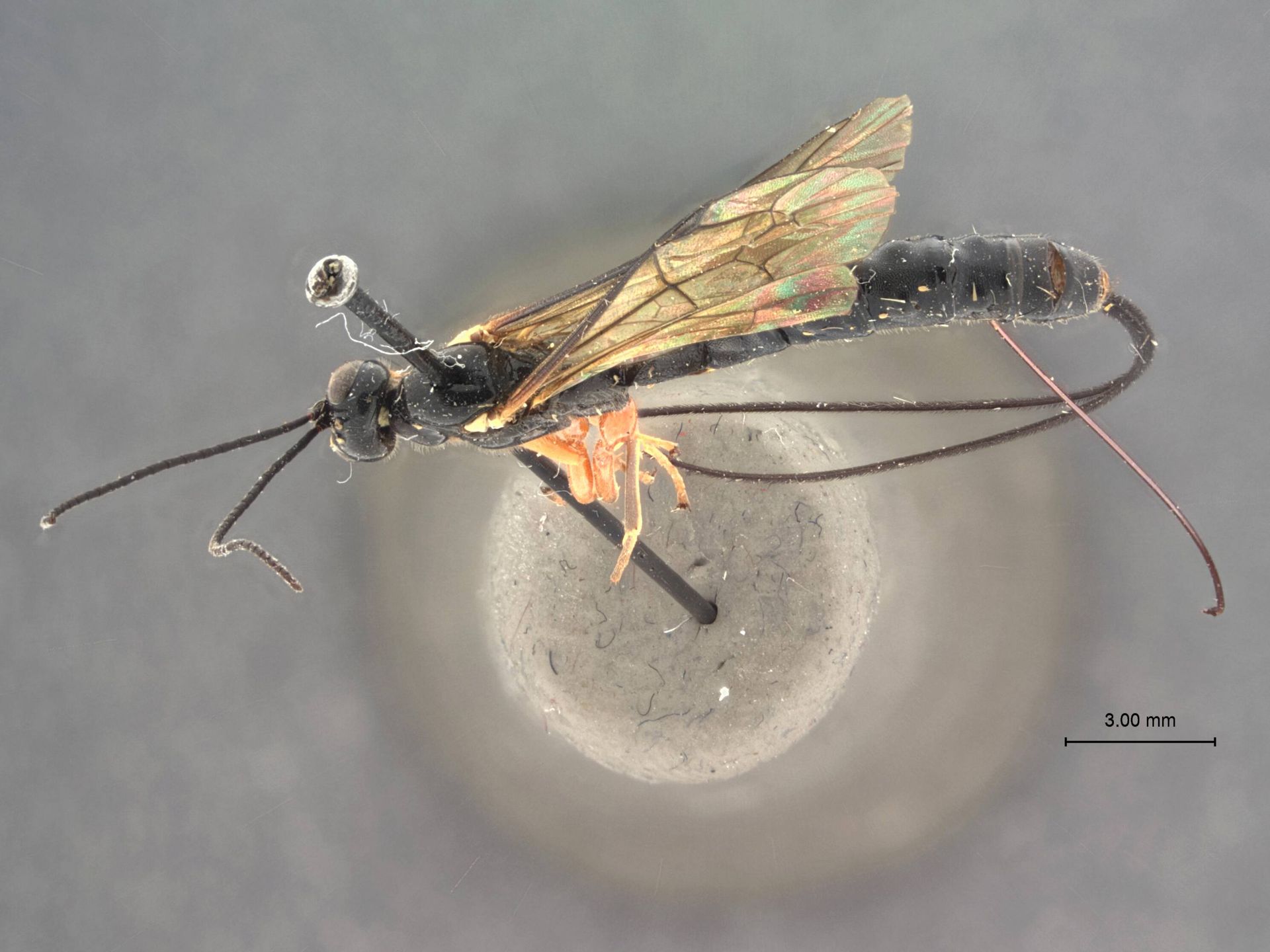
3Dolichomitus is a of ichneumonid wasps containing at least 70 described . The genus name derives from Greek roots meaning 'long thread,' referring to the elongated ovipositor characteristic of these . Species in this genus are parasitoids of wood-boring insect larvae, using their long ovipositors to reach deep within tree trunks and branches. Some species exhibit striking aposematic coloration, including metallic blue and yellow patterns that may deter avian .
Pronunciation
How to pronounce Dolichomitus: /dɔˈlɪkoʊˌmaɪtəs/
These audio files are automatically generated. While they are not always 100% accurate, they are a good starting point.
Identification
Distinguished from other ichneumonid by the combination of exceptionally long, slender ovipositor and body proportions. Some display distinctive metallic coloration: D. meii shows electric blue iridescence on a black body with golden yellow wings. occurs in some species; males and females may differ in size and antennal structure.
Images
Habitat
Forested environments including woodlands, orchards, and rainforests. Associated with standing dead or living trees containing wood-boring larvae. Specific include cherry, apricot, plum, sour cherry, apple, and almond orchards; also recorded from coppiced woodland and tropical rainforest tree trunks.
Distribution
Widespread across the Holarctic with records from Europe (Britain, Scandinavia, Ukraine, Turkey), Asia, and South America (western Amazonia). Specific records include: Britain (Shropshire), Ukraine (Carpathians), Turkey (Siirt), Denmark, Norway, Sweden, and Brazil.
Seasonality
typically occurs in spring, with D. terebrans emerging March–June and peaking in late May. This timing overlaps with adult activity periods.
Host Associations
- Sphenoptera (Tropeopeltis) tappesi - larval First documented record for D. terebrans; parasitization rates of 9.46% (2015) and 19.10% (2016) recorded in Turkish orchards
- Stenostola sp. - larval Cerambycidae of D. quercicolus, first recorded in Ukraine
- Plagionotus arcuatus - larval Cerambycidae of D. quercicolus, first recorded in Ukraine
- Pine bark weevil - larval for Dolichomitus sp., with sex ratio varying by host
Life Cycle
Solitary larval : female lays a single on or in larva. larva consumes host from within, eventually killing it. occurs within host gallery or nearby. timing varies by and latitude; D. terebrans emerges primarily spring (March–June).
Behavior
Females use elongated ovipositors to probe wood holes and locate larvae deep within tree trunks. The ovipositor functions as a tactile searching organ to detect hosts in concealed . Some exhibit aposematic : D. meii rests conspicuously on tree trunks where its metallic coloration advertises unpalatability to birds.
Ecological Role
agent of wood-boring beetles, particularly Cerambycidae and Buprestidae. Regulates of forest and orchard pests that damage timber and fruit/nut trees. Functions as a saproxylic contributing to dead wood dynamics.
Human Relevance
Potential biocontrol agent for orchard pests; D. terebrans parasitizes Sphenoptera tappesi, a pest of stone fruit and nut trees. Subject of taxonomic research with multiple new described recently, including 53 new species by University of Turku researchers in 2021 alone.
Sources and further reading
- BugGuide
- Wikipedia
- GBIF taxonomy match
- iNaturalist taxon
- NCBI Taxonomy
- Catalogue of Life
- Dolichomitus meii Wasp Discovered in Amazonia Is Like a Flying Jewel | Blog
- Dolichomitus quercicolus Zwakhals (Hymenoptera: Ichneumonidae: Pimplinae) new to Britain
- Population Development of Sphenoptera (Tropeopeltis) tappesi Marseul and Its Parasitoid Dolichomitus terebrans (Ratzeburg)
- New Data on the Genus Dolichomitus (Hymenoptera, Ichneumonidae, Pimplinae) in the Ukrainian Carpathians
- Difference in the Sex Ratio of the Pine Bark Weevil Parasite, Dolichomitus sp. (Hymenoptera : Ichneumonidae), Emerging from Different Host Species